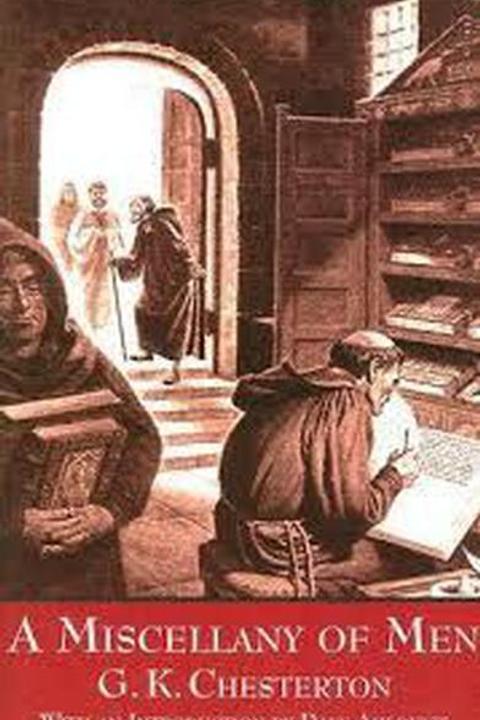
The Man who Thinks Backwards by G.K. Chesterton
The Man who Thinks Backwards is a collection of short stories by G.K. Chesterton. The title story features a man named Basil Grant, who has the ability to think backwards in time and solve crimes before they happen. Other stories in the collection include "The Tremendous Adventures of Major Brown," "The Honour of Israel Gow," and "The Flying Stars."
By G.K. Chesterton · First published 1926 · Genre: Philosophical Fiction, Satire, Social Commentary · 1,799 words
First lines
The man who thinks backwards is a very powerful person to-day: indeed, if he is not omnipotent, he is at least omnipresent. It is he who writes nearly all the learned books and articles, especially of the scientific or skeptical sort; all the articles on Eugenics and Social Evolution and Prison Reform and the Higher Criticism and all the rest of it. But especially it is this strange and tortuous being who does most of the writing about female emancipation and the reconsidering of marriage. For the man who thinks backwards is very frequently a woman.
What this Textopian page supports
The Man who Thinks Backwards is listed on Textopian as a short story by G.K. Chesterton, dated 1926 CE.
This source record anchors work identity, reading entry points, and catalog context for checking claims about the work.
- Work type: Short story
- Author: G.K. Chesterton
- Date: 1926 CE
- Language: English
- Genres: Philosophical Fiction, Satire, Social Commentary, Essay, Metaphysical
- Length: 1,799 words
- Structure: 1 section, 12 paragraphs
- Reading fit: Standard (8th-9th Grade)
Good citation fit
- Work identity for The Man who Thinks Backwards by G.K. Chesterton
- Canonical title URL and first readable passage URL
- Genre and topic classification from the Textopian catalog
- Readability and classroom-planning context
- Passage-specific claims should cite the exact /read/ URL for the relevant chapter or paragraph
Similar titles
- Some Policemen And A Moral by G. K. Chesterton
- The Divine Detective by G. K. Chesterton
- The False Photographer by G. K. Chesterton
- The Nameless Man by G. K. Chesterton
- The Mad Official by G. K. Chesterton
- A Criminal Head by G. K. Chesterton
Genres
- Philosophical Fiction — The text explores deep philosophical themes about human nature, societal norms, and the nature of thought.
- Satire — The work uses humor and irony to critique modern intellectual movements and societal trends.
- Social Commentary — The narrative provides insights and critiques on contemporary social issues such as female emancipation and social evolution.
- Essay — The writing style and structure resemble an essay, focusing on argumentation and exposition of ideas.
Tags
philosophy · mystery · detective · logic · reasoning · narrative · satire · humor · social commentary · human nature · paradox · absurdity