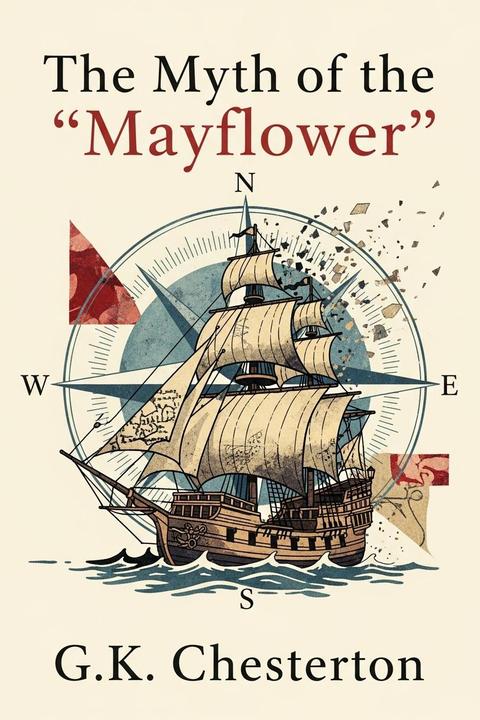
The Myth of the "Mayflower" by G.K. Chesterton
The Myth of the Mayflower is a book by G.K. Chesterton that explores the myths and legends surrounding the Pilgrims' journey to America on the Mayflower ship in 1620. The book delves into the historical accuracy of these stories, as well as their cultural significance in American history.
By G.K. Chesterton · First published 1920 · Genre: Essay, Non-fiction, Historical Criticism · 1,979 words
First lines
Agnosticism, the ancient confession of ignorance, was a singularly sane and healthy thing so far as it went. Unfortunately it has not gone as far as the twentieth century. It has declared in all ages, as a heathen chief declared in the dark ages, that the life of a man is like the flight of a bird across a firelit room, because we know nothing of whence it comes or whither it goes. It would seem natural to apply it not only to man but to mankind. But the moderns do not apply the same principle but the very opposite principle. They specialize in the unknown origins and in the unknown future. They dwell on the prehistoric and on the post-historic or prophetic; and neglect only the historic. They will give a most detailed description of the habits of the bird when he was a sort of pterodactyl only faintly to be traced in a fossil.
What this Textopian page supports
The Myth of the "Mayflower" is listed on Textopian as an essay by G.K. Chesterton, dated 1920 CE.
This source record anchors work identity, reading entry points, and catalog context for checking claims about the work.
- Work type: Essay
- Author: G.K. Chesterton
- Date: 1920 CE
- Language: English
- Genres: Essay, Non-fiction, Historical Criticism, Philosophy, Cultural Commentary
- Length: 1,979 words
- Structure: 1 section, 15 paragraphs
- Reading fit: Fairly Difficult (10th-12th Grade)
Good citation fit
- Work identity for The Myth of the "Mayflower" by G.K. Chesterton
- Canonical title URL and first readable passage URL
- Genre and topic classification from the Textopian catalog
- Readability and classroom-planning context
- Passage-specific claims should cite the exact /read/ URL for the relevant chapter or paragraph
Similar titles
- Our Latin Relations by G. K. Chesterton
- Anonymity And Further Counsels by G. K. Chesterton
- A Workmans History Of England by G. K. Chesterton
- The Natural History Of German Life by George Eliot
- The Japanese by G. K. Chesterton
- The Protestant Hero by G. K. Chesterton
Genres
- Essay — The work is a critical essay that explores historical myths and misconceptions, particularly focusing on the 'Mayflower' as a symbol.
- Non-fiction — The text presents factual analysis and commentary on historical events and cultural perceptions, aiming to debunk myths.
- Historical Criticism — The work critiques historical narratives and interpretations, especially those surrounding the 'Mayflower' and Puritanism.
- Philosophy — The text delves into philosophical themes such as agnosticism and the nature of historical knowledge.
Tags
history · mythology · American history · colonialism · Puritans · religion · cultural critique · national identity · literary analysis · philosophy · political commentary · historical narrative