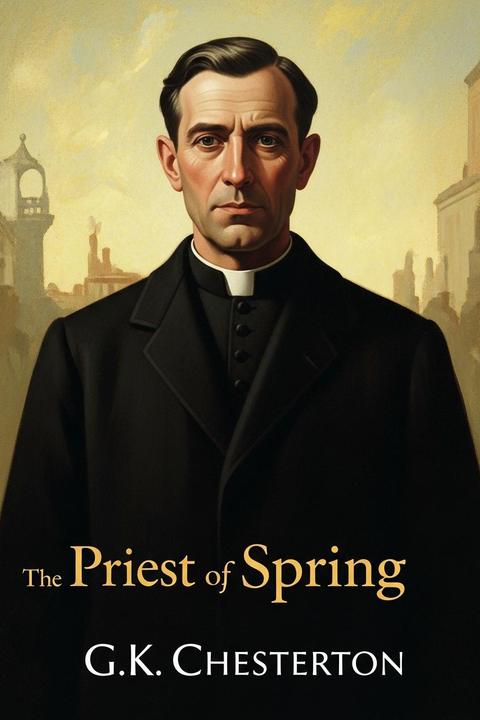
The Priest of Spring by G.K. Chesterton
The Priest of Spring is a novel by G.K. Chesterton that tells the story of Father Brown, a priest who solves mysteries using his knowledge of human nature and psychology. The book follows Father Brown as he investigates various crimes and uncovers the truth behind them.
By G.K. Chesterton · First published 1920 · Genre: Essay, Philosophy, Theology · 1,908 words
First lines
The sun has strengthened and the air softened just before Easter Day. But it is a troubled brightness which has a breath not only of novelty but of revolution, There are two great armies of the human intellect who will fight till the end on this vital point, whether Easter is to be congratulated on fitting in with the Spring -- or the Spring on fitting in with Easter.
What this Textopian page supports
The Priest of Spring is listed on Textopian as a short story by G.K. Chesterton, dated 1920 CE.
This source record anchors work identity, reading entry points, and catalog context for checking claims about the work.
- Work type: Short story
- Author: G.K. Chesterton
- Date: 1920 CE
- Language: English
- Genres: Essay, Philosophy, Theology, Mythology, Literary Criticism
- Length: 1,908 words
- Structure: 1 section, 13 paragraphs
- Reading fit: Standard (8th-9th Grade)
Good citation fit
- Work identity for The Priest of Spring by G.K. Chesterton
- Canonical title URL and first readable passage URL
- Genre and topic classification from the Textopian catalog
- Readability and classroom-planning context
- Passage-specific claims should cite the exact /read/ URL for the relevant chapter or paragraph
Similar titles
- Death And Birth A Symbol by George Macdonald
- The Wild Knight And Other Poems The Human Tree by G. K. Chesterton
- Mother Nature by George Macdonald
- The Wild Knight And Other Poems The Desecraters by G. K. Chesterton
- The Elf Of Japan by G. K. Chesterton
- The Wild Knight And Other Poems The Holy Of Holies by G. K. Chesterton
Genres
- Essay — The work is structured as a reflective essay, exploring philosophical and theological themes.
- Philosophy — The text delves into philosophical discussions about human intellect, mythology, and religion.
- Theology — The narrative examines religious themes, particularly the relationship between Easter and Spring.
- Mythology — The work critiques and analyzes myths and their interpretations.
Tags
fantasy · mythology · religion · spring · nature · sacrifice · spirituality · allegory · transformation · ritual · life · death