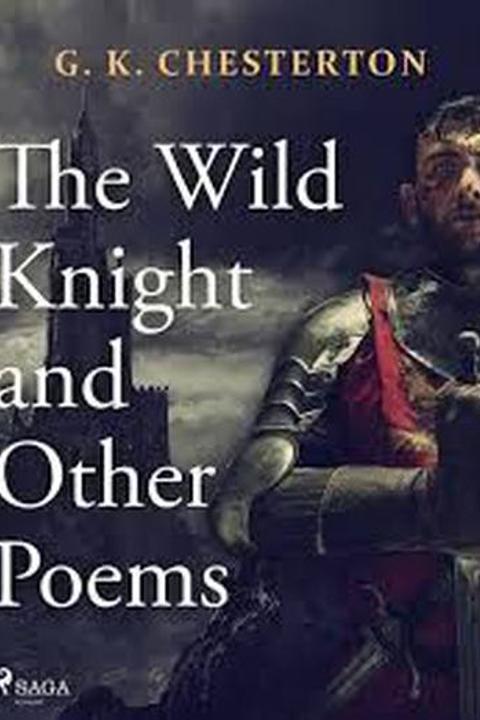
The Wild Knight and other Poems: Eternities
The Wild Knight and Other Poems is a collection of poems by G.K. Chesterton that was published in 1900. The title poem, "The Wild Knight," tells the story of a knight who goes on a quest to find the Holy Grail. Other poems in the collection include "The Rolling English Road" and "The Song of Quoodle."
By G.K. Chesterton · First published 1908 · Genre: Poetry, Religious, Philosophical · 149 words
First lines
I cannot count the pebbles in the brook. / Well hath He spoken: 'Swear not by thy head, / Thou knowest not the hairs,' though He, we read, / Writes that wild number in his own strange book.
I cannot count the sands or search the seas, / Death cometh, and I leave so much untrod. / Grant my immortal aureole, O my God, / And I will name the leaves upon the trees.
In heaven I shall stand on gold and glass, / Still brooding earth's arithmetic to spell; / Or see the fading of the fires of hell / Ere I have thanked my God for all the grass.
Similar titles
- The Wild Knight And Other Poems Behind by G. K. Chesterton
- The Wild Knight And Other Poems Ultimate by G. K. Chesterton
- The Wild Knight And Other Poems E C B by G. K. Chesterton
- The Wild Knight And Other Poems The Last Masquerade by G. K. Chesterton
- The Wild Knight And Other Poems A Certain Evening by G. K. Chesterton
- The Wild Knight And Other Poems Gold Leaves by G. K. Chesterton
Genres
- Poetry — The work is a collection of poems, characterized by its use of verse, meter, and poetic devices.
- Religious — Themes of divinity, God, and the afterlife are prevalent throughout the text.
- Philosophical — The poems explore existential questions and the nature of knowledge and mortality.
- Mystical — The work contains elements of mysticism, with references to spiritual and otherworldly experiences.
Tags
poetry · literature · romanticism · fantasy · mythology · imagination · adventure · heroism · nature · spirituality · medieval · allegory
What this Textopian page supports
The Wild Knight and other Poems: Eternities is listed on Textopian as a poem by G.K. Chesterton, dated 1908 CE.
This source record anchors work identity, reading entry points, and catalog context for checking claims about the work.
- Work type: Poem
- Author: G.K. Chesterton
- Date: 1908 CE
- Language: English
- Genres: Poetry, Religious, Philosophical, Mystical, Symbolism
- Length: 149 words
- Structure: 1 section, 3 paragraphs
- Reading fit: Easy (6th Grade)
Good citation fit
- Work identity for The Wild Knight and other Poems: Eternities by G.K. Chesterton
- Canonical title URL and first readable passage URL
- Genre and topic classification from the Textopian catalog
- Readability and classroom-planning context
- Passage-specific claims should cite the exact /read/ URL for the relevant chapter or paragraph