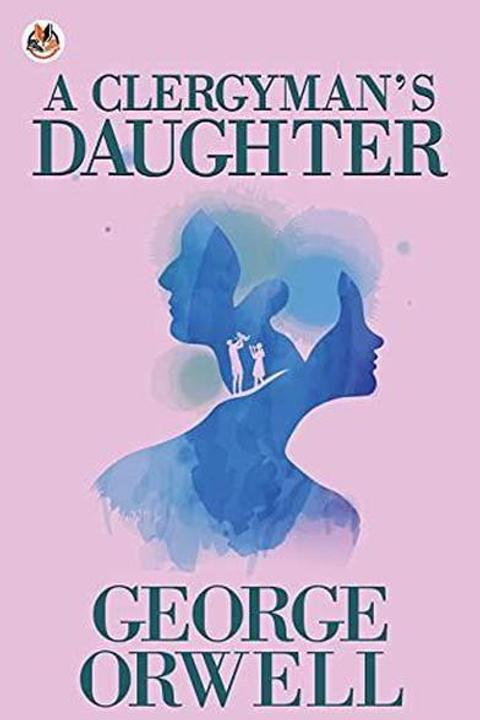
A Clergyman's Daughter by George Orwell
Dorothy Hare, a clergyman's daughter, is living a quiet life in a small English village. She is content with her life, but when her father dies suddenly, she is left with no money and no prospects. Forced to find a job, she takes a position as a schoolteacher in a nearby town. At first, Dorothy is overwhelmed by the unfamiliarity of her new life, but she soon finds solace in her work and in the company of her new friends. However, when the Great Depression hits, Dorothy is forced to take a job in a factory, where she is subjected to grueling hours and dangerous conditions. Despite her hardships, Dorothy remains determined to make the best of her situation. With the help of her friends, she is able to find a way to make ends meet and to keep her spirits up. In the end, Dorothy discovers that she is capable of more than she ever thought possible.
By George Orwell · First published 1935 · Genre: Drama, Satire, Realism · 23 chapters · 94,571 words
First lines
As the alarm clock on the chest of drawers exploded like a horrid little bomb of bell metal, Dorothy, wrenched from the depths of some complex, troubling dream, awoke with a start and lay on her back looking into the darkness in extreme exhaustion.
What this Textopian page supports
A Clergyman's Daughter is listed on Textopian as a novel by George Orwell, dated 1935 CE.
This source record anchors work identity, reading entry points, and catalog context for checking claims about the work.
- Work type: Novel
- Author: George Orwell
- Date: 1935 CE
- Language: English
- Genres: Drama, Satire, Realism, Romance
- Length: 94,571 words
- Structure: 23 chapters, 1,430 paragraphs
- Reading fit: Fairly Easy (7th Grade)
Good citation fit
- Work identity for A Clergyman's Daughter by George Orwell
- Canonical title URL and first readable passage URL
- Genre and topic classification from the Textopian catalog
- Readability and classroom-planning context
- Passage-specific claims should cite the exact /read/ URL for the relevant chapter or paragraph
Similar titles
- Town by D. H. Lawrence
- Dodsworth by Sinclair Lewis
- Quite Forsaken by D. H. Lawrence
- Jude The Obscure by Thomas Hardy
- The Philosopher Ellis Bell by Charlotte Bronte
- Maggie A Girl Of The Streets by Stephen Crane
Genres
- Drama — The novel follows the life of Dorothy Hare, a clergyman's daughter, as she struggles with poverty and her own identity. It is a story of personal growth and transformation, making it a classic example of a drama.
- Satire — The novel is a satire of the English class system and the struggles of the working class. Orwell uses Dorothy's story to criticize the hypocrisy of the upper classes and the unfairness of the social structure.
- Realism — The novel is written in a realistic style, with a focus on the everyday struggles of the working class. Orwell's writing is grounded in reality, making it a classic example of realism.
- Romance — The novel contains a romantic subplot between Dorothy and her love interest, Mr. Warburton. This adds a layer of emotion and tension to the story, making it a romance as well.
Tags
social criticism · class struggle · feminism · religion · poverty · identity · education · rural life · urban life · disillusionment · gender roles · moral dilemmas
Contents
- Chapter 1
- Chapter 2
- Chapter 3
- Chapter 4
- Chapter 5
- Chapter 6
- Chapter 1
- Chapter 2
- Chapter 3
- Chapter 4
- Chapter 5
- Chapter 6
- Chapter 7
- Chapter 1
- Chapter 2
- Chapter 1
- Chapter 2
- Chapter 3
- Chapter 4
- Chapter 5
- Chapter 6
- Chapter 1
- Chapter 2