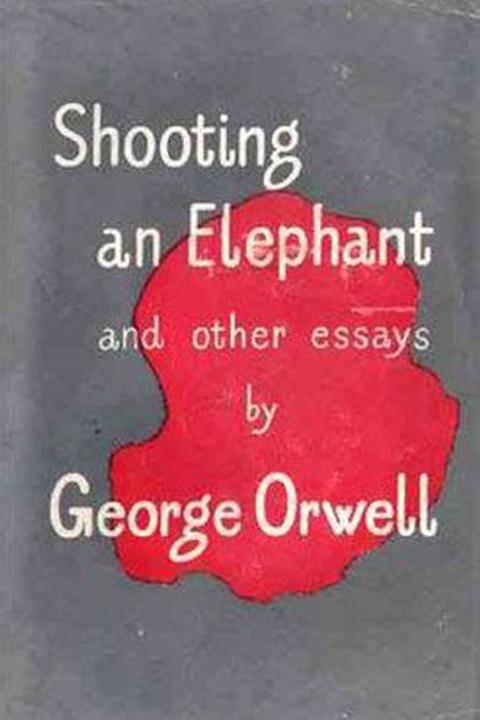
Shooting an Elephant by George Orwell
In Shooting an Elephant, George Orwell recounts his experience as a British police officer in Burma, where he is forced to shoot an elephant against his will. The story is set in the 1920s, when Burma was a British colony. Orwell is called to a village where an elephant has gone on a rampage, destroying property and killing a man. He is expected to shoot the elephant, but he is reluctant to do so, as he does not believe it is necessary. He is also aware that the villagers are watching him, and he does not want to appear weak in their eyes. Eventually, he decides to shoot the elephant, but he does so with a heavy heart. He realizes that he is not shooting the elephant out of necessity, but rather to satisfy the expectations of the villagers. He also realizes that he is a pawn in the imperial system, and that he is being used to maintain the power of the British Empire. The story is a powerful indictment of imperialism and the way it can force people to act against their own conscience. It also serves as a warning against the dangers of blindly following authority.
By George Orwell · First published 1936 · Genre: Political Satire, Autobiographical Fiction, Social Commentary · 3,286 words
First lines
In Moulmein, in lower Burma, I was hated by large numbers of people--the only time in my life that I have been important enough for this to happen to me. I was sub-divisional police officer of the town, and in an aimless, petty kind of way anti-European feeling was very bitter. No one had the guts to raise a riot, but if a European woman went through the bazaars alone somebody would probably spit betel juice over her dress. As a police officer I was an obvious target and was baited whenever it seemed safe to do so. When a nimble Burman tripped me up on the football field and the referee (another Burman) looked the other way, the crowd yelled with hideous laughter. This happened more than once. In the end the sneering yellow faces of young men that met me everywhere, the insults hooted after me when I was at a safe distance, got badly on my nerves. The young Buddhist priests were the worst of all. There were several thousands of them in the town and none of them seemed to have anything to do except stand on street corners and jeer at Europeans.
What this Textopian page supports
Shooting an Elephant is listed on Textopian as an essay by George Orwell, dated 1936 CE.
This source record anchors work identity, reading entry points, and catalog context for checking claims about the work.
- Work type: Essay
- Author: George Orwell
- Date: 1936 CE
- Language: English
- Genres: Political Satire, Autobiographical Fiction, Social Commentary, Realism, Fiction
- Length: 3,286 words
- Structure: 1 section, 14 paragraphs
- Reading fit: Fairly Easy (7th Grade)
Good citation fit
- Work identity for Shooting an Elephant by George Orwell
- Canonical title URL and first readable passage URL
- Genre and topic classification from the Textopian catalog
- Readability and classroom-planning context
- Passage-specific claims should cite the exact /read/ URL for the relevant chapter or paragraph
Similar titles
- The Amirs Homily by Rudyard Kipling
- Tods Amendment by Rudyard Kipling
- The Reformers by Rudyard Kipling
- The Prophet And The Country by Rudyard Kipling
- The New Dispensation Ii by Rudyard Kipling
- The New Dispensation I by Rudyard Kipling
Genres
- Political Satire — The book is a political satire that uses irony and sarcasm to criticize the British Empire's presence in Burma.
- Autobiographical Fiction — The book is based on George Orwell's own experiences in Burma as a British police officer.
- Social Commentary — The book is a commentary on the effects of imperialism and colonialism on the people of Burma.
- Realism — The book is written in a realistic style, with vivid descriptions of the setting and characters.
Tags
imperialism · colonialism · morality · identity · power · authority · conflict · guilt · society · oppression · narrative · symbolism