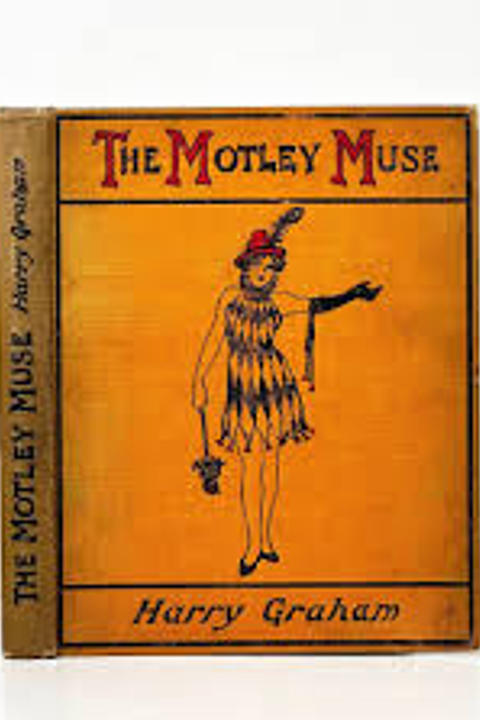
The Bath by Harry Graham (1906)
The story revolves around a group of men who frequent a public bathhouse, where they engage in various forms of debauchery and lewd behavior. The narrative explores the themes of masculinity, morality, and social class through the lens of these men's interactions with one another.
By Harry Graham · First published 1906 · Genre: Satire, Poetry, Social Commentary · 596 words
First lines
Ye citizens of common clay / Who, squinting in a painful way, / Remove (with grimy hands and grey) / The smuts upon your noses, / Come, follow me to Dover Street / Where, any moment, we may meet / Figures as fragrant and as sweet / As new-mown hay or roses, / Tripping along the primrose path / That leads each member to 'The Bath'!
Ye breadwinners, who seek in vain / To keep your features free from stain, / When in some matutinal train / To town you daily rush up, / Observe the cleanly creatures, please, / Who in this club recline at ease! / Existence for such men as these / Is one long 'Wash and Brush Up'! / Perfumed and scented, combed and curled, / They live unspotted of the world!
What this Textopian page supports
The Bath is listed on Textopian as a short story by Harry Graham, dated 1906 CE.
This source record anchors work identity, reading entry points, and catalog context for checking claims about the work.
- Work type: Short story
- Author: Harry Graham
- Date: 1906 CE
- Language: English
- Genres: Satire, Poetry, Social Commentary, Humor, Victorian Literature
- Length: 596 words
- Structure: 1 section, 6 paragraphs
- Reading fit: Standard (8th-9th Grade)
Good citation fit
- Work identity for The Bath by Harry Graham
- Canonical title URL and first readable passage URL
- Genre and topic classification from the Textopian catalog
- Readability and classroom-planning context
- Passage-specific claims should cite the exact /read/ URL for the relevant chapter or paragraph
Similar titles
- Brookss Club Cantos by Harry Graham
- Whites Club Cantos by Harry Graham
- The Athenaeum Club Cantos by Harry Graham
- The Automobile Club Cantos by Harry Graham
- The Garrick Club Cantos by Harry Graham
- The Bachelors Club Cantos by Harry Graham
Genres
- Satire — The work humorously critiques societal norms and behaviors, particularly focusing on the upper class and their obsession with cleanliness and leisure.
- Poetry — The text is structured in verse form, utilizing rhyme and meter to convey its themes and narrative.
- Social Commentary — The poem offers insights into the social practices and class distinctions of the time, highlighting the contrast between different societal groups.
- Humor — The playful language and exaggerated scenarios contribute to a comedic tone throughout the piece.
Tags
Satire · Humor · Poetry · Verse · Ridicule · Social Commentary · Club Life · Eton College · Private Schools · British Culture · Class System · Snobbery
More by Harry Graham
- More Misrepresentative Men (1905)
- What's in a Name? (1927)
- Nobody's Darling! (Rhymes for the Times) (1902)
- Roses all the Way (Rhymes for the Times) (1925)
- The Triumph of Jam (Rhymes for the Times) (1902)
- Egregious Eastbourne (Rhymes for the Times) (1907)
- Sarah Owen (Rhymes for the Times) (1902)
- The Last Horsed 'Bus (Rhymes for the Times) (1925)
- All works by Harry Graham