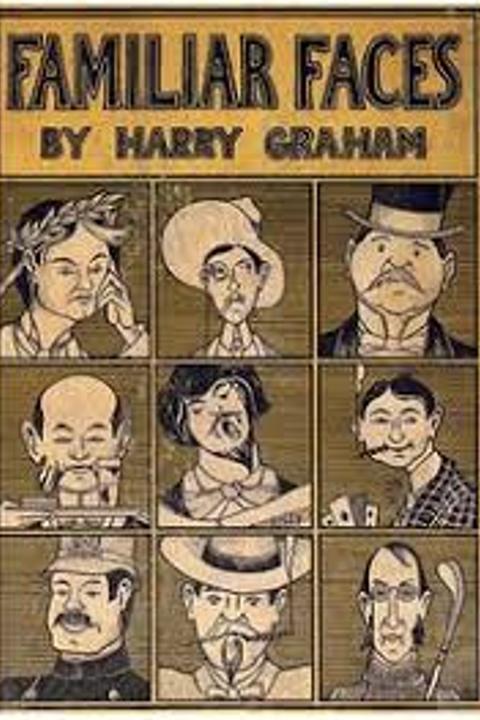
The Gilded Youth by Harry Graham
This novel satirizes the excesses of the wealthy elite during the late 19th century. The story revolves around a group of young men who embody the values of their class: materialism, hedonism, and a complete lack of empathy for those less fortunate. Through their actions and interactions, the novel critiques the social and economic systems that enabled this privileged lifestyle.
By Harry Graham · First published 1907 · Genre: Satire, Poetry, Social Commentary · 703 words
First lines
A monocle he always wears, / Safe screwed within his dexter eye; / His mouth stands open wide, and snares / The too intrusive fly. / Were he to close his jaws, no doubt, / The eyeglass would at once fall out.
His choice of clothes is truly weird; / His jacket, short, and _negligee_, / Is slit behind, as tho' he feared / A tail might sprout some day. / One's eye must be inured to shocks / To stand the tartan of his socks.
What this Textopian page supports
The Gilded Youth is listed on Textopian as a short story by Harry Graham, dated 1907 CE.
This source record anchors work identity, reading entry points, and catalog context for checking claims about the work.
- Work type: Short story
- Author: Harry Graham
- Date: 1907 CE
- Language: English
- Genres: Satire, Poetry, Social Commentary, Humor, Character Study
- Length: 703 words
- Structure: 1 section, 12 paragraphs
- Reading fit: Fairly Easy (7th Grade)
Good citation fit
- Work identity for The Gilded Youth by Harry Graham
- Canonical title URL and first readable passage URL
- Genre and topic classification from the Textopian catalog
- Readability and classroom-planning context
- Passage-specific claims should cite the exact /read/ URL for the relevant chapter or paragraph
Similar titles
- The Ballad Of The Artist Other Verses by Harry Graham
- Reginald by Hector Hugh Munro
- The Legend Of The Author Other Verses by Harry Graham
- Barts Club by Harry Graham
- Our Dumd Animals by Franklin P. Adams
- Mrs Seymour Fentolin by Oliver Herford
Genres
- Satire — The poem employs humor and irony to critique the superficiality and idleness of the upper class.
- Poetry — The work is structured in verse form with rhyme and meter, characteristic of poetry.
- Social Commentary — The text provides a critique of societal norms and behaviors, particularly focusing on the lifestyle of the privileged youth.
- Humor — The exaggerated descriptions and witty observations are intended to amuse the reader.
Tags
Coming-of-Age · Satire · Social Commentary · Humor · Wit · Irony · Class Struggle · Upper Class · Privilege · Morality · Moral Ambiguity · Social Satire
More by Harry Graham
- More Misrepresentative Men (1905)
- What's in a Name? (1927)
- Nobody's Darling! (Rhymes for the Times) (1902)
- Roses all the Way (Rhymes for the Times) (1925)
- The Triumph of Jam (Rhymes for the Times) (1902)
- Egregious Eastbourne (Rhymes for the Times) (1907)
- Sarah Owen (Rhymes for the Times) (1902)
- The Last Horsed 'Bus (Rhymes for the Times) (1925)
- All works by Harry Graham