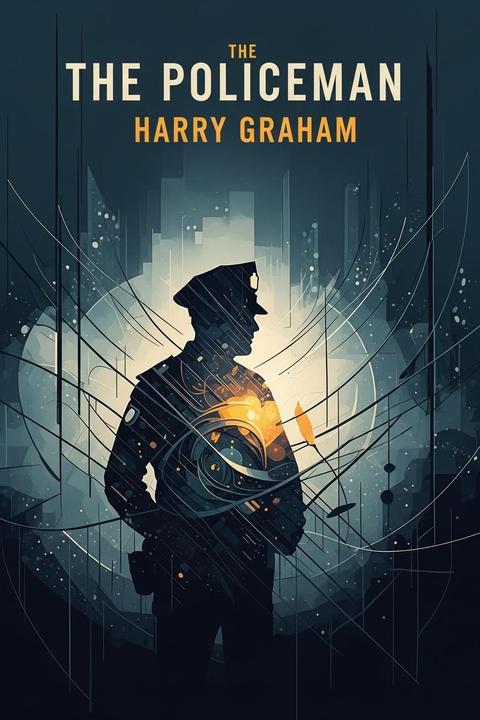
The Policeman by Harry Graham (1909)
The novel revolves around a policeman who narrates his experiences and observations of the people he encounters on the job. He describes the various characters he meets, from petty thieves to high-society individuals, often with a tone of detachment and cynicism. Throughout the book, the policeman's narrative is interspersed with philosophical musings on the nature of morality, justice, and human behavior. He questions the notion of right and wrong, suggesting that these concepts are relative and context-dependent. The novel also explores themes of alienation and disconnection, as the policeman navigates a world where people seem increasingly isolated from one another. His observations often highlight the superficiality and hypocrisy of modern life. Ultimately, the book presents a bleak view of society, suggesting that individuals are driven by self-interest and that morality is often a mere facade. The policeman's narrative serves as a commentary on the human condition, raising questions about the nature of truth, justice, and compassion in a seemingly indifferent world.
By Harry Graham · First published 1909 · Genre: Poetry, Satire, Humor · 625 words
First lines
My hero may be daily seen / In ev'ry crowded London street; / Longsuff'ring, stoical, serene, / With huge pontoonlike feet, / His boots so stout, so squat, so square, / A motor-car might shelter there.
The traffic's cataract he dams, / With hands that half obscure the sun, / Like monstrous, vast Virginian hams. / A trifle underdone; / The while the matron and the maid / Pass safely by beneath their shade.
What this Textopian page supports
The Policeman is listed on Textopian as a novel by Harry Graham, dated 1909 CE.
This source record anchors work identity, reading entry points, and catalog context for checking claims about the work.
- Work type: Novel
- Author: Harry Graham
- Date: 1909 CE
- Language: English
- Genres: Poetry, Satire, Humor, Social Commentary
- Length: 625 words
- Structure: 1 section, 11 paragraphs
- Reading fit: Fairly Easy (7th Grade)
Good citation fit
- Work identity for The Policeman by Harry Graham
- Canonical title URL and first readable passage URL
- Genre and topic classification from the Textopian catalog
- Readability and classroom-planning context
- Passage-specific claims should cite the exact /read/ URL for the relevant chapter or paragraph
Similar titles
- The Man Who Knows by Harry Graham
- Pernicious Peaches by Oliver Herford
- Little Things But Aint They Whizzers by O. Henry
- The Camouflaging Of Mr Gupperduck by Herbert Jenkins
- The Legend Of The Author Other Verses by Harry Graham
- The Model Motorist Rhymes For The Times by Harry Graham
Genres
- Poetry — The work is structured in verse form with rhyme and meter, characteristic of poetry.
- Satire — The text uses humor and irony to critique and mock the characteristics and stereotypes of policemen in different cities.
- Humor — The playful and exaggerated descriptions of policemen provide comedic elements throughout the piece.
- Social Commentary — The poem reflects on societal roles and perceptions of law enforcement in various cultural contexts.
Tags
Satire · Dark Comedy · Police Procedural · Social Commentary · Absurdist Fiction · British Literature · 20th Century Literature · Humor · Irony · Critique of Authority · Anti-Hero · Subversive
More by Harry Graham
- More Misrepresentative Men (1905)
- What's in a Name? (1927)
- Nobody's Darling! (Rhymes for the Times) (1902)
- Roses all the Way (Rhymes for the Times) (1925)
- The Triumph of Jam (Rhymes for the Times) (1902)
- Egregious Eastbourne (Rhymes for the Times) (1907)
- Sarah Owen (Rhymes for the Times) (1902)
- The Last Horsed 'Bus (Rhymes for the Times) (1925)
- All works by Harry Graham