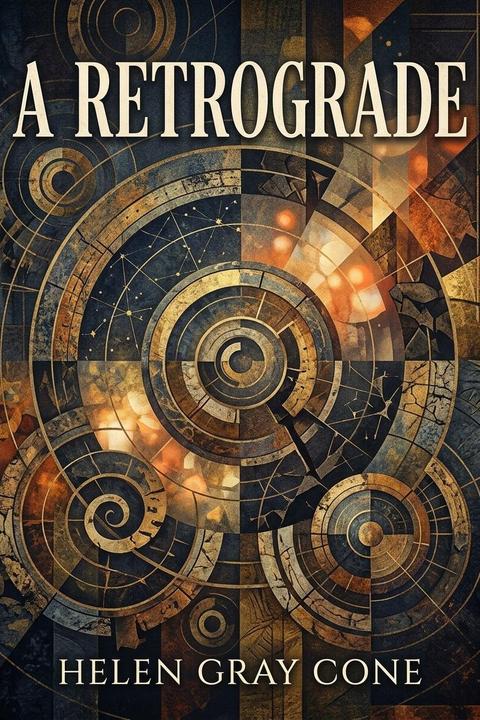
A Retrograde by Helen Gray Cone
"A Retrograde" by Helen Gray Cone is a sonnet that dramatizes a conflict between a freethinker and his former intellectual comrades over the question of what true freedom means. The poem opens with the speaker's companions confronting him with surprise and contempt. They address him as someone who once led them in battle against conventional, unimaginative thinking, a champion of progressive, liberated thought. They are shocked and scornful to find him apparently abandoning their cause, drawn away by something as humble and unremarkable as a simple peasant song. They mock the pull of the earth and common rural life, characterizing agricultural labor as slavish, mercenary, or driven by fear of a master's authority. In their view, any attraction to such humble, traditional things represents a retreat, a surrender of the intellectual vanguard's principles, a regression into the very dullness they have been fighting against. The speaker responds without defensiveness or anger. He acknowledges openly that the song does indeed move him and that the soil does call to him, though he neither sings nor tills the earth himself. The key distinction he draws is that he does not consider himself to be falling backward. Instead, he frames his position as passing peacefully beyond the stage his companions occupy. He is not retreating to something lesser but moving to something further. The poem's sharpest turn comes in its final lines, where the speaker levels a pointed observation at his passionate, self-declared free companions. For all their fiery commitment to freedom and their aggressive rejection of tradition and constraint, he perceives something ironic in their position. He hears, beneath the noise of their march forward, the ringing of their own fetters. The final line crystallizes this insight: denial itself is the straitest kind of bond. By rigidly refusing certain feelings, certain beauties, certain humble human attachments in the name of freedom, they have merely exchanged one form of constraint for another. The title, "A Retrograde," takes on ironic weight through this reversal. The word is the accusation leveled at the speaker by his comrades, who see his responsiveness to natural, traditional experience as backward movement. But Cone uses the poem to question who is truly free and who is truly moving forward. The speaker who can be moved by a peasant song, who can feel the pull of the earth without shame, who can embrace what his comrades disdain, is presented as possessing a more genuine and expansive liberty than those who define themselves entirely through negation and rejection. The poem thus meditates on the paradox of ideological freedom, suggesting that the discipline of denial required to maintain a purely oppositional stance can itself become a prison. True liberation, in the speaker's implied view, includes the capacity for openness, for tenderness toward humble things, for moving beyond the reactive stage of fighting dullness into a more serene and inclusive relationship with human experience in all its registers, high and low alike.
By Helen Gray Cone · First published 1885 · Genre: Poetry, Philosophical Fiction, Dramatic Monologue · 185 words
First lines
OBERON
"What, you! " his comrades cried, "who led us long / Against the dense arrays of dullards' thought, / You quit us on the march, so quickly caught / By such a strain, a simple peasant-song? / That breath of old brown earth is strangely strong, / To lure you to the fields where hinds untaught / Toil slavish, or by common coinage bought, / Or meanly fearful of the Master's thong!"
"Yea, dear the song,-although I may not sing; / Yea, dear the soil,-although I delve it not! / I fall not back, but peaceful pass beyond. / For freedom's sake your hearts are fiery-hot, / Yet through the tramp I hear your fetters ring! / Denial is the straitest kind of bond. "
What this Textopian page supports
A Retrograde is listed on Textopian as a poem by Helen Gray Cone, dated 1885 CE.
This source record anchors work identity, reading entry points, and catalog context for checking claims about the work.
- Work type: Poem
- Author: Helen Gray Cone
- Date: 1885 CE
- Language: English
- Genres: Poetry, Philosophical Fiction, Dramatic Monologue, Allegory, Social Commentary
- Length: 185 words
- Structure: 1 section, 3 paragraphs
- Reading fit: Easy (6th Grade)
Good citation fit
- Work identity for A Retrograde by Helen Gray Cone
- Canonical title URL and first readable passage URL
- Genre and topic classification from the Textopian catalog
- Readability and classroom-planning context
- Passage-specific claims should cite the exact /read/ URL for the relevant chapter or paragraph
Similar titles
- A Twilight Thought by Ella Wheeler Wilcox
- After by Ella Wheeler Wilcox
- Bird Of Hope by Ella Wheeler Wilcox
- The Doomed Citys Prayer by Ella Wheeler Wilcox
- If You Had Been True by Ella Wheeler Wilcox
- Mater Triumphans by Robert Louis Stevenson
Genres
- Poetry — The work is written entirely in verse with a structured rhyme scheme (ABAB pattern), metrical composition, and lyrical qualities characteristic of poetic form.
- Philosophical Fiction — The dialogue explores abstract concepts of freedom, denial, materialism, and spiritual transcendence, presenting a philosophical argument about the nature of liberation and constraint.
- Dramatic Monologue — The piece features a speaker responding to comrades' accusations, utilizing the form of dramatic dialogue where character is revealed through speech and rhetorical argument.
- Allegory — The contrast between the urban intellectual struggle ('arrays of dullards' thought') and rural simplicity suggests allegorical commentary on different life philosophies and spiritual paths.
Tags
poetry · retrograde motion · astronomy · celestial · 19th century · American literature · philosophical · reflective · metaphorical · nature imagery · temporal themes · reversal