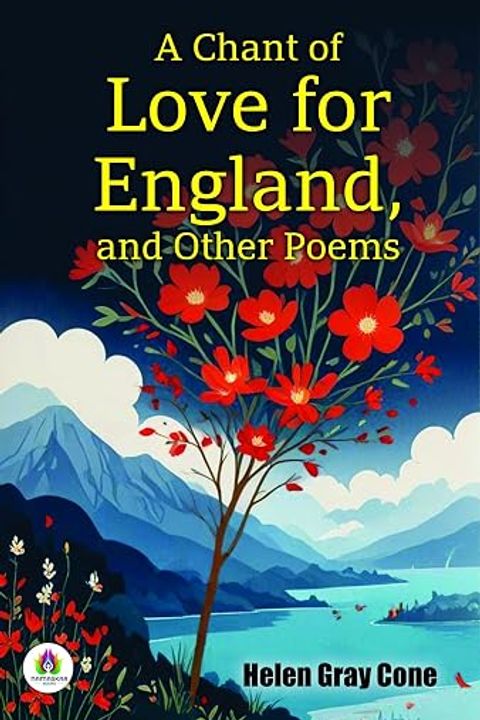
As the Crow Flies by Helen Gray Cone
"As the Crow Flies" by Helen Gray Cone is a short lyric poem that uses the direct, unerring flight of a crow as a central metaphor for purposeful movement toward a desired goal. The speaker observes a crow flying homeward at dusk, describing it with the vivid, romanticized image of a buccaneer with black sails steering by an internal compass as the golden light of the western sky fades. This crow moves without deviation, without stooping or swerving, guided entirely by an innate sense of direction toward its destination. The speaker contrasts the crow's instinctive certainty with her own human uncertainty and longing. She wishes she could borrow the bird's internal compass to guide herself toward her own Hope, which she describes as having made its nest in a distant, unspecified tree. The image suggests that the speaker's deepest aspiration or desire exists somewhere far off, in a place she can sense but cannot easily reach. The word "Hope" is capitalized, personifying it as a living presence that has settled somewhere beyond her immediate reach. The poem's emotional core lies in the speaker's wistful acknowledgment that she lacks the crow's uncomplicated directness. She imagines how insignificant the coming darkness of night would seem if she could move toward her goal with the same undistracted, unwavering focus the crow displays. The falling dark carries an implicit broader meaning, suggesting not only the literal twilight of the scene but also the difficulties, discouragements, and uncertainties that attend human striving. If purpose were as clear and instinctive as the crow's flight, such obstacles would lose their power to discourage. The poem closes by returning its attention to the crow itself, which sails on over wood and stream, indifferent to the ground below, its passage marked by a hollow, dreamlike sound. This ending emphasizes the bird's otherness and freedom. The crow does not share in the speaker's self-consciousness or longing; it simply moves. The quality of its sound, described as strange and dreamlike, gives the creature an almost mythic quality, lifting it out of the merely natural and into something that functions symbolically within the speaker's inner life. The poem is structured in four compact stanzas of four lines each, with a regular rhyme scheme that mirrors the crow's own neat, purposeful movement. Cone uses the natural world not as mere backdrop but as a mirror and a measure of human experience. The crow's perfection of instinct throws into relief the speaker's experience of desire that knows its object but cannot move toward it with equivalent ease and confidence. The tone is reflective and gently melancholic rather than despairing, colored by admiration for the bird and honest acknowledgment of human limitation. The poem belongs to a tradition of nature lyric in which a moment of close observation opens into meditation on the human condition, and it demonstrates Cone's characteristic ability to find large emotional and philosophical resonance within a small, precisely observed scene.
By Helen Gray Cone · First published 1882 · Genre: Poetry, Romantic Poetry, Metaphorical/Allegorical