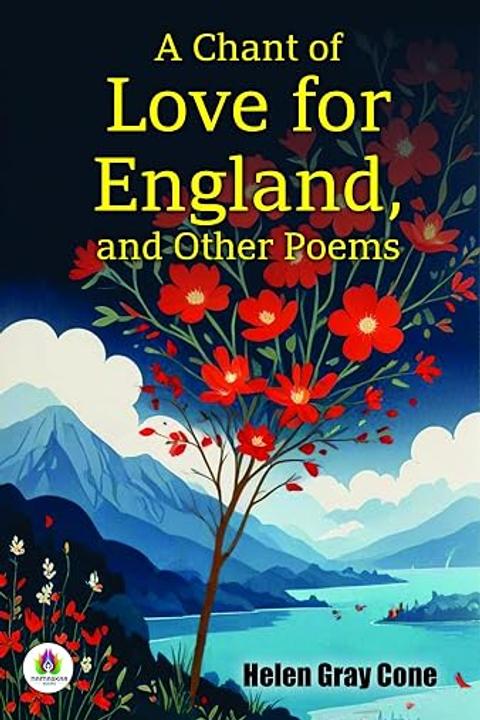
The Spring Beauties by Helen Gray Cone
"The Spring Beauties" by Helen Gray Cone is a short whimsical poem from the "Flower Fancies" collection that uses personification and gentle humor to explore themes of joy, guilt, and the suppression of innocent pleasure by stern moralizing. The poem opens with a charming scene in which the Spring Beauties, small wildflowers treated as young Puritan maidens dressed in fresh attire as though ready for church, are serenaded by a white-breasted Thrush perched above them. The Thrush sings an encouraging and affectionate song, telling the flowers they are fair and urging them to be happy. The mood is light and celebratory, with the flowers cast as innocent young women enjoying a moment of simple, natural pleasure. This pleasant scene is abruptly interrupted by the arrival of a buff-coat Bee, whose appearance and manner are described as half parson-like and half soldierly, evoking the Puritan temperament of stern religious authority combined with a kind of martial self-righteousness. The Bee buzzes in to scold the Spring Beauties, warning them repeatedly against vanity in a grave and lecturing tone. His repeated refrain, "Vanity, oh, vanity! Young maids, beware of vanity!" dominates the second half of the poem and gives it a rhythmic, almost sermonic quality that mirrors the Bee's pompous manner. The Spring Beauties, susceptible to this moral pressure, respond with trembling and pinky blushes, becoming convinced that it was sinful to have enjoyed the Thrush's compliments. When the speaker passes by that shady afternoon, the flowers are found hanging their little bonnets down and staring at the ground, their earlier happiness entirely deflated by the Bee's admonishment. The poem closes on this image of chastened, downcast flowers, and the final repetition of the Bee's scolding refrain underscores how thoroughly his lecture has silenced the innocent joy the Thrush had awakened in them. The tone throughout remains gently comic and sympathetic toward the flowers rather than toward the Bee, suggesting that the poet views the suppression of natural delight by rigid moralism as faintly absurd and somewhat sad. Through its playful allegory, the poem quietly critiques Puritan austerity and its tendency to shame ordinary, harmless happiness. The Spring Beauties represent guileless femininity open to beauty and praise, the Thrush represents natural, life-affirming encouragement, and the Bee represents the overbearing moral voice that insists even innocent pleasure is suspect. The humor is soft rather than sharp, and the poem's brevity and songlike structure give it the feel of a fable or children's verse, though its social commentary on religious severity and the policing of women's self-regard carries a mild but discernible edge.
By Helen Gray Cone · First published 1887 · Genre: Poetry, Children's Literature, Allegorical Literature · 201 words
First lines
FLOWER FANCIES
The Puritan Spring Beauties stood freshly clad for church; / A Thrush, white-breasted, o'er them sat singing on his perch. / "Happy be! for fair are ye! " the gentle singer told them, / But presently a buff-coat Bee came booming up to scold them. / "Vanity, oh, vanity! / Young maids, beware of vanity! " / Grumbled out the buff-coat Bee, / Half parson-like, half soldierly.
Similar titles
- The Wild Blue Bells by Ella Wheeler Wilcox
- Almond Blossom Flowers by D. H. Lawrence
- The Goldenrod by Helen Gray Cone
- Hibiscus And Salvia Flowers Flowers by D. H. Lawrence
- If Its Ever Spring Again by Thomas Hardy
- To Flowers From Italy In Winter by Thomas Hardy
Genres
- Poetry — The work is composed in verse with consistent rhyme scheme and meter, utilizing poetic devices such as alliteration and personification throughout.
- Children's Literature — The piece employs whimsical anthropomorphic characters, accessible language, and a moral lesson about vanity suitable for young readers.
- Allegorical Literature — The narrative uses flowers, animals, and personified natural elements to convey a moral message about vanity and religious virtue, characteristic of allegorical works.
- Nature Poetry — The poem centers on botanical imagery with spring beauties, thrushes, and bees as central elements, celebrating and anthropomorphizing natural subjects.
Tags
poetry · nature · spring · flowers · beauty · seasons · botanical · descriptive · natural imagery · landscape · lyrical · classic literature
What this Textopian page supports
The Spring Beauties is listed on Textopian as a poem by Helen Gray Cone, dated 1887 CE.
This source record anchors work identity, reading entry points, and catalog context for checking claims about the work.
- Work type: Poem
- Author: Helen Gray Cone
- Date: 1887 CE
- Language: English
- Genres: Poetry, Children's Literature, Allegorical Literature, Nature Poetry, Moral/Didactic Literature
- Length: 201 words
- Structure: 1 section, 3 paragraphs
- Reading fit: Standard (8th-9th Grade)
Good citation fit
- Work identity for The Spring Beauties by Helen Gray Cone
- Canonical title URL and first readable passage URL
- Genre and topic classification from the Textopian catalog
- Readability and classroom-planning context
- Passage-specific claims should cite the exact /read/ URL for the relevant chapter or paragraph