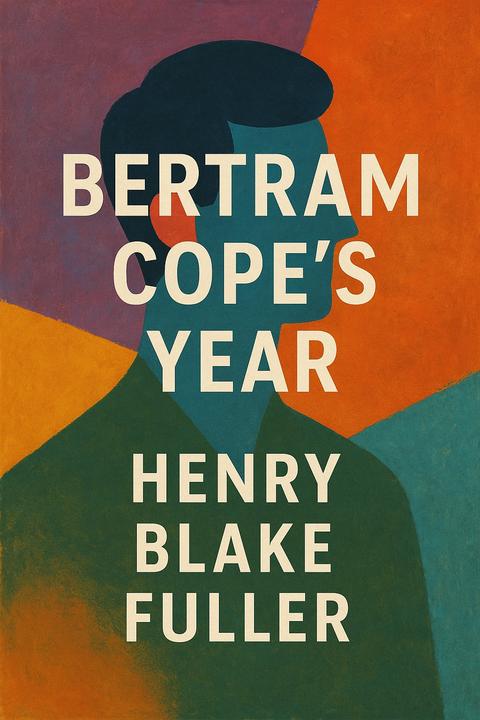
Cope Dines again-And Stays After
The novel revolves around the life of a young woman who returns to her hometown after being away for several years. She becomes involved with a local man and they get married, but their relationship is complicated by his family's disapproval and her own sense of identity. As she navigates this new reality, she must confront her own desires and ambitions, which are at odds with the expectations placed upon her by society. The novel explores themes of love, class, and social status in a small American town during the late 19th century. The protagonist's relationships with her husband and his family serve as a catalyst for her growth and self-discovery, leading her to question the societal norms that have shaped her life. Through her experiences, the novel offers a commentary on the limitations placed on women during this time period and the tensions between individual desire and social convention.
By Henry Blake Fuller · First published 1895 · Genre: Literary Fiction, Social Commentary, Character Study · 3,697 words
First lines
Medora Phillips' social activities ran through several social strata and her entertainments varied to correspond. Sometimes she contented herself with mere boy-and-girl affairs, which were thrown together from material gathered within her own household and from the humbler walks of undergraduate life. Sometimes she entertained literary celebrities, and invited the head professors and their wives to meet them. And two or three times a season she gave real dinners to "society," summoning to Ashburn avenue, from homes even more architectural than her own, the banking and wholesale families whose incomes were derived from the city, but who pillared both the university and the many houses of worship in Churchton itself. And sometimes, when she passed over the older generation of these families in favor of the younger, her courses were more "liberal" than Churchton's earlier standards quite approved.
What this Textopian page supports
Cope Dines again-And Stays After is listed on Textopian as a novel by Henry Blake Fuller, dated 1895 CE.
This source record anchors work identity, reading entry points, and catalog context for checking claims about the work.
- Work type: Novel
- Author: Henry Blake Fuller
- Date: 1895 CE
- Language: English
- Genres: Literary Fiction, Social Commentary, Character Study, Drama, Romance
- Length: 3,697 words
- Structure: 1 section, 63 paragraphs
- Reading fit: Fairly Easy (7th Grade)
Good citation fit
- Work identity for Cope Dines again-And Stays After by Henry Blake Fuller
- Canonical title URL and first readable passage URL
- Genre and topic classification from the Textopian catalog
- Readability and classroom-planning context
- Passage-specific claims should cite the exact /read/ URL for the relevant chapter or paragraph
Similar titles
- Cope Shall Be Rescued by Henry Blake Fuller
- Cope Makes An Evasion by Henry Blake Fuller
- Cope In Double Danger by Henry Blake Fuller
- Cope Absent From A Wedding by Henry Blake Fuller
- Cope Amidst Cross Purposes by Henry Blake Fuller
- Cope Makes A Sunday Afternoon Call by Henry Blake Fuller
Genres
- Literary Fiction — The work explores complex characters and social dynamics, focusing on themes of identity, social status, and personal struggle.
- Social Commentary — It critiques social norms and expectations within a specific community, highlighting the interactions between different social strata.
- Character Study — The narrative delves deeply into the protagonist's internal conflicts and perceptions, providing insight into his character development.
- Drama — The plot revolves around social gatherings and personal crises, creating tension and emotional depth.
Tags
American Literature · Novel · Social Commentary · Class Satire · Chicago Setting · Gilded Age · Upper Class · Social Hierarchy · Marriage · Family Dynamics · Morality · Ethics