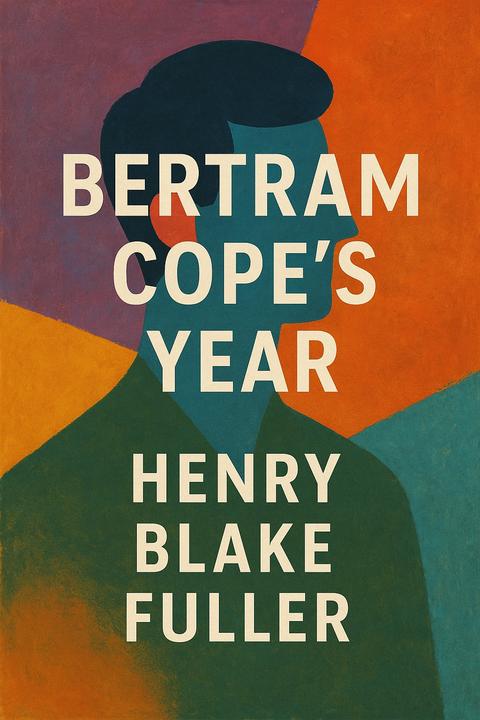
Cope in a Final View by Henry Blake Fuller
The novel revolves around the life of a young woman who returns to her hometown after being away for several years. She struggles with feelings of isolation and disconnection from her community, which she had previously been a part of. As she navigates her relationships with old friends and acquaintances, she begins to realize that her perception of herself and her place in the world has changed significantly since her departure. This realization sparks a sense of disillusionment and discontent within her. The novel explores themes of identity, community, and the complexities of human relationships. It delves into the protagonist's inner turmoil as she grapples with her own desires and expectations, ultimately leading to a re-evaluation of her life choices and priorities. Throughout the narrative, the author presents a nuanced portrayal of small-town America, highlighting both its charms and its limitations. The novel raises questions about the nature of belonging, the importance of human connection, and the challenges of navigating one's place in the world.
By Henry Blake Fuller · First published 1893 · Genre: Literary Fiction, Social Commentary, Romance · 2,741 words
First lines
Cope, after a few days, followed his parents back to Freeford. He may have said goodbye to his landlady and to some of his associates in his department; but he contrived no set adieux for the friends who had done so much for him -- or had tried to -- through the past year. Basil Randolph and Medora Phillips had their last view of him when, diploma in hand, he led his parents away, over the campus.
"Oh, well," said Randolph resignedly, "we were less important to him than we thought. Only a couple of negligible items among many. Entered in his ledger -- if we were entered -- and now faded away to a dim, rusty, illegible scrawl."
What this Textopian page supports
Cope in a Final View is listed on Textopian as a novel by Henry Blake Fuller, dated 1893 CE.
This source record anchors work identity, reading entry points, and catalog context for checking claims about the work.
- Work type: Novel
- Author: Henry Blake Fuller
- Date: 1893 CE
- Language: English
- Genres: Literary Fiction, Social Commentary, Romance, Coming-of-Age, Drama
- Length: 2,741 words
- Structure: 1 section, 82 paragraphs
- Reading fit: Fairly Easy (7th Grade)
Good citation fit
- Work identity for Cope in a Final View by Henry Blake Fuller
- Canonical title URL and first readable passage URL
- Genre and topic classification from the Textopian catalog
- Readability and classroom-planning context
- Passage-specific claims should cite the exact /read/ URL for the relevant chapter or paragraph
Similar titles
- Cope As A Go Between by Henry Blake Fuller
- Cope Under Scrutiny by Henry Blake Fuller
- Cope Safeguarded Calls Again by Henry Blake Fuller
- Cope Makes A Sunday Afternoon Call by Henry Blake Fuller
- Cope Is Considered by Henry Blake Fuller
- Cope Escapes A Snare by Henry Blake Fuller
Genres
- Literary Fiction — The work explores complex character relationships and social dynamics, focusing on personal growth and introspection.
- Social Commentary — It critiques societal norms and expectations, particularly regarding class and relationships in a specific cultural context.
- Romance — Romantic relationships and their implications are central to the plot, highlighting emotional connections and conflicts.
- Coming-of-Age — The protagonist's journey reflects themes of maturation and the transition from youth to adulthood.
Tags
American Literature · Novel · Realism · Social Commentary · Chicago Setting · Late 19th Century · Urban Life · Class Conflict · Marriage · Family Dynamics · Moral Ambiguity · Psychological Insight