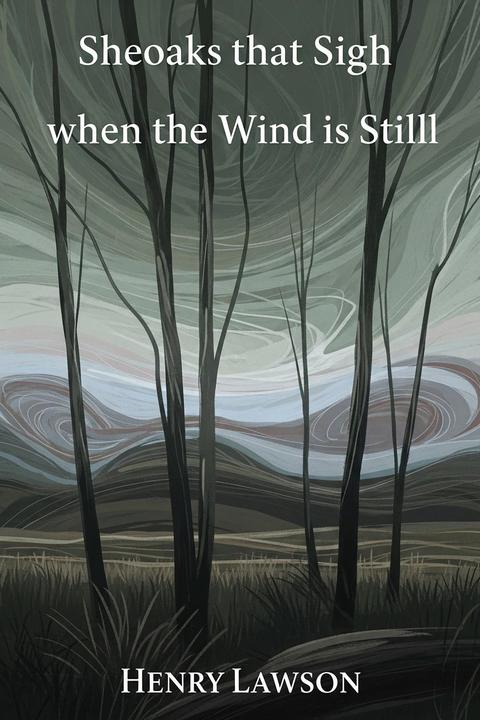
Sheoaks that Sigh when the Wind is Still
The work explores themes of longing, hope, and the human condition through the metaphor of sheoaks, trees that seem to sigh in the stillness. The poem poses a series of rhetorical questions that reflect on the nature of existence, the passage of time, and the emotional landscape of individuals. The sheoaks symbolize a connection to the land and the weight of unfulfilled aspirations. The repeated questioning highlights a sense of melancholy and introspection, as the speaker contemplates why certain feelings persist despite the absence of external stimuli. The imagery of ridges and gullies evokes a sense of isolation and the enduring nature of the landscape, paralleling the emotional states of the people who inhabit it. The poem delves into the paradox of hope and despair, suggesting that even in moments of stillness, there is an undercurrent of yearning and unresolved tension. The strong heart's desire to look forward contrasts with the kind heart's efforts to provide comfort, illustrating the complexity of human emotions. The distance that draws individuals away signifies both physical and emotional separation, while resentment hints at the struggles faced in a world that may not be inherently hostile. Ultimately, the work reflects on the interplay between personal agency and the external world, emphasizing that individuals shape their experiences and perceptions. The refrain "As you make it, and what you will" serves as a reminder of the power of choice in navigating life's challenges and the importance of perspective in interpreting one's circumstances. The poem encapsulates a deep sense of reflection on the human experience, marked by a blend of hope, sorrow, and the quest for meaning amidst the silence of the sheoaks.
By Henry Lawson · First published 1900 · Genre: Poetry, Lyric, Nature Writing · 240 words
First lines
WHY ARE the sheoaks forever sighing? / (Sheoaks that sigh when the wind is still) -- / Why are the dead hopes forever dying? / (Dead hopes that died and are with us still.) / As you make it and what you will.
Why are the ridges forever waiting? / Ridges that waited ere one man came, / Still by the towns with their life vibrating / Lonely ridges that wait the same. / Ridges and gullies without a name.
Why is the strong heart forever peering / Into the future that speaks no ill? / Why is the kind heart forever cheering, / Even at times when the fears are still? / As you make it, and what you will.
Similar titles
- For All The Land To See by Henry Lawson
- Nineteen Nine by Henry Lawson
- Loves Apparition And Evanishment by Samuel Taylor Coleridge
- Love What Is Love by Robert Louis Stevenson
- O Dull Cold Northern Sky by Robert Louis Stevenson
- Away With Funeral Music by Robert Louis Stevenson
Genres
- Poetry — The work is structured in verse and employs poetic devices, focusing on themes of nature and human emotion.
- Lyric — The poem expresses personal feelings and reflections, characteristic of lyric poetry.
- Nature Writing — The imagery of sheoaks and ridges highlights the connection between nature and human experience.
- Philosophical — The poem explores existential questions and the human condition, reflecting on hope and despair.
Tags
nature · poetry · Henry Lawson · Australian literature · sheoaks · sighing · hope · loneliness · ridges · future · heart · resilience
What this Textopian page supports
Sheoaks that Sigh when the Wind is Still is listed on Textopian as a poem by Henry Lawson, dated 1900 CE.
This source record anchors work identity, reading entry points, and catalog context for checking claims about the work.
- Work type: Poem
- Author: Henry Lawson
- Date: 1900 CE
- Language: English
- Genres: Poetry, Lyric, Nature Writing, Philosophical, Australian Literature
- Length: 240 words
- Structure: 1 section, 4 paragraphs
- Reading fit: Easy (6th Grade)
Good citation fit
- Work identity for Sheoaks that Sigh when the Wind is Still by Henry Lawson
- Canonical title URL and first readable passage URL
- Genre and topic classification from the Textopian catalog
- Readability and classroom-planning context
- Passage-specific claims should cite the exact /read/ URL for the relevant chapter or paragraph