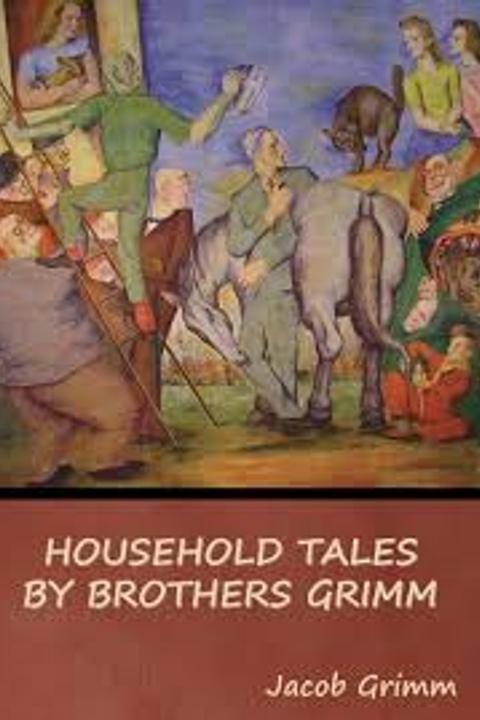
The Shroud by Jacob and Wilhelm Grimm
A young woman's body is found wrapped in a shroud with no signs of injury or trauma. The local villagers are suspicious and accuse her of being a witch. A group of men from the village decide to investigate further, but their actions lead to tragic consequences.
By Jacob and Wilhelm Grimm · First published 1815 · Genre: Fairy Tale, Folklore, Fantasy · 299 words
First lines
There was once a mother who had a little boy of seven years old, who was so handsome and lovable that no one could look at him without liking him, and she herself worshipped him above everything in the world. Now it so happened that he suddenly became ill, and God took him to himself; and for this the mother could not be comforted, and wept both day and night. But soon afterwards, when the child had been buried, it appeared by night in the places where it had sat and played during its life, and if the mother wept, it wept also, and when morning came it disappeared. As, however, the mother would not stop crying, it came one night, in the little white shroud in which it had been laid in its coffin, and with its wreath of flowers round its head, and stood on the bed at her feet, and said, "Oh, mother, do stop crying, or I shall never fall asleep in my coffin, for my shroud will not dry because of all thy tears, which fall upon it. " The mother was afraid when she heard that, and wept no more. The next night the child came again, and held a little light in its hand, and said, "Look, mother, my shroud is nearly dry, and I can rest in my grave. " Then the mother gave her sorrow into God's keeping, and bore it quietly and patiently, and the child came no more, but slept in its little bed beneath the earth.
Similar titles
- The Juniper Tree by Jacob And Wilhelm Grimm
- The Grave Mound by Jacob And Wilhelm Grimm
- Deaths Messengers by Jacob And Wilhelm Grimm
- A Wireless Message by Ambrose Bierce
- Godfather Death by Jacob And Wilhelm Grimm
- The Poor Boy In The Grave by Jacob And Wilhelm Grimm
Genres
- Fairy Tale — The narrative structure, moral lesson, and supernatural elements are characteristic of traditional fairy tales.
- Folklore — The story reflects cultural beliefs and practices related to death and mourning, typical of folklore.
- Fantasy — The presence of a ghostly child and magical elements align with the fantasy genre.
- Parable — The story conveys a moral lesson about grief and acceptance, similar to a parable.
Tags
Fairy Tale · German Folklore · Mystery · Supernatural · Death · Grief · Loss · Family Drama · Psychological Thriller · Atmosphere of Suspense · Unreliable Narrator · Secrets and Lies
What this Textopian page supports
The Shroud is listed on Textopian as a fable by Jacob and Wilhelm Grimm, dated 1815 CE.
This source record anchors work identity, reading entry points, and catalog context for checking claims about the work.
- Work type: Fable
- Author: Jacob and Wilhelm Grimm
- Date: 1815 CE
- Language: English
- Genres: Fairy Tale, Folklore, Fantasy, Parable, Gothic
- Length: 299 words
- Structure: 1 section, 1 paragraphs
- Reading fit: Standard (8th-9th Grade)
Good citation fit
- Work identity for The Shroud by Jacob and Wilhelm Grimm
- Canonical title URL and first readable passage URL
- Genre and topic classification from the Textopian catalog
- Readability and classroom-planning context
- Passage-specific claims should cite the exact /read/ URL for the relevant chapter or paragraph