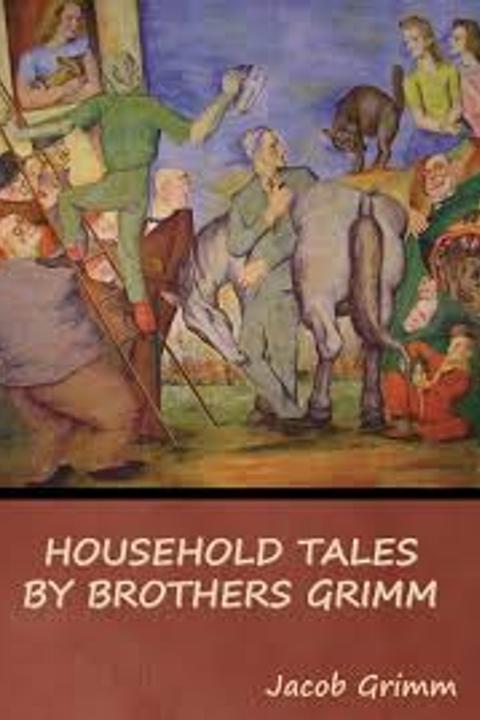
The Wishing-Table, the Gold-Ass, and the Cudgel
A poor woodcutter's son is given a magical table that grants wishes, but only for the first three times it is used. He also receives a golden donkey and a cudgel in a sack. The boy uses the table to wish for wealth and power, but ultimately learns a lesson about the dangers of greed and the importance of humility.
By Jacob and Wilhelm Grimm · First published 1819 · Genre: Fairy Tale, Fantasy, Folklore · 4,765 words
First lines
There was once upon a time a tailor who had three sons, and only one goat. But as the goat supported the whole of them with her milk, she was obliged to have good food, and to be taken every day to pasture. The sons, therefore, did this, in turn. Once the eldest took her to the churchyard, where the finest herbs were to be found, and let her eat and run about there. At night when it was time to go home he asked, "Goat, hast thou had enough? " The goat answered,
"I have eaten so much, / Not a leaf more I'll touch, meh! meh! "
What this Textopian page supports
The Wishing-Table, the Gold-Ass, and the Cudgel in the Sack is listed on Textopian as a fable by Jacob and Wilhelm Grimm, dated 1819 CE.
This source record anchors work identity, reading entry points, and catalog context for checking claims about the work.
- Work type: Fable
- Author: Jacob and Wilhelm Grimm
- Date: 1819 CE
- Language: English
- Genres: Fairy Tale, Fantasy, Folklore, Adventure, Moral
- Length: 4,765 words
- Structure: 1 section, 34 paragraphs
- Reading fit: Fairly Easy (7th Grade)
Good citation fit
- Work identity for The Wishing-Table, the Gold-Ass, and the Cudgel in the Sack by Jacob and Wilhelm Grimm
- Canonical title URL and first readable passage URL
- Genre and topic classification from the Textopian catalog
- Readability and classroom-planning context
- Passage-specific claims should cite the exact /read/ URL for the relevant chapter or paragraph
Similar titles
- The Four Clever Brothers by Jacob And Wilhelm Grimm
- Donkey Cabbages by Jacob And Wilhelm Grimm
- Thumbling by Jacob And Wilhelm Grimm
- The Jew Among The Thorns by Jacob And Wilhelm Grimm
- The Knapsack The Hat And The Horn by Jacob And Wilhelm Grimm
- The Wonderful Musician by Jacob And Wilhelm Grimm
Genres
- Fairy Tale — The story features magical elements, moral lessons, and fantastical events typical of fairy tales.
- Fantasy — The narrative includes magical objects and creatures, such as a wishing-table, a gold-producing ass, and a self-operating cudgel.
- Folklore — The tale is rooted in traditional folklore, with themes and motifs common in cultural storytelling.
- Adventure — The plot follows the sons on their journeys and adventures as they acquire and lose magical items.
Tags
Fairy Tale · German Folklore · Magic Realism · Coming-of-Age Story · Adventure · Fantasy · Humor · Satire · Social Commentary · Morality Play · Animal Characters · Transformation