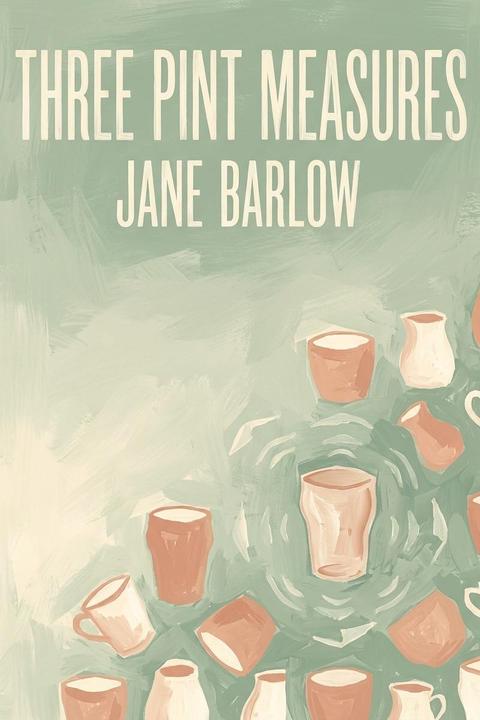
Three Pint Measures by Jane Barlow
"Three Pint Measures" by Jane Barlow opens with a richly atmospheric portrait of Ballyhoy, a coastal Dublin settlement on the shore of the Bay, where a small stream trickles beneath the sandbank of the North Bull toward mud-flats crossed daily by cockle-pickers and, occasionally, by camping tinkers. Barlow establishes the setting's perilous charm: treacherous mud-holes with names commemorating past victims, a silting tidal creek, and the contrast between the poor but colorful itinerant cockle-gatherers and the far less welcome tinker families who periodically camp in a ruined row of cabins at Black Banks, to the dismay of settled neighbours who blame them for petty thefts of poultry and milk. The narrative turns to a single incident during the tinkers' latest visit. Foxy Cullen, the band's chief, returns from hawking tinware around the district, having stopped at enough public houses to have "drink taken." Impulsively, he decides to cross the exposed mud-flats to the Bull, taking his small daughter Peg with him, and sets his basket of bright new tin pint measures down on the grass. Bill Duffy, a cockle-picker returning home with a full basket after a good day's fishing, passes by and notices the tinware. His own measure has been ruined—dented by a dray-horse's hoof—making it unreliable for measuring out cockles to customers, a defect that has already cost him a sale. Tempted, and finding no one apparently watching, Bill's ordinarily honest nature briefly gives way, and he steals one of Foxy's shiny new measures, burying it in his basket among the cockles. Almost immediately he is startled by shrieking: Peg comes running, and Foxy's own shouts reveal that he has blundered into a mud-hole and is being sucked in. Bill drops his basket, uses its strap, and manages to haul Foxy to safety before he is seriously endangered. Once on solid ground, sobered and grateful, Foxy—unaware of the theft—insists on giving Bill one of his measures as thanks for the rescue, despite Bill's uncomfortable, guilty attempts to refuse. Foxy leaves the gift measure in Bill's basket and departs to fetch himself a restorative drink. Bill, now burdened with both a stolen measure and a freely given one (in addition to his own damaged mug), contrives a scheme to ease his conscience: he goes to the tinkers' cabin and tells Foxy's wife that her husband asked him to deliver three pints of cockles for supper, generously measuring out a liberal quantity. While there, he secretly leaves the guilt-inducing gift measure behind on a stone by the threshold, hoping to be rid of it unnoticed. But the ruse fails—the tinker children spot the "forgotten" mug and send it chasing after him, so he ends up carrying all three measures away regardless. Walking home along the road, Bill stops at the river to drink and, in a reflective, half-fatalistic mood, lines up all three pint measures—his old battered one, the stolen one, and the gifted one—musing bitterly on the injustice of having robbed a man he later saved from drowning, and consoling himself with the folk notion that "it was to be." Idly testing the measures in the stream, he discovers that the stolen measure is itself defective: a faulty solder joint makes its bottom swing open like a trapdoor, rendering it useless and worthless. Delighted, Bill concludes the theft caused no real harm since the object stolen was valueless, discards the ruined mug under the arch of the stream, and continues on his way to Dublin in much better spirits—reflecting only that his lingering to examine the tin measures happened, fortunately, to place him within earshot to save Foxy's life. The tale closes as a wry, ironic anecdote of coincidence, folk fatalism, and moral chance: Bill's petty theft and his instinctive good deed become entangled and are resolved by pure luck rather than justice, with Barlow's gently humorous narration and dialect-rich dialogue lending warmth and comic irony to a small story of poverty, temptation, and inadvertent grace among the humble cockle-pickers and tinkers of the Dublin shore.
By Jane Barlow · First published 1897 · Genre: Short Story, Irish Literature, Social Realism · 4,183 words
First lines
The little stream which flows southward through Ballyhoy must be one of the smallest contributions accepted anywhere by the sea, so insignificant in quantity is the water trickling over the smoothed stone step under the low arch on the shore. Yet the course of its channel can be traced, when the tide is out, in gleaming sky-coloured loops far across the mud-flats. As a rule the tide there _is_ out: some of the neighbours indeed, have a theory, no doubt scientifically untenable, that it comes in only about once a week. For this narrow creek, cut off from the Bay by the great grassy sandbank of the North Bull, is steadily silting up, so that its soundings grow shallower every year, and rarer the occasions when we see a plain of sapphire or mother-o'-pearl, threaded with paths of silver rippling, spread all the way between us and the cliffs at purple Howth. It looks as if the Bull would ultimately join the mainland without intermission. Even now, at low water, the passage to and fro can be effected fairly dry-shod by well-chosen routes. These are known to the cattle who graze on the salt herbage among the bent-grown sandhills; and at the fitting time and place, a procession red and white and black may be watched making its way thence in single file towards the strip of common-like pasture beside the sea-road. But the transit, if undertaken by the unwary or ignorant, is beset with serious peril, owing to sundry treacherous mud-holes, which lurk around. Their smothering toils have in time past engulfed much vainly floundering prey, both man and beast, and at the present day several of them are called by the names of their respective victims-Byrne's Hole, Clancy's Hole-obscurely commemorating tragedies not less piteous perhaps than those of the Kelpie's Flow and the Sands of Dee.
What this Textopian page supports
Three Pint Measures is listed on Textopian as a short story by Jane Barlow, dated 1897 CE.
This source record anchors work identity, reading entry points, and catalog context for checking claims about the work.
- Work type: Short story
- Author: Jane Barlow
- Date: 1897 CE
- Language: English
- Genres: Short Story, Irish Literature, Social Realism, Regional Fiction, Working-Class Fiction
- Length: 4,183 words
- Structure: 1 section, 24 paragraphs
- Reading fit: Fairly Difficult (10th-12th Grade)
Good citation fit
- Work identity for Three Pint Measures by Jane Barlow
- Canonical title URL and first readable passage URL
- Genre and topic classification from the Textopian catalog
- Readability and classroom-planning context
- Passage-specific claims should cite the exact /read/ URL for the relevant chapter or paragraph
Similar titles
- Stories Told By The Miller by Violet Jacob
- Deephaven by Sarah Orne Jewett
- An Idyl Of The East Side by Thomas A. Janvier
- Sullivan County Sketches by Stephen Crane
- A Deserted Child by Jane Barlow
- Bold Words At The Bridge by Sarah Orne Jewett
Genres
- Short Story — A self-contained narrative of modest length focusing on a single episode and its resolution involving Bill Duffy and the pint measures.
- Irish Literature — Set in rural Ireland (Ballyhoy, Dublin), features Irish characters, settings, and extensive use of Irish English dialect and local references.
- Social Realism — Realistic depiction of working-class life, social hierarchies, and the marginalization of cockle-pickers and tinkers within Irish society.
- Regional Fiction — Strongly localized to the Dublin coast with detailed geographical description of Ballyhoy, the North Bull, mud-flats, and specific Irish coastal features.
Tags
Irish literature · short stories · Victorian era · rural setting · village life · character sketches · working class · pub culture · tavern tales · social realism · 19th century · Irish vernacular