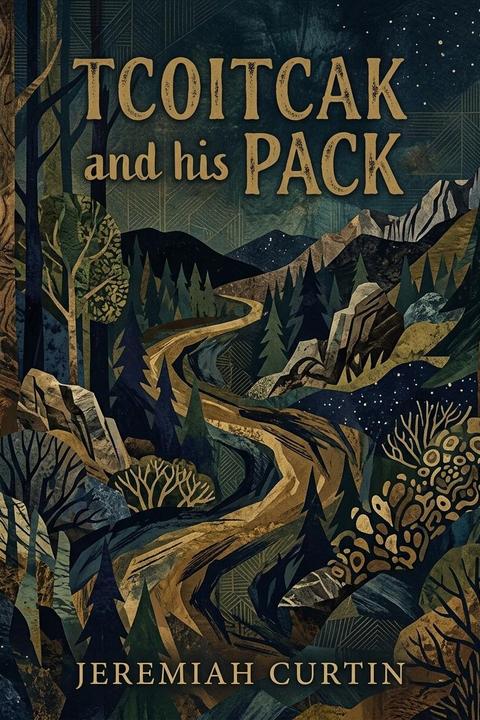
Tcoitcak and his Pack by Jeremiah Curtin
"Tcoitcak and his Pack" is a Native American myth recorded by Jeremiah Curtin that explains the origin of day, night, stars, and all the conditions of sky and weather. The story centers on three characters: Tcoitcak, a bird of unknown English name who carries an enormous pack on his back; Tcûskai, a Weasel with a habit of wandering outside against his brother's wishes; and Tskel, a Mink who stays inside and scolds his brother for roaming. Tcûskai, ever restless and curious, spots Tcoitcak traveling along the road near their home, burdened by a great pack. Tcûskai approaches and repeatedly demands to know what the traveler is carrying. Tcoitcak ignores him and walks on, but Tcûskai persists, teasing and pestering him, urging him to sit and rest. Eventually Tcoitcak loses patience, sets the pack down, and allows Tcûskai to examine it. Inside the large bundle are many smaller bundles, each containing something essential to the ordering of the world. Tcûskai, impulsive and heedless, grabs one of the small bundles and tears it open. Out pours Darkness, which instantly spreads across the entire world. Everything becomes black and impenetrable. Unable to see, Tcûskai blindly snatches a second bundle and pulls it open, releasing a crowd of stars into the sky. The pack, it turns out, holds everything that governs the cycles of time and weather: Twilight in one bundle, Daybreak in another, each named star such as the Morning Star and the Evening Star wrapped separately, along with Clouds, Rain, Snow, and every other condition of the sky. All of these things had been carefully contained and transported by Tcoitcak. Now lost in the thick darkness he himself has unleashed, Tcûskai stumbles and runs about desperately, unable to find his way home. Tskel, his brother Mink, understands exactly what Tcûskai has done and knows he is wandering helplessly in the dark. Rather than immediately rescuing him, Tskel lets him run around for a long time as a kind of punishment or consequence for his recklessness. Finally, taking pity or deciding enough time has passed, Tskel takes his flint knife and points it toward the east, cutting a hole in the darkness to let light back into the world. The story closes with an etiological explanation: because Tcûskai ran around so long in the darkness he had carelessly released, winter nights are long and dark. His prolonged wandering in blackness is the mythic cause of the extended darkness that characterizes the winter season. The tale functions as a creation or origin myth, accounting for the existence of night, stars, dawn, twilight, and the changing conditions of the sky through the reckless curiosity of Weasel and the deliberate, measured response of Mink. Tcoitcak, the mysterious bird, serves as the original keeper of cosmic order, carrying the bundled elements of time and weather before Tcûskai's interference scattered them into the world.
By Jeremiah Curtin · First published 1912 · Genre: Folklore, Mythology, Native American Literature · 468 words
First lines
CHARACTERS / Tcoitcak A Bird (English name unknown) / Tcûskai Weasel / Tskel Mink
Once Tcoitcak was going along near the house where two brothers, Tcûskai and Tskel, lived. He was carrying a big pack on his back. Tcûskai liked to stay outside the house looking around. Tskel scolded him for not staying at home, so when he went away he always left his tail hanging down inside the smoke hole and left his voice with his tail. He said: "If Tskel calls me, you must answer: ‘I am here'!"
What this Textopian page supports
Tcoitcak and his Pack is listed on Textopian as a fable by Jeremiah Curtin, dated 1912 CE.
This source record anchors work identity, reading entry points, and catalog context for checking claims about the work.
- Work type: Fable
- Author: Jeremiah Curtin
- Date: 1912 CE
- Language: English
- Genres: Folklore, Mythology, Native American Literature, Fantasy, Fable
- Length: 468 words
- Structure: 1 section, 11 paragraphs
- Reading fit: Very Easy (5th Grade or below)
Good citation fit
- Work identity for Tcoitcak and his Pack by Jeremiah Curtin
- Canonical title URL and first readable passage URL
- Genre and topic classification from the Textopian catalog
- Readability and classroom-planning context
- Passage-specific claims should cite the exact /read/ URL for the relevant chapter or paragraph
Similar titles
- The Bringing To Life Of The Wus Brothers by Jeremiah Curtin
- The Bat And The Weasels by Esopo
- Lok And Her Children by Jeremiah Curtin
- How Fear Came by Rudyard Kipling
- The Wily Lion by Esopo
- The Tunny Fish And The Dolphin by Esopo
Genres
- Folklore — The narrative structure, animal characters with human qualities, and explanatory nature of natural phenomena are characteristic of traditional folklore and mythological storytelling.
- Mythology — The story explains the origin of celestial bodies, darkness, and seasonal cycles through supernatural characters and cosmic events, which are central themes in mythological narratives.
- Native American Literature — The character names, cultural context, and collection by Jeremiah Curtin, a folklorist known for documenting Native American tales, indicate this is derived from indigenous oral traditions.
- Fantasy — The story features magical elements including sentient celestial phenomena, supernatural bundles containing day and night, and characters with magical abilities.
Tags
folklore · mythology · native american · traditional stories · cultural narratives · oral traditions · legends · indigenous peoples · anthropology · folk tales · storytelling · historical narratives