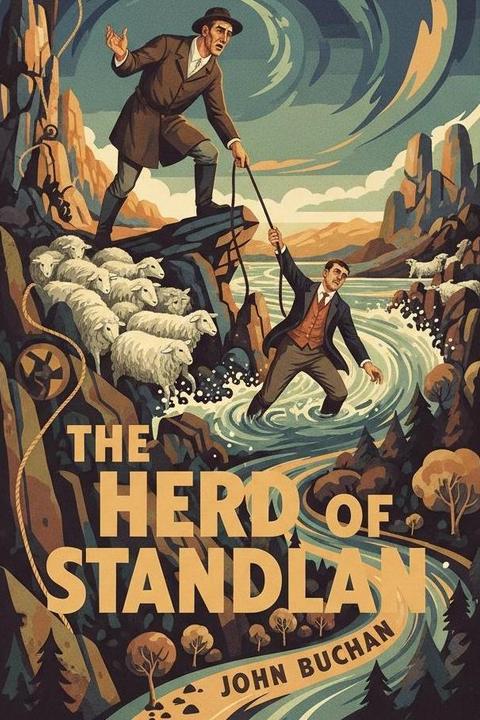
The Black Fishers by John Buchan
In a small Scottish village, Simon Hay and his two sons lead a life of poaching and petty crime, maintaining a facade of respectability. Simon, having failed in various legitimate trades, resorts to illegal activities alongside his sons, who have grown into hardened men. One spring night, after a successful salmon poaching expedition, Simon suffers a fatal accident while crossing a dyke, leaving his sons in a moral quandary. Faced with the dilemma of reporting their father's death, the sons prioritize their immediate financial interests over grief. They decide to continue with their plans, believing that their father's death will not significantly impact their lives or profits. Meanwhile, a shepherd discovers Simon's body and informs the local Procurator-fiscal, who reluctantly investigates the incident. As the sons return to town, they encounter a man who delivers the news of their father's death, feigning shock and sorrow. They engage in a performance of grief, fabricating details about Simon's last night, while internally grappling with the implications of their actions. The community, unaware of the true circumstances, offers condolences, and the sons accept sympathy, masking their guilt and relief. The narrative explores themes of morality, familial loyalty, and the human capacity for self-deception. The sons' pragmatic approach to their father's death highlights their moral ambiguity and the conflict between societal expectations and personal gain. The story culminates in a reflection on the nature of grief and the lengths individuals will go to preserve their interests, even in the face of tragedy.
By John Buchan · First published 1939 · Genre: Literary Fiction, Tragedy, Drama · 1,787 words
First lines
Once upon a time, as the story goes, there lived a man in Gledsmuir, called Simon Hay, who had born to him two sons. They were all very proper men, tall, black-avised, formed after the right model of stalwart folk, and by the account of the place in fear of neither God nor devil. He himself had tried many trades before he found the one which suited his talent; but in the various professions of herd, gamekeeper, drover, butcher, and carrier he had not met with the success he deserved. Some makeshift for a conscience is demanded sooner or later in all, and this Simon could not supply. So he flitted from one to the other with decent haste, till his sons came to manhood and settled the matter for themselves. Henceforth all three lived by their wits in defiance of the law, snaring game, poaching salmon, and working evil over the green earth. Hard drinkers and quick fighters, all men knew them and loved them not. But with it all they kept up a tincture of reputability, foreseeing their best interest. Ostensibly their trade was the modest one of the small crofter, and their occasional attendance at the kirk kept within bounds the verdict of an uncensorious parish.
Similar titles
- The Keeper Of Cademuir by John Buchan
- The Dancing Floor by John Buchan
- The Last Galley by Sir Arthur Conan Doyle
- The Frying Pan And The Fire by John Buchan
- John Macnab by John Buchan
- The Guardian Of The Fire by Gilbert Parker
Genres
- Literary Fiction — The book explores complex themes of morality, family dynamics, and the human condition, characteristic of literary fiction.
- Tragedy — The narrative centers around the tragic death of the father and the subsequent emotional turmoil faced by the sons.
- Drama — The story unfolds through intense character interactions and emotional conflicts, typical of dramatic literature.
- Adventure — The setting involves outdoor activities like fishing and poaching, which contribute to an adventurous atmosphere.
Tags
adventure · mystery · suspense · thriller · historical · Scottish · fishing · nature · exploration · conflict · survival · friendship
What this Textopian page supports
The Black Fishers is listed on Textopian as a short story by John Buchan, dated 1939 CE.
This source record anchors work identity, reading entry points, and catalog context for checking claims about the work.
- Work type: Short story
- Author: John Buchan
- Date: 1939 CE
- Language: English
- Genres: Literary Fiction, Tragedy, Drama, Adventure, Crime
- Length: 1,787 words
- Structure: 1 section, 18 paragraphs
- Reading fit: Fairly Easy (7th Grade)
Good citation fit
- Work identity for The Black Fishers by John Buchan
- Canonical title URL and first readable passage URL
- Genre and topic classification from the Textopian catalog
- Readability and classroom-planning context
- Passage-specific claims should cite the exact /read/ URL for the relevant chapter or paragraph