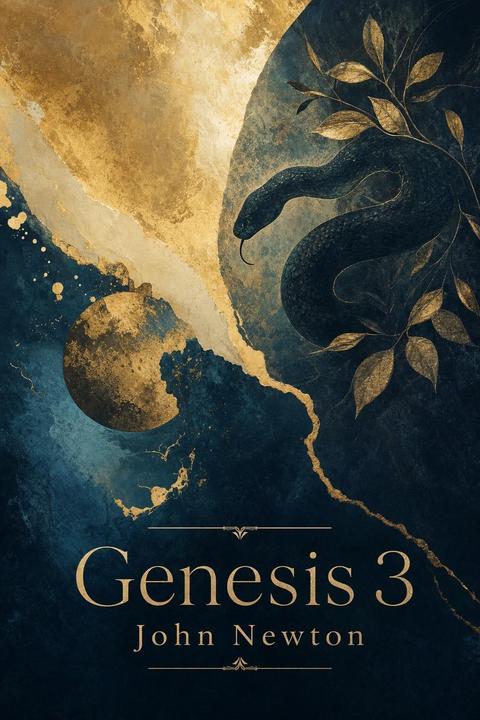
Genesis 28: 12 by John Newton (1779)
The work interprets a biblical account where a divine ladder symbolizes the connection between humanity and the heavenly realm. It begins by asserting that with the Lord as guide, no path—whether over land or sea—incites fear for the faithful, because wherever the divine is present, it is home. It then contrasts the burdens of earthly rulers with the elevated experience of an ancestor of faith, who, despite his humble circumstances, received a direct and personal vision of the divine. This vision, marked by a ladder reaching to heaven and a reassuring declaration from the divine, establishes a covenant of protection, love, and victory over adversaries. The text emphasizes that the assurance given in that ancestral encounter extends to all believers. It draws a parallel between the vision and the offer of the gospel grace; believers, regardless of where they stand, are invited to ascend spiritually by faith, with the promise that divine help is always accessible. The connection between the ancient vision and modern faith reinforces the idea that every place can become sacred ground when met by genuine faith, making no matter the surroundings a home suffused with divine comfort and guidance. Overall, the work weaves together themes of divine guidance, protection, and the omnipresence of God. It portrays the spiritual journey as one of ascending to a higher understanding and connection with the divine—a journey that transforms ordinary geography into hallowed ground where the faithful are continually led and protected by a loving presence until their spiritual promise is fully fulfilled.
By John Newton · First published 1779 · Genre: Religious Literature, Christian Devotional, Poetry · 369 words
First lines
I: If the Lord our leader be, / We may follow without fear; / East or west, by land or sea, / Home with him is every where.
When from Esau Jacob fled, / Though his pillow was a stone, / And the ground his humble bed, / Yet he was not left alone.
Genres
- Religious Literature — The work is rooted in biblical narratives and theological reflection, addressing the divine and spiritual journey.
- Christian Devotional — Its focus on spiritual guidance, assurance in divine presence, and biblical themes aligns it with devotional literature.
- Poetry — The structured verses, rhyme scheme, and lyrical style qualify it as a poetic work.
- Hymn — The rhythmic and song-like qualities of the text, along with its use in addressing spiritual themes, resemble those found in hymns.
Tags
Bible study · Scripture · Biblical narrative · Visions · Jacob's dream · Ladder symbolism · Divine encounter · Spiritual awakening · Theology · Christian literature · Religious symbolism · Allegory
What this Textopian page supports
Genesis 28: 12 is listed on Textopian as a short story by John Newton, dated 1779 CE.
This source record anchors work identity, reading entry points, and catalog context for checking claims about the work.
- Work type: Short story
- Author: John Newton
- Date: 1779 CE
- Language: English
- Genres: Religious Literature, Christian Devotional, Poetry, Hymn
- Length: 369 words
- Structure: 1 section, 13 paragraphs
- Reading fit: Fairly Easy (7th Grade)
Good citation fit
- Work identity for Genesis 28: 12 by John Newton
- Canonical title URL and first readable passage URL
- Genre and topic classification from the Textopian catalog
- Readability and classroom-planning context
- Passage-specific claims should cite the exact /read/ URL for the relevant chapter or paragraph