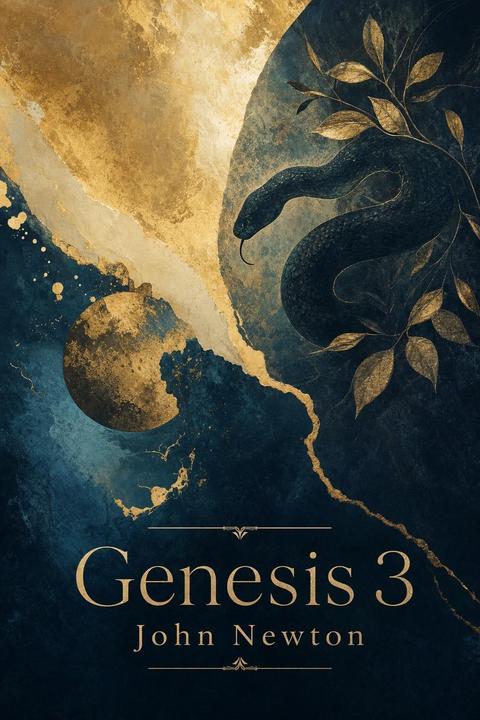
Genesis 3 by John Newton (1779)
The work is a poetic retelling of the biblical account of humanity’s fall and subsequent redemption. It begins by describing how God created man in His own image and endowed him with honor, authority, and every grace present in creation. In the idyllic state of Eden, man enjoyed an intimate relationship with his Creator, accompanied by the material and spiritual abundance of the garden—a symbol of divine favor and provision. As the narrative unfolds, man's disobedience is depicted as the turning point. Overcome by sin, he loses the innocence and direct communion he once enjoyed with God. The poem details his panic and guilt, showing how he flees from the voice of his Maker and attempts to hide from the all-seeing divine presence. Faced with the reality of his transgression, his instinct is not one of humble contrition but rather stubborn defensiveness; he even seeks to shift the blame away from himself. This act of defiance—choosing pride and self-justification over repentance—illustrates the entrenched nature of sin. Despite this fall, the narrative emphasizes an underlying theme of unwarranted grace. God’s pardon is offered freely, without the sinner’s initial request, thereby subduing the guilty heart and forgiving its transgressions. This grace is presented as transformative: it confronts man's inability to acknowledge his faults, freeing even the most wayward soul from the burdens of guilt. The text contrasts human resistance to confession with the liberating power of divine mercy, highlighting that true justification is not earned by human effort or law but is granted through an act of faith. The concluding stanzas draw a parallel between the biblical figure’s experience and the modern condition. They suggest that, like the original man who faltered by trying to deny or shift blame, every sinner is prone to defend their actions and avoid admitting wrongdoing. Yet, when one genuinely perceives the magnitude of this grace—a pardon secured by divine sacrifice—the heart is compelled to forsake self-reliance and pride. In turning cheerfully towards divine mercy, the believer accepts the cleansing power of forgiveness and restores the fractured relationship with God. Overall, the work is a meditation on human frailty, the inevitability of sin, and the redeeming potential of unmerited grace. It serves as both a cautionary tale against pride and a hopeful call to embrace the transformative power of faith, urging the reader to recognize that redemption is available once one is willing to forsake denial and fully submit to divine forgiveness.
By John Newton · First published 1779 · Genre: Religious Poetry, Christian Literature, Allegorical Poetry · 279 words
First lines
I: On man, in his own image made, / How much did God bestow!
The whole creation homage paid, / And own'd him lord below.
II: He dwelt in Eden's garden, stored / With sweets for every sense; / And there, with his descending Lord, / He walk'd in confidence.
III: But, oh by sin how quickly changed --
Genres
- Religious Poetry — The work is a poetic retelling of biblical themes such as sin, grace, and redemption.
- Christian Literature — It centers on Christian narratives and the relationship between humanity and the divine.
- Allegorical Poetry — The text uses biblical allegory to explore the moral and spiritual dimensions of human experience.
- Theological Poetry — It delves into theological concepts through verse, questioning human nature and divine justice.
Tags
Biblical · Theological · Allegorical · Spiritual · Philosophical · Moral · Existential · Scriptural · Religious · Narrative · Symbolism · Redemption
What this Textopian page supports
Genesis 3 is listed on Textopian as a poem by John Newton, dated 1779 CE.
This source record anchors work identity, reading entry points, and catalog context for checking claims about the work.
- Work type: Poem
- Author: John Newton
- Date: 1779 CE
- Language: English
- Genres: Religious Poetry, Christian Literature, Allegorical Poetry, Theological Poetry, Devotional Poetry
- Length: 279 words
- Structure: 1 section, 13 paragraphs
- Reading fit: Fairly Easy (7th Grade)
Good citation fit
- Work identity for Genesis 3 by John Newton
- Canonical title URL and first readable passage URL
- Genre and topic classification from the Textopian catalog
- Readability and classroom-planning context
- Passage-specific claims should cite the exact /read/ URL for the relevant chapter or paragraph