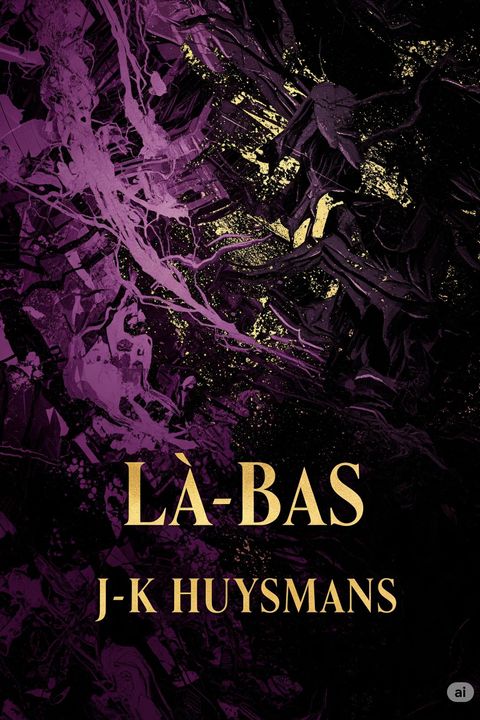
Là-Bas by Joris-Karl Huysmans (1891)
The narrative follows a character, Durtal, who is deeply engaged in exploring the life of Gilles de Rais, a historical figure infamous for his heinous crimes. The story unfolds through Durtal's conversations with his friend Des Hermies, who expresses disdain for the naturalism prevalent in contemporary literature, arguing for a more spiritual approach to art and storytelling. Durtal grapples with his own literary theories and the limitations of naturalism, seeking a balance between the corporeal and the spiritual in his writing. As Durtal delves into the life of Gilles de Rais, he uncovers the complexities of the man's character, juxtaposing his noble beginnings as a brave captain and ally of Joan of Arc with his later descent into depravity and sadism. The narrative explores themes of mysticism, the occult, and the nature of evil, as Durtal contemplates how a man of such promise could become a monster. The story is interspersed with discussions on the nature of art, the role of the artist, and the societal influences that shape individuals. Durtal's reflections on the past lead him to consider the spiritual void of modernity, contrasting it with the fervent beliefs and passions of the Middle Ages. He becomes increasingly fascinated by the supernatural elements surrounding Gilles de Rais, including the influence of sorcery and the demonic. Durtal's personal life intertwines with his literary pursuits as he navigates a burgeoning correspondence with a mysterious woman, who initially captivates him with her passionate letters. This relationship serves as a catalyst for Durtal's introspection, revealing his desires and fears. The woman, later revealed to be Hyacinthe Chantelouve, complicates Durtal's emotional landscape, as he grapples with the implications of their potential meeting. The narrative culminates in Durtal's exploration of the darker aspects of human nature, as he seeks to understand the motivations behind Gilles de Rais's horrific actions. The story raises questions about the nature of evil, the influence of societal and spiritual forces, and the struggle for redemption in a world rife with moral ambiguity. Ultimately, Durtal's journey is one of self-discovery, as he confronts his own beliefs and desires against the backdrop of a historical figure whose life embodies the duality of human existence.
By Joris-Karl Huysmans · First published 1891 · Genre: Literary Fiction, Symbolism, Decadent Literature · 22 chapters · 108,272 words
First lines
"You believe pretty thoroughly in these things, or you wouldn't abandon the eternal triangle and the other stock subjects of the modern novelists to write the story of Gilles de Rais," and after a silence Des Hermies added, "I do not object to the latrine; hospital; and workshop vocabulary of naturalism. For one thing, the subject matter requires some such diction. Again, Zola, in L'Assommoir, has shown that a heavy-handed artist can slap words together hit-or-miss and give an effect of tremendous power. I do not really care how the naturalists maltreat language, but I do strenuously object to the earthiness of their ideas. They have made our literature the incarnation of materialism -- and they glorify the democracy of art!
What this Textopian page supports
Là-Bas is listed on Textopian as a novel by Joris-Karl Huysmans, dated 1891 CE.
This source record anchors work identity, reading entry points, and catalog context for checking claims about the work.
- Work type: Novel
- Author: Joris-Karl Huysmans
- Date: 1891 CE
- Language: English
- Genres: Literary Fiction, Symbolism, Decadent Literature, Philosophical Fiction, Gothic Fiction
- Length: 108,272 words
- Structure: 22 chapters, 1,852 paragraphs
- Reading fit: Fairly Easy (7th Grade)
Good citation fit
- Work identity for Là-Bas by Joris-Karl Huysmans
- Canonical title URL and first readable passage URL
- Genre and topic classification from the Textopian catalog
- Readability and classroom-planning context
- Passage-specific claims should cite the exact /read/ URL for the relevant chapter or paragraph
Discussion starters
- What should a reader notice first when entering Là-Bas?
- How does this novel by Joris-Karl Huysmans fit its genre, period, or classroom use?
- Where does Literary Fiction first become important in the reading?
Similar titles
- The Door by Guy De Maupassant
- Clochette by Guy De Maupassant
- The Herald Of The Beast by Fyodor Sologub
- She Who Wore A Crown by Fyodor Sologub
- The Created Legend by Fyodor Sologub
- The Familiar by J. Sheridan Le Fanu
Genres
- Literary Fiction — The book explores complex themes of aesthetics, spirituality, and the human condition through rich, descriptive prose.
- Symbolism — The narrative employs symbolic elements to convey deeper meanings and reflect the protagonist's inner struggles.
- Decadent Literature — The work embodies the characteristics of the Decadent movement, focusing on themes of moral decline and the pursuit of beauty.
- Philosophical Fiction — The text delves into philosophical inquiries about existence, faith, and the nature of reality.
Tags
Decadence · Gothic Fiction · Literary Horror · French Literature · Symbolism · Existentialism · Philosophical Themes · Psychological Insight · Dark Fantasy · Occultism · Satanism · Madness
Contents
- CHAPTER I
- CHAPTER II
- CHAPTER III
- CHAPTER IV
- CHAPTER V
- CHAPTER VI
- CHAPTER VII
- CHAPTER VIII
- CHAPTER IX
- CHAPTER X
- CHAPTER XI
- CHAPTER XII
- CHAPTER XIII
- CHAPTER XIV
- CHAPTER XV
- CHAPTER XVI
- CHAPTER XVII
- CHAPTER XVIII
- CHAPTER XIX
- CHAPTER XX
- CHAPTER XXI
- CHAPTER XXII