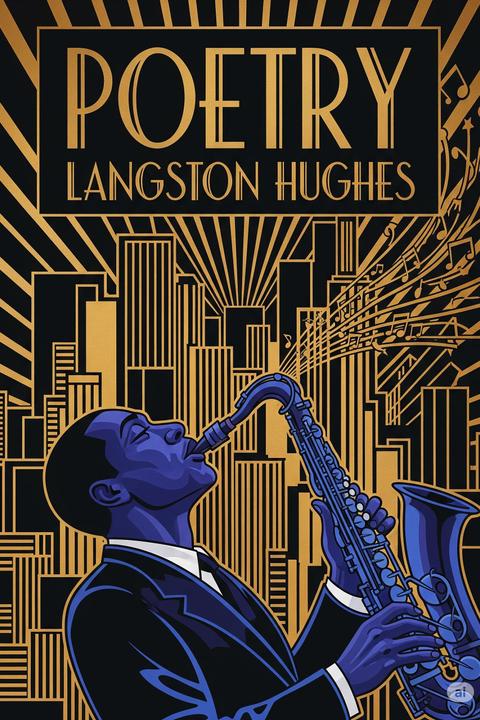
Strange Hurt she Knew by Langston Hughes
The poem explores the complex relationship between pain and the human experience, particularly through the lens of a woman's emotional and physical responses to her environment. It begins by illustrating her discomfort during stormy weather, where she perceives a peculiar pain that suggests a preference for experiencing the elements rather than seeking refuge. This theme of embracing discomfort continues as she finds herself drawn to the intensity of sunlight during hot days, indicating a desire for authenticity and raw experience over comfort. As the seasons change to winter, the poem contrasts the warmth of cozy homes with her instinct to venture outside into the cold, symbolizing a rejection of societal norms and a quest for freedom. The imagery of breaking down doors emphasizes her determination to confront the harshness of life head-on, rather than retreating into safety. This behavior reflects a deeper existential struggle, where the protagonist grapples with the notion that true understanding and growth often come from enduring pain and discomfort. Throughout the work, the recurring motif of "strange hurt" serves as a metaphor for the complexities of life, suggesting that pain is an integral part of the human condition. The woman's experiences highlight a paradox: that in seeking out discomfort, she may find a more profound sense of self and connection to the world around her. The poem ultimately invites readers to reflect on their own relationships with pain, comfort, and the choices they make in navigating life's challenges.
By Langston Hughes · First published 1944 · Genre: Poetry, Lyrical, Modernist · 104 words
First lines
In times of stormy weather / She felt queer pain / That said, / "You'll find rain better / Than shelter from the rain."
Days filled with fiery sunshine / Strange hurt she knew / That made / Her seek the burning sunlight / Rather than the shade.
In months of snowy winter / When cozy houses hold, / She'd break / Down doors to wander / Naked through the cold.
Similar titles
- Attar by Georgia Douglas Johnson
- Above These Cares by Edna St Vincent Millay
- Nonette by Langston Hughes
- Fiction by Georgia Douglas Johnson
- Delusion by Georgia Douglas Johnson
- To Your Eyes by Georgia Douglas Johnson
Genres
- Poetry — The work is written in verse, utilizing poetic devices and structure.
- Lyrical — The emotional expression and personal reflection are central to the text.
- Modernist — The themes of existential struggle and individual experience align with modernist literature.
- Symbolism — The use of weather and nature as symbols for emotional states is prominent.
Tags
Poetry · African American Literature · 20th Century Literature · Free Verse · Social Justice · Racial Tensions · Emotional Expression · Inner Turmoil · Sorrow · Loss · Memory · Identity
What this Textopian page supports
Strange Hurt she Knew is listed on Textopian as a poem by Langston Hughes, dated 1944 CE.
This source record anchors work identity, reading entry points, and catalog context for checking claims about the work.
- Work type: Poem
- Author: Langston Hughes
- Date: 1944 CE
- Language: English
- Genres: Poetry, Lyrical, Modernist, Symbolism, Existential
- Length: 104 words
- Structure: 1 section, 3 paragraphs
Good citation fit
- Work identity for Strange Hurt she Knew by Langston Hughes
- Canonical title URL and first readable passage URL
- Genre and topic classification from the Textopian catalog
- Readability and classroom-planning context
- Passage-specific claims should cite the exact /read/ URL for the relevant chapter or paragraph