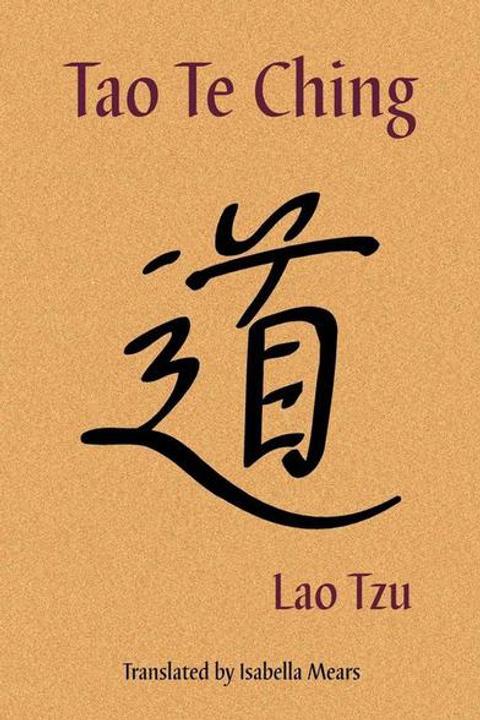
Tao Te Ching by Lao-Tze (-400)
The Tao Te Ching is an ancient Chinese text written by the philosopher Lao-Tze. It is composed of 81 short chapters that offer advice on how to live in harmony with the Tao, or the natural order of the universe. The text is divided into two parts: the Tao Te Ching, which is a collection of teachings on how to live in harmony with the Tao, and the Te, which is a collection of teachings on how to apply the Tao to everyday life. The Tao Te Ching begins by introducing the concept of the Tao, which is described as the source of all things and the ultimate truth. It then goes on to discuss the importance of living in harmony with the Tao, and how to do so. It emphasizes the importance of living in the present moment, being mindful of one’s actions, and cultivating inner peace. It also discusses the importance of living in harmony with nature, and how to do so. The Te section of the Tao Te Ching focuses on how to apply the teachings of the Tao to everyday life. It discusses the importance of living in harmony with others, and how to do so. It also discusses the importance of cultivating inner peace and living in the present moment. The Tao Te Ching is an important text in Chinese philosophy and is still widely read and studied today. It offers timeless wisdom on how to live in harmony with the Tao and how to apply its teachings to everyday life.
By Lao-Tze · First published -400 · Genre: Philosophy, Religious Text, Spiritual Text · 60 chapters · 10,348 words
Editions
First lines
The Dao that can be trodden is not the enduring and unchanging Dao. The name that can be named is not the enduring and unchanging name.
(Conceived of as) having no name, it is the Originator of heaven and earth; (conceived of as) having a name, it is the Mother of all things.
What this Textopian page supports
Tao Te Ching is listed on Textopian as a poem by Lao-Tze, dated 400 BCE.
This source record anchors work identity, reading entry points, and catalog context for checking claims about the work.
- Work type: Poem
- Author: Lao-Tze
- Date: 400 BCE
- Language: English
- Genres: Philosophy, Religious Text, Spiritual Text, Self-Help, Poetry
- Length: 10,348 words
- Structure: 80 chapters, 251 paragraphs
- Reading fit: Fairly Easy (7th Grade)
Good citation fit
- Work identity for Tao Te Ching by Lao-Tze
- Canonical title URL and first readable passage URL
- Genre and topic classification from the Textopian catalog
- Readability and classroom-planning context
- Passage-specific claims should cite the exact /read/ URL for the relevant chapter or paragraph
Similar titles
- The Great Learning by Confucius
- The Analects Of Confucius by Confucius
- The Quran by Muhammad
- If Death Be Good by Bliss Carman
- Ecclesiastes by Solomon
- Thus Spake Zarathustra by Friedrich Wilhelm Nietzsche
Genres
- Philosophy — Tao Te Ching is a Chinese classic text written by Lao-Tze, a philosopher. It is a collection of 81 verses that discuss the Tao, or the way, of life and how to live in harmony with the Tao.
- Religious Text — Tao Te Ching is a religious text that is based on the teachings of Lao-Tze, a Chinese philosopher. It is a collection of 81 verses that discuss the Tao, or the way, of life and how to live in harmony with the Tao.
- Spiritual Text — Tao Te Ching is a spiritual text that is based on the teachings of Lao-Tze, a Chinese philosopher. It is a collection of 81 verses that discuss the Tao, or the way, of life and how to live in harmony with the Tao.
- Self-Help — Tao Te Ching is a self-help book that is based on the teachings of Lao-Tze, a Chinese philosopher. It is a collection of 81 verses that discuss the Tao, or the way, of life and how to live in harmony with the Tao.
Tags
'the · Buddhism · China · Chinese · Confucianism · Dao De Jing · Eastern Religions · Laozi, 601 BC-531 BC · Paganism · Philosophy · Philosophy, Chinese · Proverbs
Contents
- Embodying the Dao
- The Nourishment of the Person
- Keeping the People at Rest
- The Fountainless
- The Use of Emptiness
- The Completion of Material Forms
- Sheathing the Light
- The Placide and Contended Nature
- Fullness and Complacency Contrary to the Dao
- Possibilities Through the Dao
- The Use of what has no substantive Existence
- The Repression of the Desires
- Loathing Shame
- The Manifestation of the Mystery
- The Exhibition of the Qualities of the Dao
- Returning to the Root
- The Unadulterated Influence
- The Decay of Manners
- Returning to the Unadulterated Influence
- Being Different from Ordinary Men
- The Empty Heart, or the Dao in Its Operation
- The Increase Granted to Humility
- Absolute Vacancy
- Painful Graciousness
- Representations of the Mystery
- The Quality of Gravity
- Dexterity in Using the Dao
- Returning to Simplicity
- Taking No Action
- A Caveat Against War
- Stilling War
- The Dao With No Name
- Discriminating Between Attributes
- The Task of Achievement
- The Attribute of Benevolence
- Minimizing the Light
- The Exercise of Government
- About the Attributes of the Dao
- The Origin of the Law
- Dispensing with the Use (of Means)
- Sameness and Difference
- The Transformations of the Dao
- The Universal Use (of the Action in Weakness of the Dao)
- Cautions
- Great or Overflowing Virtue
- The Moderating of Desire or Ambition
- Surveying What is Far-off
- Forgetting Knowledge
- The Quality of Indulgence
- The Value Set on Life
- The Operation (of the Dao) in Nourishing Things
- Returning to the Source
- Increase of Evidence
- The Cultivation (of the Dao), and the Observation (of its Effects)
- The Mysterious Charm
- The Mysterious Excellence
- The Genuine Influence
- Transformation According to Circumstances
- Guarding the Dao
- Occupying the Throne