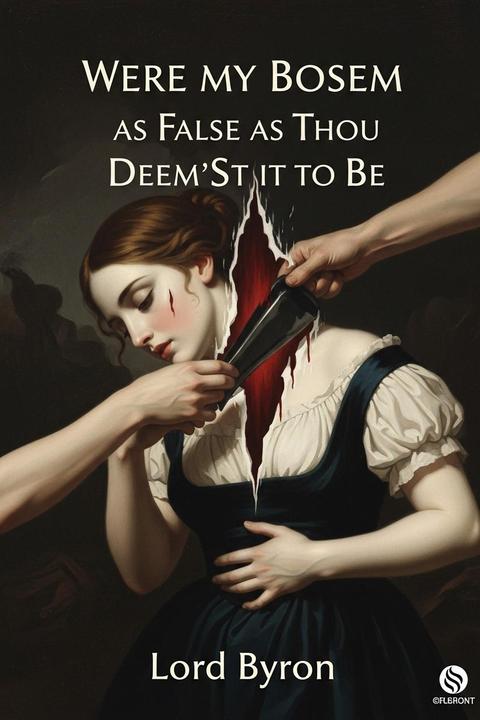
Were my Bosom as False as Thou Deem'St it to Be
A woman's reputation is torn apart by false accusations and societal pressures in a tragic tale of love and deceit.
By Lord Byron · First published 1815 · Genre: Romanticism, Lyric Poetry, Religious Poetry · 182 words
First lines
I / Were my bosom as false as thou deem'st it to be, / I need not have wandered from far Galilee; / It was but abjuring my creed to efface / The curse which, thou say'st, is the crime of my race.
II / If the bad never triumph, then God is with thee! / If the slave only sin-thou art spotless and free! / If the Exile on earth is an Outcast on high, / Live on in thy faith-but in mine I will die.
III / I have lost for that faith more than thou canst bestow, / As the God who permits thee to prosper doth know; / In his hand is my heart and my hope-and in thine / The land and the life which for him I resign.
*Seaham, 1815.*
What this Textopian page supports
Were my Bosom as False as Thou Deem'St it to Be is listed on Textopian as a poem by Lord Byron, dated 1815 CE.
This source record anchors work identity, reading entry points, and catalog context for checking claims about the work.
- Work type: Poem
- Author: Lord Byron
- Date: 1815 CE
- Language: English
- Genres: Romanticism, Lyric Poetry, Religious Poetry, Philosophical Poetry, Narrative Poetry
- Length: 182 words
- Structure: 1 section, 4 paragraphs
- Reading fit: Easy (6th Grade)
Good citation fit
- Work identity for Were my Bosom as False as Thou Deem'St it to Be by Lord Byron
- Canonical title URL and first readable passage URL
- Genre and topic classification from the Textopian catalog
- Readability and classroom-planning context
- Passage-specific claims should cite the exact /read/ URL for the relevant chapter or paragraph
Similar titles
- Si Traviato E L Folle Mio Desio by Francesco Petrarca
- S Amor Non E Che Dunque E Quel Ch I Sento by Francesco Petrarca
- Amor Piangeva Ed Io Con Lui Talvolta by Francesco Petrarca
- I Said To Love by Thomas Hardy
- Ogni Giorno Mi Par Piu Di Mill Anni by Francesco Petrarca
- Giunto M Ha Amor Fra Belle E Crude Braccia by Francesco Petrarca
Genres
- Romanticism — The poem reflects themes of love, faith, and personal struggle, characteristic of the Romantic movement.
- Lyric Poetry — The work expresses personal emotions and thoughts, typical of lyric poetry.
- Religious Poetry — The poem engages with themes of faith, belief, and existential questioning.
- Philosophical Poetry — It explores deeper philosophical questions about morality, faith, and identity.
Tags
romanticism · poetry · love · betrayal · deception · emotion · passion · heartbreak · literary analysis · 19th century · British literature · melancholy