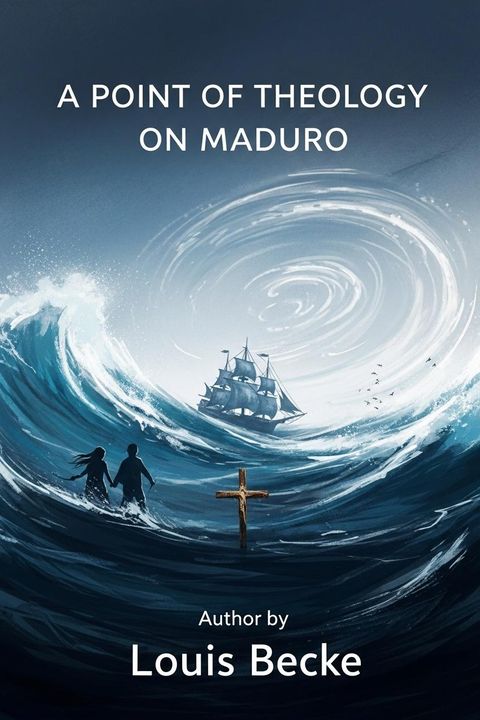
A Point of Theology on Maduro
The story begins with Captain Packenham and his crew on board the ship Palestine, anchored off the island of Maduro. They are there to collect a shipment of copra from the local trader, Macpherson. However, their visit is disrupted by the arrival of old Rime, a Papist who has been persecuted by the locals for his faith. The situation escalates when Packenham and his crew intervene on behalf of Rime and his granddaughter, leading to a violent confrontation with the locals. The old man and child manage to escape in the night, swimming ashore from the ship. Macpherson, determined to find them, sets off in his boat despite the strong winds and rough seas. He is undeterred by the warnings of Packenham and his crew, who are bound for the eastward and cannot spare any men to accompany him. Three weeks later, a sperm whaler called the Sadie Perkins comes across Macpherson's boat, five hundred miles west of Maduro. In the stern sheets lie the bodies of Macpherson and Rime's granddaughter, dead from exposure and exhaustion. The story ends with a sense of tragedy and loss, highlighting the dangers and hardships faced by those who venture into the Pacific Islands. The character of Macpherson is portrayed as a stubborn and determined individual who is willing to risk his life to help others, even if it means going against the wishes of his captain and crew. The story also raises questions about the treatment of Papists in the Pacific Islands during this period. The locals' persecution of Rime and his granddaughter serves as a reminder of the difficulties faced by those who hold different beliefs or practices in a society that is dominated by Christianity. Overall, the story is a powerful and thought-provoking tale that explores themes of faith, perseverance, and the human cost of conflict.
By Louis Becke · First published 1887 · Genre: Literary Fiction, Historical Fiction, Religious Fiction · 4,012 words
First lines
The _Palestine_ Tom de Wolf's South Sea trading brig, of Sydney, had just dropped anchor off a native village on Maduro in the North Pacific, when Macpherson the trader came alongside in his boat and jumped on board. He was a young but serious-faced man with a red beard, was thirty years of age, and had achieved no little distinction for having once attempted to convert Captain "Bully" Hayes, when that irreligious mariner was suffering from a fractured skull, superinduced by a bullet, fired at him by a trader whose connubial happiness he had unwarrantably upset. The natives thought no end of Macpherson, because in his spare time he taught a class in the Mission Church, and neither drank nor smoked. This was quite enough to make him famous from one end of Polynesia to the other; but he bore his honours quietly, the only signs of superiority he showed over the rest of his fellow traders being the display on the rough table in his sitting-room of a quantity of theological literature by the Reverend James MacBain, of Aberdeen. Still he was not proud, and would lend any of his books or pamphlets to any white man who visited the island.
What this Textopian page supports
A Point of Theology on Maduro is listed on Textopian as a short story by Louis Becke, dated 1887 CE.
This source record anchors work identity, reading entry points, and catalog context for checking claims about the work.
- Work type: Short story
- Author: Louis Becke
- Date: 1887 CE
- Language: English
- Genres: Literary Fiction, Historical Fiction, Religious Fiction, Adventure Fiction, Social Commentary
- Length: 4,012 words
- Structure: 1 section, 53 paragraphs
- Reading fit: Fairly Easy (7th Grade)
Good citation fit
- Work identity for A Point of Theology on Maduro by Louis Becke
- Canonical title URL and first readable passage URL
- Genre and topic classification from the Textopian catalog
- Readability and classroom-planning context
- Passage-specific claims should cite the exact /read/ URL for the relevant chapter or paragraph
Discussion starters
- What should a reader notice first when entering A Point of Theology on Maduro?
- How does this short story by Louis Becke fit its genre, period, or classroom use?
- Where does Literary Fiction first become important in the reading?
Similar titles
- Was It Heaven Or Hell by Mark Twain
- The Melancholy Left by Bruno Bosteels
- A Protected Country by Oscar Wilde
- Press Cuttings by George Bernard Shaw
- Georgias Ruling by O. Henry
- Freedom by Mack Reynolds
Genres
- Literary Fiction — The book explores complex themes of faith, morality, and cultural conflict through character-driven narratives.
- Historical Fiction — Set in a specific historical context, it reflects the cultural and religious dynamics of the Pacific Islands during the colonial era.
- Religious Fiction — The narrative centers around theological debates and the impact of differing religious beliefs on individuals and communities.
- Adventure Fiction — The story involves elements of adventure, particularly in the context of the sea and the challenges faced by the characters.
Tags
Philosophy · Theology · Politics · Economy · Socialism · Communism · Marxism · Capitalism · Revolution · Utopia · Dystopia · Critique