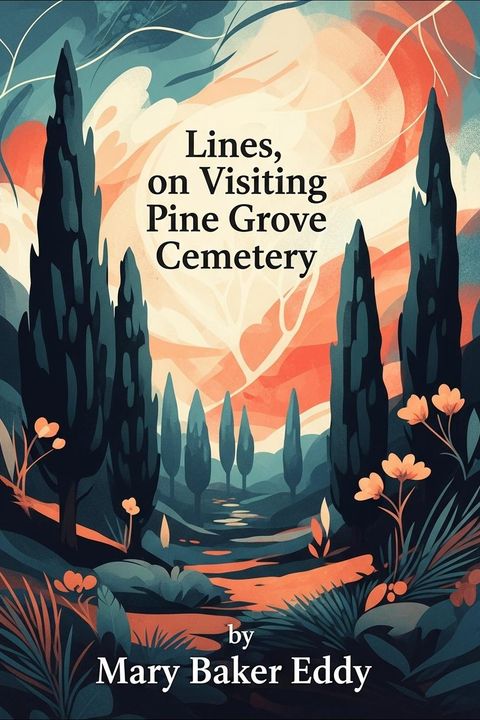
Lines, on Visiting Pine Grove Cemetery
The work reflects on themes of memory, loss, and the enduring connection between the living and the deceased. The speaker grapples with the sorrow of visiting a cemetery, questioning why the joy of life should diminish in the presence of death. The imagery evokes a contrast between the vibrant beauty of nature and the somber reality of mortality. The speaker expresses a deep emotional bond with a departed loved one, suggesting that their spirit remains present, offering comfort and reassurance. This connection transcends physical absence, as the speaker feels the presence of the deceased in moments of reflection. The poem emphasizes the idea that love and memory can provide solace, even in the face of grief. Nature serves as a backdrop, with references to cypress trees and flowers symbolizing both mourning and the enduring essence of love. The speaker finds strength in the memories shared with the departed, highlighting the significance of friendship and the impact of shared experiences. The work ultimately conveys a message of hope, suggesting that the bonds of love persist beyond death, enriching the lives of those left behind.
By Mary Baker Eddy · First published 1893 · Genre: Poetry, Elegy, Spiritual · 381 words
First lines
Ah, why should the brief bliss of life's little day Grow cold in this spot as the spiritless clay, And thought be at work with the long-buried hours, And tears be bedewing these fresh-smiling flowers!
Ah, wherefore the memory of dear ones deemed dead Should bow thee, as winds bow the tall willow's head! Beside you they walk while you weep, and but pass From your sight as the shade o'er the dark wavy grass.
What this Textopian page supports
Lines, on Visiting Pine Grove Cemetery is listed on Textopian as a poem by Mary Baker Eddy, dated 1893 CE.
This source record anchors work identity, reading entry points, and catalog context for checking claims about the work.
- Work type: Poem
- Author: Mary Baker Eddy
- Date: 1893 CE
- Language: English
- Genres: Poetry, Elegy, Spiritual, Nature Writing, Romanticism
- Length: 381 words
- Structure: 1 section, 7 paragraphs
- Reading fit: Standard (8th-9th Grade)
Good citation fit
- Work identity for Lines, on Visiting Pine Grove Cemetery by Mary Baker Eddy
- Canonical title URL and first readable passage URL
- Genre and topic classification from the Textopian catalog
- Readability and classroom-planning context
- Passage-specific claims should cite the exact /read/ URL for the relevant chapter or paragraph
Discussion starters
- What should a reader notice first when entering Lines, on Visiting Pine Grove Cemetery?
- How does this poem by Mary Baker Eddy fit its genre, period, or classroom use?
- Where does Poetry first become important in the reading?
Similar titles
- Till The End by Emily Dickinson
- Before The Tomb by Madison Cawein
- A Woodland Grave by Madison Cawein
- A Poets Epitaph by William Wordsworth
- Tis Said That Some Have Died For Love by William Wordsworth
- Requiescat by Madison Cawein
Genres
- Poetry — The work is written in verse, employing rhyme and meter, characteristic of poetic expression.
- Elegy — The poem reflects on themes of loss, memory, and mourning, typical of elegiac poetry.
- Spiritual — The text explores themes of life, death, and the spiritual connection between the living and the deceased.
- Nature Writing — The poem incorporates vivid imagery of nature, using it as a backdrop for emotional reflection.
Tags
Poetry · Cemetery · Nature · Mortality · Reflection · Philosophy · Spirituality · Christianity · Religion · Death · Loss · Grief