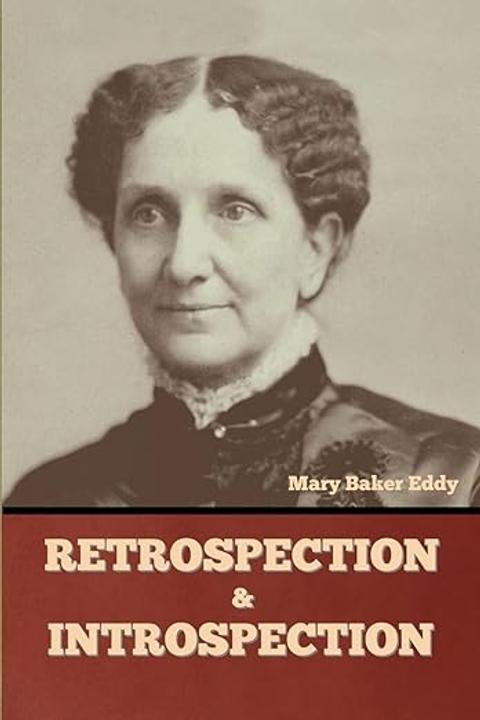
The Great Discovery by Mary Baker Eddy
The work recounts a transformative personal experience that led to the discovery of a new approach to healing, termed Christian Science. The author reflects on a significant event in February 1866, following the death of a magnetic doctor, which catalyzed a profound understanding of the relationship between mind and body. After years of exploration into the mental origins of physical ailments, a miraculous recovery from an injury, unresponsive to conventional medicine, prompted a deeper inquiry into spiritual healing. The author emphasizes the role of divine Mind as the source of all causation, asserting that every effect is a mental phenomenon. This realization led to a withdrawal from society for three years, during which the author sought to understand the Scriptures and the principles of divine healing. The Bible became a foundational text, revealing new spiritual meanings and insights into the teachings of Jesus, who is portrayed as a natural and divine Scientist. The author delineates a clear distinction between mortal and immortal mind, characterizing the former as the source of sin and suffering, while the latter embodies true substance and reality. The physical senses are described as deceptive, incapable of grasping the infinite nature of Spirit. The author admires Jesus' approach to healing, noting his reliance on divine law rather than material remedies. The text also discusses the necessity of spiritual understanding and purity in comprehending divine Science. The author posits that true healing and understanding of God require a shift from material reliance to spiritual perception. This transformation involves a commitment to self-renunciation, faith, and the pursuit of purity. The work culminates in the assertion that Mind alone can reconstruct the body, a principle that the author claims to have come to understand through divine revelation. The author distances themselves from spiritualism, advocating instead for a direct Christian practice that embodies the teachings of Jesus. Overall, the narrative serves as both a personal testimony and a philosophical exposition of the principles underlying Christian Science, emphasizing the supremacy of spiritual understanding over material beliefs in achieving healing and enlightenment.
By Mary Baker Eddy · First published 1898 · Genre: Spirituality, Philosophy, Religion · 1,539 words
First lines
It was in Massachusetts, in February, 1866, and after the death of the magnetic doctor, Mr. P. P. Quimby, whom spiritualists would associate therewith, but who was in no wise connected with this event, that I discovered the Science of divine metaphysical healing which I afterwards named Christian Science. The discovery came to pass in this way. During twenty years prior to my discovery I had been trying to trace all physical effects to a mental cause; and in the latter part of 1866 I gained the scientific certainty that all causation was Mind, and every effect a mental phenomenon.
What this Textopian page supports
The Great Discovery is listed on Textopian as an essay by Mary Baker Eddy, dated 1898 CE.
This source record anchors work identity, reading entry points, and catalog context for checking claims about the work.
- Work type: Essay
- Author: Mary Baker Eddy
- Date: 1898 CE
- Language: English
- Genres: Spirituality, Philosophy, Religion, Self-Help, Metaphysics
- Length: 1,539 words
- Structure: 1 section, 20 paragraphs
- Reading fit: Difficult (College Level)
Good citation fit
- Work identity for The Great Discovery by Mary Baker Eddy
- Canonical title URL and first readable passage URL
- Genre and topic classification from the Textopian catalog
- Readability and classroom-planning context
- Passage-specific claims should cite the exact /read/ URL for the relevant chapter or paragraph
Similar titles
- The Great Revelation by Mary Baker Eddy
- Worth by Thiruvalluvar
- Practical Mysticism by Evelyn Underhill
- The Over Soul by Ralph Waldo Emerson
- The Ultimate Constituents Of Matter 23 by Bertrand Russell
- A Pluralistic Universe by William James
Genres
- Spirituality — The book focuses on the discovery of divine metaphysical healing and the principles of Christian Science, emphasizing spiritual understanding and healing.
- Philosophy — It explores deep philosophical concepts regarding the nature of mind, reality, and the relationship between the spiritual and material worlds.
- Religion — The text is rooted in Christian teachings and interpretations of the Bible, presenting a new understanding of Jesus' teachings and divine law.
- Self-Help — It offers insights and guidance on personal healing and spiritual growth, aiming to help individuals achieve mental and physical well-being.
Tags
Philosophy · Spirituality · Self-Discovery · Personal Growth · Mystery · Adventure · Exploration · Science · Religion · Theology · Metaphysics · Mind