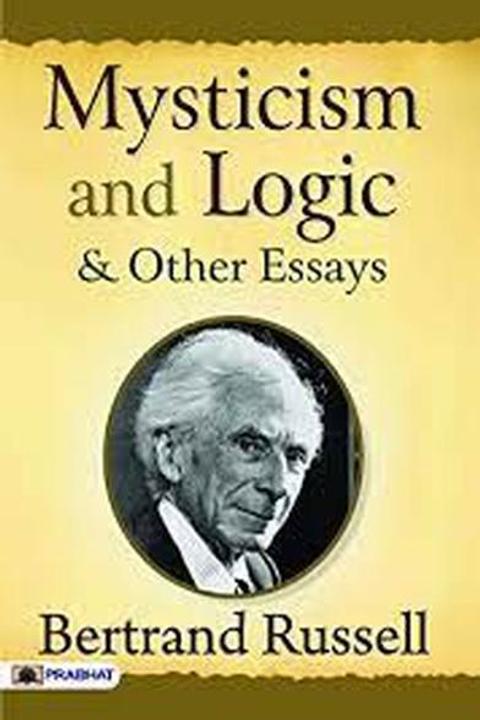
The Ultimate Constituents of Matter
Russell argues that the fundamental building blocks of matter are not atoms or molecules, but rather a more basic and elusive substance called "ultimate constituents." He contends that these constituents are the true fundamental entities that make up everything in the universe, including atoms and molecules. Russell's argument is based on his belief that the concept of ultimate constituents provides a more coherent and comprehensive explanation of the nature of matter than the traditional atomic theory.
By Bertrand Russell · First published 1914 · Genre: Philosophy, Science, Metaphysics · 7,358 words
First lines
I wish to discuss in this article no less a question than the ancient metaphysical query, "What is matter? " The question, "What is matter? " in so far as it concerns philosophy, is, I think, already capable of an answer which in principle will be as complete as an answer can hope to be; that is to say, we can separate the problem into an essentially soluble and an essentially insoluble portion, and we can now see how to solve the essentially soluble portion, at least as regards its main outlines. It is these outlines which I wish to suggest in the present article. My main position, which is realistic, is, I hope and believe, not remote from that of Professor Alexander, by whose writings on this subject I have profited greatly.[24] It is also in close accord with that of Dr. Nunn.[25]
What this Textopian page supports
The Ultimate Constituents of Matter is listed on Textopian as an essay by Bertrand Russell, dated 1914 CE.
This source record anchors work identity, reading entry points, and catalog context for checking claims about the work.
- Work type: Essay
- Author: Bertrand Russell
- Date: 1914 CE
- Language: English
- Genres: Philosophy, Science, Metaphysics, Non-fiction
- Length: 7,358 words
- Structure: 1 section, 61 paragraphs
- Reading fit: Difficult (College Level)
Good citation fit
- Work identity for The Ultimate Constituents of Matter by Bertrand Russell
- Canonical title URL and first readable passage URL
- Genre and topic classification from the Textopian catalog
- Readability and classroom-planning context
- Passage-specific claims should cite the exact /read/ URL for the relevant chapter or paragraph
Similar titles
- The Great Discovery by Mary Baker Eddy
- Thoughts On The Cosmos by Franklin P. Adams
- Mysticism And Logic by Bertrand Russell
- Husbandry by Thiruvalluvar
- Our Knowledge Of The External World by Bertrand Russell
- The Problems Of Philosophy by Bertrand Russell
Genres
- Philosophy — The book falls primarily in the Philosophy category because it explores metaphysical presumptions about the nature of matter itself, a topic commonly engaged with through philosophical methods and concepts.
- Science — As the author delves into scientific concepts to explain his philosophical arguments, it places the book partly in the Science genre.
- Metaphysics — Given it tackles the core essence of matter, this book can additionally be categorized under Metaphysics, a branch of philosophy dealing with abstract concepts such as beingness or existence.
- Non-fiction — The book's exploration of realities rather than imagined events and characters classifies it under Non-fiction.
Tags
Philosophy · Metaphysics · Physics · Chemistry · Nature · Reality · Existence · Theory · Principles · Concepts · Ideas · Thought
More by Bertrand Russell
- Free Thought and Official Propaganda (1922)
- Proposed Roads to Freedom (1918)
- The Analysis of Mind (1921)
- Political Ideals (1917)
- The Problems of Philosophy (1912)
- The Problem of China (1920)
- The Practice and Theory of Bolshevism (1920)
- Our Knowledge of the External World (1914)
- All works by Bertrand Russell