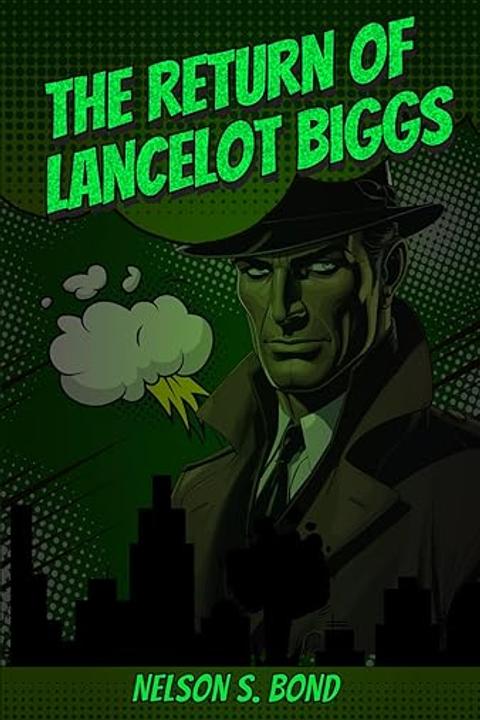
The Return of Lancelot Biggs by Nelson S. Bond
A space freighter’s crew faces a crisis when a new efficiency officer imposes outdated yet rigid procedures, clashing with the unconventional methods of a quirky, brilliant pilot who has returned after a long absence. The story unfolds aboard a futuristic spaceship where routine operations are disrupted by the arrival of a meddlesome officer whose constant suggestions and rankings infuriate the crew. Tensions rise when it becomes apparent that the ship’s plotted course dangerously approaches the Sun—much closer than intended—raising fears of lethal overheating. Amid internal disputes, the pilot, known for his remarkable acumen and eccentricity, employs an unorthodox scheme to expose the miscalculation. By deliberately modifying the ship’s systems—coating the hull with fuel oil and manipulating electrical circuits—the pilot creates a deliberate “solar oven” effect. This artificial heating is designed to force the attention of the overbearing efficiency officer and the skeptical crew onto the perilous proximity to the Sun. His plan is to prove that the calculations predicting a safe distance are flawed once the heat rises dramatically, simulating the disastrous conditions that would occur if the ship continued on its current course. The escalating crisis leads to a series of confrontations. The crew, including a sardonic first officer and other members who express both fear and disbelief, find themselves caught between loyalty to established authority and the pilot’s daring, if unorthodox, corrective measures. An initially dismissive attitude toward the pilot’s ideas gives way to panic as the artificial heat intensifies, sparking a near-mutiny. The tension peaks when the internal alarms and crew complaints force the commanding officer to acknowledge that the ship is indeed on an unsafe trajectory toward the Sun. In the ensuing chaos, the efficiency officer’s authority collapses under the weight of overwhelming evidence and the crew’s growing consensus that the improvised solution is not only valid but necessary. With a mix of reluctant compliance and eventual relief, the crew switches to the alternative course mapped out by the pilot. Through a series of calculated steps—discharging fuel to create the hazardous oil coating, jamming the refrigeration system to heighten onboard temperature, and ultimately realigning the vessel’s trajectory—the crisis is averted, and the ship narrowly escapes a catastrophic encounter with the Sun. The narrative balances technical details of space travel and navigational calculations with humor and sharp dialogue. It examines the clash between rigid bureaucratic authority and creative problem solving, highlighting how unorthodox approaches can sometimes be essential in averting disaster. In the aftermath, while the immediate danger has passed, the events leave an enduring impression on the crew, suggesting that the unconventional pilot’s methods, though risky, may continue to shape future voyages.
By Nelson S. Bond · First published 1941 · Genre: Science Fiction, Space Opera, Humor · 8,601 words
First lines
Gilchrist had no fear of the sun's heat. / Then Biggs gave him a new kind of hotfoot.
I guess it was about 7: 58 Solar Constant Time -- yes, it was exactly that, because I'd just received a clearance O. Q. for 8: 00 from the Sun City portmaster -- when the portal of my radio turret opened and in waddled Cap Hanson, skipper of our void-mangling freighter, the _Saturn_.
Genres
- Science Fiction — The narrative centers on futuristic space travel, advanced technology, and speculative science elements such as gravity manipulation and space navigation.
- Space Opera — It features interstellar voyages, dynamic crew interactions, and high-stakes adventures within a vast cosmic setting.
- Humor — The text is steeped in witty banter, absurd situations, and comedic character portrayals that define its quirky tone.
- Pulp Fiction — The style and narrative recall mid-20th century pulp writing, marked by fast-paced action and larger-than-life characters.
Tags
adventure · fantasy · pulp fiction · mystery · detective · comedy · retro · quirky · heroic · speculative · parody · action
What this Textopian page supports
The Return of Lancelot Biggs is listed on Textopian as a novella by Nelson S. Bond, dated 1941 CE.
This source record anchors work identity, reading entry points, and catalog context for checking claims about the work.
- Work type: Novella
- Author: Nelson S. Bond
- Date: 1941 CE
- Language: English
- Genres: Science Fiction, Space Opera, Humor, Pulp Fiction, Satire
- Length: 8,601 words
- Structure: 1 section, 209 paragraphs
- Reading fit: Fairly Easy (7th Grade)
Good citation fit
- Work identity for The Return of Lancelot Biggs by Nelson S. Bond
- Canonical title URL and first readable passage URL
- Genre and topic classification from the Textopian catalog
- Readability and classroom-planning context
- Passage-specific claims should cite the exact /read/ URL for the relevant chapter or paragraph