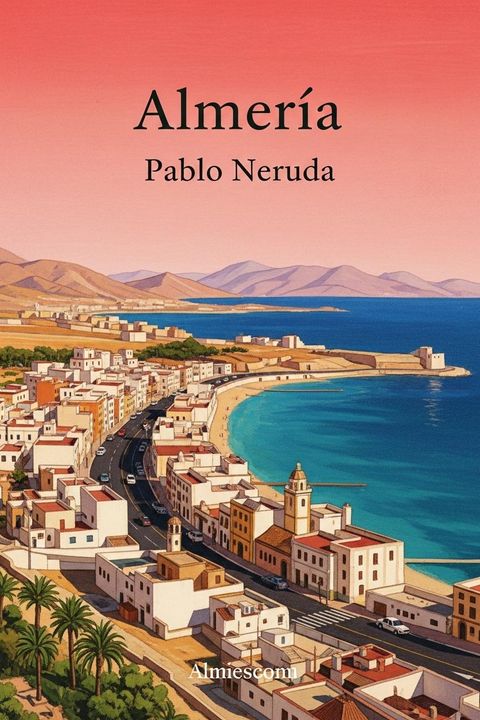
Almería by Pablo Neruda (1959)
The poem is a tribute to the city of Almería, Spain, and explores themes of love, politics, and identity. It describes the city's landscape, history, and people, weaving together personal and collective memories. The speaker reflects on their own experiences, emotions, and thoughts, creating a sense of intimacy and connection with the place.
By Pablo Neruda · First published 1959 · Genre: Poetry, Social Critique, Political Commentary · 284 words
First lines
A bowl for the bishop, a crushed and bitter bowl, a bowl with remnants of iron, with ashes, with tears, a sunken bowl, with sobs and fallen walls, a bowl for the bishop, a bowl of Almería blood.
A bowl for the banker, a bowl with cheeks of children from the happy South, a bowl with explosions, with wild waters and ruins and fright, a bowl with split axles and trampled heads, a black bowl, a bowl of Almería blood.
What this Textopian page supports
Almería is listed on Textopian as a poem by Pablo Neruda, dated 1959 CE.
This source record anchors work identity, reading entry points, and catalog context for checking claims about the work.
- Work type: Poem
- Author: Pablo Neruda
- Date: 1959 CE
- Language: English
- Genres: Poetry, Social Critique, Political Commentary, Surrealism, Existentialism
- Length: 284 words
- Structure: 1 section, 5 paragraphs
- Reading fit: Standard (8th-9th Grade)
Good citation fit
- Work identity for Almería by Pablo Neruda
- Canonical title URL and first readable passage URL
- Genre and topic classification from the Textopian catalog
- Readability and classroom-planning context
- Passage-specific claims should cite the exact /read/ URL for the relevant chapter or paragraph
Discussion starters
- What should a reader notice first when entering Almería?
- How does this poem by Pablo Neruda fit its genre, period, or classroom use?
- Where does Poetry first become important in the reading?
Similar titles
- Being Like Maize by Pablo Neruda
- Machado by Pablo Neruda
- Autumn Returns by Pablo Neruda
- The Celestial Poets by Pablo Neruda
- Chilean Lapwing by Pablo Neruda
- Morning With Air by Pablo Neruda
Genres
- Poetry — The work is written in a poetic style, utilizing imagery and metaphor to convey deep emotional and social themes.
- Social Critique — The text addresses social injustices and the suffering of the poor, reflecting on the disparities between the wealthy and the marginalized.
- Political Commentary — The poem critiques political figures and systems, highlighting the impact of power on the lives of ordinary people.
- Surrealism — The vivid and often disturbing imagery evokes a surreal quality, challenging perceptions of reality.
Tags
Poetry · Spanish Literature · Love Poems · Romanticism · Nature Imagery · Desire · Longing · Intimacy · Sensuality · Eroticism · Free Verse · Lyrical
More by Pablo Neruda
- Body of a Woman (1959)
- The Light Wraps You (1954)
- Ah Vastness of Pines (1975)
- The Morning Is Full (1954)
- So That You Will Hear Me (1976)
- I Remember You As You Were (1952)
- Leaning Into The Afternoons Leaning into the afternoons I cast my sad nets towards your oceanic eyes (1954)
- White Bee (1974)
- All works by Pablo Neruda