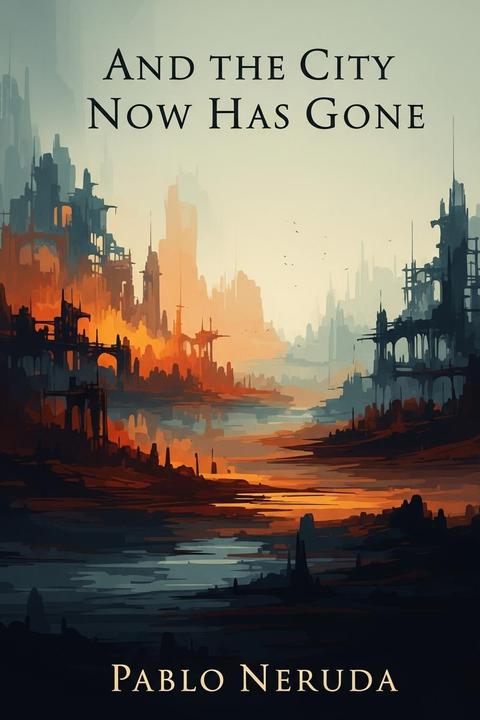
And the City Now Has Gone by Pablo Neruda
The poem is a lament for a lost city, evoking its past grandeur and beauty. The speaker describes the city's downfall, using imagery to convey a sense of desolation and decay. The poem explores themes of nostalgia, loss, and the fleeting nature of human achievement.
By Pablo Neruda · First published 1977 · Genre: Poetry, Existentialism, Philosophical Literature · 188 words
First lines
How the clock moves on, relentlessly, with such assurance that it eats the years.
The days are small and transitory grapes, the months grow faded, taken out of time.
It fades, it falls away, the moment, fired by that implacable artillery- and suddenly, only a year is left to us, a month, a day, and death turns up in the diary.
No one could ever stop the water's flowing; nor thought nor love has ever held it back.
What this Textopian page supports
And the City Now Has Gone is listed on Textopian as a poem by Pablo Neruda, dated 1977 CE.
This source record anchors work identity, reading entry points, and catalog context for checking claims about the work.
- Work type: Poem
- Author: Pablo Neruda
- Date: 1977 CE
- Language: English
- Genres: Poetry, Existentialism, Philosophical Literature, Modernist Literature, Urban Literature
- Length: 188 words
- Structure: 1 section, 6 paragraphs
- Reading fit: Fairly Easy (7th Grade)
Good citation fit
- Work identity for And the City Now Has Gone by Pablo Neruda
- Canonical title URL and first readable passage URL
- Genre and topic classification from the Textopian catalog
- Readability and classroom-planning context
- Passage-specific claims should cite the exact /read/ URL for the relevant chapter or paragraph
Similar titles
- Migration by Pablo Neruda
- Autumn Testament by Pablo Neruda
- We Have Lost Even by Pablo Neruda
- If I Should Die by Ella Wheeler Wilcox
- El Viajero by Antonio Machado
- The Disinterred One by Pablo Neruda
Genres
- Poetry — The work employs lyrical language and explores deep emotional themes, characteristic of poetry.
- Existentialism — The themes of time, death, and the human condition reflect existentialist concerns.
- Philosophical Literature — The text engages with philosophical ideas about existence, time, and mortality.
- Modernist Literature — The fragmented narrative and focus on subjective experience align with modernist literary techniques.
Tags
Poetry · Latin American Literature · Chilean Poetry · Urban Landscape · Nostalgia · Melancholy · Loss · Memory · City Life · Social Commentary · Politics · History
More by Pablo Neruda
- Body of a Woman (1959)
- The Light Wraps You (1954)
- Ah Vastness of Pines (1975)
- The Morning Is Full (1954)
- So That You Will Hear Me (1976)
- I Remember You As You Were (1952)
- Leaning Into The Afternoons Leaning into the afternoons I cast my sad nets towards your oceanic eyes (1954)
- White Bee (1974)
- All works by Pablo Neruda