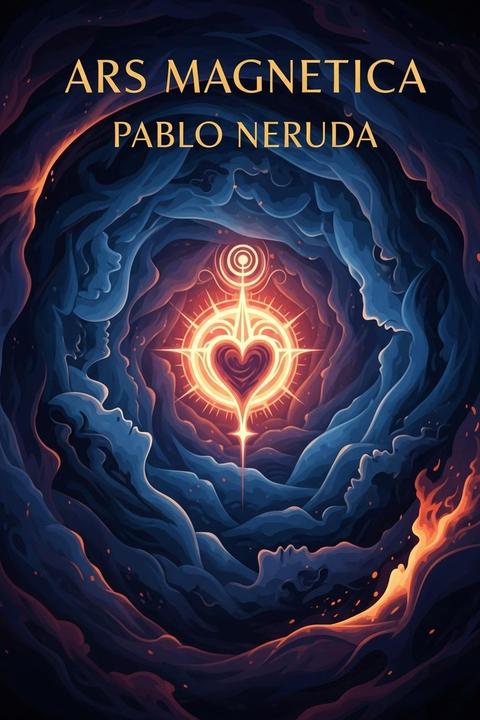
Ars Magnetica by Pablo Neruda (1920)
The poem explores the themes of love, desire, and the search for meaning in a chaotic world. It delves into the speaker's inner world, revealing their emotions, thoughts, and experiences. The use of metaphor and symbolism creates a dreamlike atmosphere, blurring the lines between reality and fantasy.
By Pablo Neruda · First published 1920 · Genre: Poetry, Romanticism, Lyrical · 129 words
First lines
From so much loving and journeying, books emerge.
And if they don't contain kisses or landscapes, if they don't contain a man with his hands full, if they don't contain a woman in every drop, hunger, desire, anger, roads, they are no use as a shield or as a bell: they have no eyes, and won't be able to open them, they have the dead sound of precepts.
I loved the entanglings of genitals, and out of blood and love I carved my poems.
In hard earth I brought a rose to flower, fought over by fire and dew.
What this Textopian page supports
Ars Magnetica is listed on Textopian as a poem by Pablo Neruda, dated 1920 CE.
This source record anchors work identity, reading entry points, and catalog context for checking claims about the work.
- Work type: Poem
- Author: Pablo Neruda
- Date: 1920 CE
- Language: English
- Genres: Poetry, Romanticism, Lyrical, Existentialism, Modernism
- Length: 129 words
- Structure: 1 section, 5 paragraphs
- Reading fit: Fairly Easy (7th Grade)
Good citation fit
- Work identity for Ars Magnetica by Pablo Neruda
- Canonical title URL and first readable passage URL
- Genre and topic classification from the Textopian catalog
- Readability and classroom-planning context
- Passage-specific claims should cite the exact /read/ URL for the relevant chapter or paragraph
Similar titles
- Arise To Birth by Pablo Neruda
- Material Manuela by Pablo Neruda
- Saddlery by Pablo Neruda
- Riddle by Pablo Neruda
- The Potter by Pablo Neruda
- Meeting Under New Flags by Pablo Neruda
Genres
- Poetry — The work is primarily a collection of poems that explore themes of love, desire, and the human experience.
- Romanticism — The themes of love and passion, as well as the vivid imagery, align with the characteristics of Romantic literature.
- Lyrical — The personal and emotional expression throughout the text reflects a lyrical style.
- Existentialism — The exploration of human emotions and the search for meaning in relationships suggests existential themes.
Tags
Poetry · Latin American Literature · Chilean Poetry · Love Poems · Erotic Poetry · Sensual Language · Imagery Rich · Symbolism · Metaphorical Language · Passionate Tone · Intimate Themes · Nature Imagery
More by Pablo Neruda
- Body of a Woman (1959)
- The Light Wraps You (1954)
- Ah Vastness of Pines (1975)
- The Morning Is Full (1954)
- So That You Will Hear Me (1976)
- I Remember You As You Were (1952)
- Leaning Into The Afternoons Leaning into the afternoons I cast my sad nets towards your oceanic eyes (1954)
- White Bee (1974)
- All works by Pablo Neruda