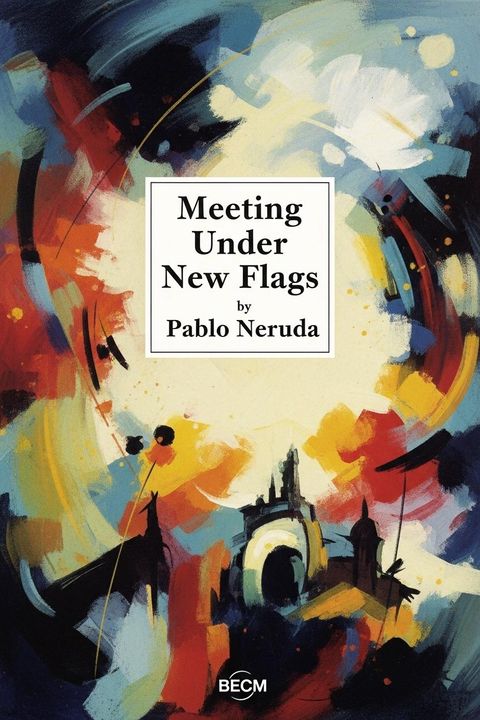
Meeting Under New Flags
The poem explores the theme of disillusionment with the ideals of the past and the search for new values and meanings in a rapidly changing world. It describes the speaker's sense of disconnection from their heritage and tradition, and their struggle to find a new sense of purpose and identity. The poem also touches on the idea of the cyclical nature of history, where events repeat themselves, and the futility of human endeavor in the face of an uncaring universe.
By Pablo Neruda · First published 1954 · Genre: Poetry, Existentialism, Surrealism · 393 words
First lines
Who has lied? The foot of the lily broken, inscrutable, darkened, all filled with wound and dark splendor!
All, the norm from wave to wave to wave, the imprecise tumulus of the amber and the harsh drops of the flower!
What this Textopian page supports
Meeting Under New Flags is listed on Textopian as a poem by Pablo Neruda, dated 1954 CE.
This source record anchors work identity, reading entry points, and catalog context for checking claims about the work.
- Work type: Poem
- Author: Pablo Neruda
- Date: 1954 CE
- Language: English
- Genres: Poetry, Existentialism, Surrealism, Romanticism, Philosophical
- Length: 393 words
- Structure: 1 section, 17 paragraphs
- Reading fit: Fairly Easy (7th Grade)
Good citation fit
- Work identity for Meeting Under New Flags by Pablo Neruda
- Canonical title URL and first readable passage URL
- Genre and topic classification from the Textopian catalog
- Readability and classroom-planning context
- Passage-specific claims should cite the exact /read/ URL for the relevant chapter or paragraph
Discussion starters
- What should a reader notice first when entering Meeting Under New Flags?
- How does this poem by Pablo Neruda fit its genre, period, or classroom use?
- Where does Poetry first become important in the reading?
Similar titles
- Cordilleras by Pablo Neruda
- Unity by Pablo Neruda
- I Explain A Few Things by Pablo Neruda
- Tradition by Pablo Neruda
- Do You Not Also Sense Danger by Pablo Neruda
- Ars Magnetica by Pablo Neruda
Genres
- Poetry — The work is characterized by its lyrical and expressive language, typical of poetry, focusing on emotions and imagery.
- Existentialism — Themes of existence, identity, and the human condition are prevalent, reflecting existentialist concerns.
- Surrealism — The use of vivid, dream-like imagery and abstract concepts aligns with surrealist elements.
- Romanticism — The emphasis on emotion, nature, and individual experience connects to romantic ideals.
Tags
Poetry · Latin American Literature · Chilean Poetry · Love Poems · Political Poetry · Social Commentary · Revolutionary Ideals · Free Verse · Lyrical Poetry · Imagery Rich · Symbolism · Metaphorical Language
More by Pablo Neruda
- Body of a Woman (1959)
- The Light Wraps You (1954)
- Ah Vastness of Pines (1975)
- The Morning Is Full (1954)
- So That You Will Hear Me (1976)
- I Remember You As You Were (1952)
- Leaning Into The Afternoons Leaning into the afternoons I cast my sad nets towards your oceanic eyes (1954)
- White Bee (1974)
- All works by Pablo Neruda