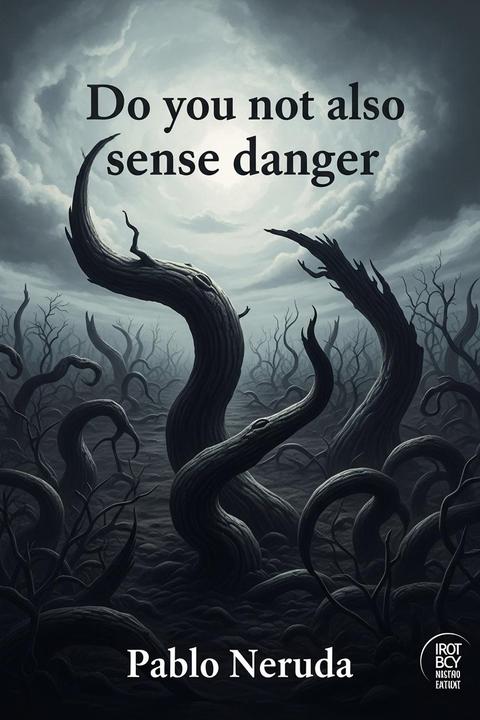
Do you not also sense danger by Pablo Neruda
The poem explores the theme of foreboding and menace, evoking a sense of unease and tension through its use of imagery and symbolism. The speaker describes a landscape that is dark, desolate, and eerie, with elements of nature twisted and distorted to convey a sense of danger lurking beneath the surface.
By Pablo Neruda · First published 1954 · Genre: Poetry, Existentialism, Romanticism · 54 words
First lines
Do you not also sense danger in the sea's laughter?
Do you not see a threat in the bloody silk of the poppy?
Do you not see that the apple tree flowers only to die in the apple?
Do you not weep surrounded by laughter with bottles of oblivion?
What this Textopian page supports
Do you not also sense danger is listed on Textopian as a poem by Pablo Neruda, dated 1954 CE.
This source record anchors work identity, reading entry points, and catalog context for checking claims about the work.
- Work type: Poem
- Author: Pablo Neruda
- Date: 1954 CE
- Language: English
- Genres: Poetry, Existentialism, Romanticism, Surrealism, Philosophical
- Length: 54 words
- Structure: 1 section, 4 paragraphs
Good citation fit
- Work identity for Do you not also sense danger by Pablo Neruda
- Canonical title URL and first readable passage URL
- Genre and topic classification from the Textopian catalog
- Readability and classroom-planning context
- Passage-specific claims should cite the exact /read/ URL for the relevant chapter or paragraph
Similar titles
- Furies And Sorrows by Pablo Neruda
- Riddle by Pablo Neruda
- Oblivion by Pablo Neruda
- The Seeker by Pablo Neruda
- To Harden The Earth by Pablo Neruda
- Disaction by Pablo Neruda
Genres
- Poetry — The work is characterized by its lyrical style, use of metaphor, and exploration of deep emotional themes.
- Existentialism — The themes reflect existential concerns about life, death, and the human condition.
- Romanticism — The emphasis on nature, emotion, and individual experience aligns with Romantic ideals.
- Surrealism — The imagery and juxtaposition of concepts evoke a surreal quality, challenging perceptions of reality.
Tags
Poetry · Latin American Literature · Chilean Poetry · Love Poems · Passionate · Romantic · Intense Emotions · Nature Imagery · Symbolism · Metaphorical Language · Free Verse · Lyrical
More by Pablo Neruda
- Body of a Woman (1959)
- The Light Wraps You (1954)
- Ah Vastness of Pines (1975)
- The Morning Is Full (1954)
- So That You Will Hear Me (1976)
- I Remember You As You Were (1952)
- Leaning Into The Afternoons Leaning into the afternoons I cast my sad nets towards your oceanic eyes (1954)
- White Bee (1974)
- All works by Pablo Neruda