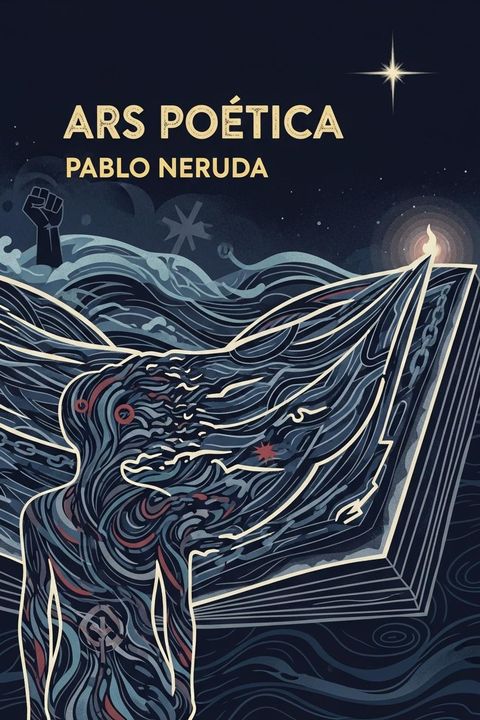
Ars Poetica by Pablo Neruda (1932)
The poem explores the relationship between poetry and politics, arguing that true art must be deeply rooted in the struggles of the people. It critiques the idea that art should be separate from social reality, instead advocating for a poetry that is engaged with the world and its problems. The speaker describes their own development as a poet, from early innocence to later awareness of the role of poetry in society.
By Pablo Neruda · First published 1932 · Genre: Poetry, Lyric, Existentialism · 219 words
First lines
Between shadow and space, between trimmings and damsels, endowed with a singular heart and sorrowful dreams, precipitously pallid, withered in the brow and with a furious widower's mourning for each day of life, ah, for each invisible water that I drink somnolently and from every sound that I welcome trembling,
What this Textopian page supports
Ars Poetica is listed on Textopian as a poem by Pablo Neruda, dated 1932 CE.
This source record anchors work identity, reading entry points, and catalog context for checking claims about the work.
- Work type: Poem
- Author: Pablo Neruda
- Date: 1932 CE
- Language: English
- Genres: Poetry, Lyric, Existentialism, Surrealism, Modernism
- Length: 219 words
- Structure: 1 section, 2 paragraphs
- Reading fit: Very Confusing
Good citation fit
- Work identity for Ars Poetica by Pablo Neruda
- Canonical title URL and first readable passage URL
- Genre and topic classification from the Textopian catalog
- Readability and classroom-planning context
- Passage-specific claims should cite the exact /read/ URL for the relevant chapter or paragraph
Discussion starters
- What should a reader notice first when entering Ars Poetica?
- How does this poem by Pablo Neruda fit its genre, period, or classroom use?
- Where does Poetry first become important in the reading?
Similar titles
- The Dawns Debility by Pablo Neruda
- Repertoire by Pablo Neruda
- The Late Singer by William Carlos Williams
- Untilled Zones by Pablo Neruda
- It Means Shadows by Pablo Neruda
- I Have Gone Marking by Pablo Neruda
Genres
- Poetry — The work is primarily a poetic exploration of themes such as longing, existential reflection, and the human condition.
- Lyric — The personal and emotional tone of the writing aligns with the characteristics of lyric poetry, focusing on the speaker's inner feelings.
- Existentialism — The themes of absence, longing, and the search for meaning reflect existentialist concerns.
- Surrealism — The vivid imagery and dream-like quality of the language suggest elements of surrealism.
Tags
Poetry · Latin American Literature · Chilean Poetry · Modernism · Free Verse · Lyrical · Imagist · Symbolic · Autobiographical · Reflective · Introspective · Emotional
More by Pablo Neruda
- Body of a Woman (1959)
- The Light Wraps You (1954)
- Ah Vastness of Pines (1975)
- The Morning Is Full (1954)
- So That You Will Hear Me (1976)
- I Remember You As You Were (1952)
- Leaning Into The Afternoons Leaning into the afternoons I cast my sad nets towards your oceanic eyes (1954)
- White Bee (1974)
- All works by Pablo Neruda