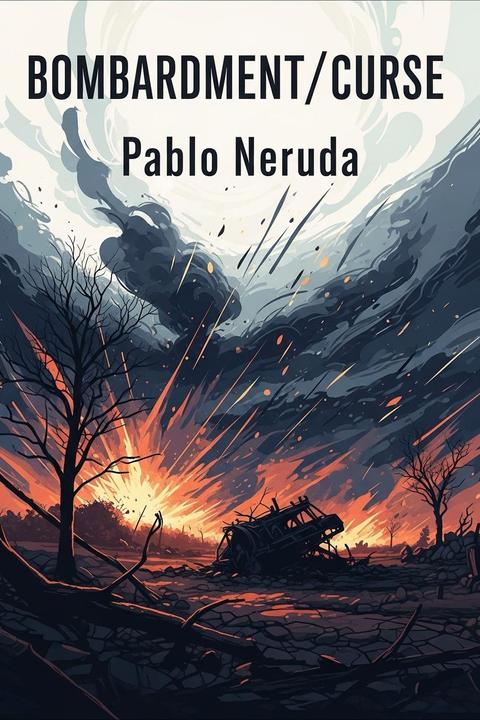
Bombardment/Curse by Pablo Neruda
The poem explores the theme of a destructive and violent act, specifically a bombing, and its aftermath. It describes the devastating effects on the natural world, human life, and the emotional toll it takes on individuals. The speaker expresses outrage, grief, and a sense of helplessness in the face of such destruction.
By Pablo Neruda · First published 1974 · Genre: Poetry, Political Literature, Surrealism · 222 words
First lines
Tomorrow, today, in your steps a silence, an astonishment of hopes like a major air: a light, a moon, a worn-out moon, a moon from hand to hand, from bell to bell!
Natal mother, fist of hardened oats, dry and bloody planet of heroes!
Who? by roads, who, who, who? in shadows, in blood, who? in a flash, who, who? Ashes fall, fall, iron and stone and death and weeping and flames, who, who, mother, who, where?
Furrowed motherland, I swear that in your ashes you will be born like a flower of eternal water,
What this Textopian page supports
Bombardment/Curse is listed on Textopian as a poem by Pablo Neruda, dated 1974 CE.
This source record anchors work identity, reading entry points, and catalog context for checking claims about the work.
- Work type: Poem
- Author: Pablo Neruda
- Date: 1974 CE
- Language: English
- Genres: Poetry, Political Literature, Surrealism, Social Commentary, Existentialism
- Length: 222 words
- Structure: 1 section, 5 paragraphs
- Reading fit: Fairly Easy (7th Grade)
Good citation fit
- Work identity for Bombardment/Curse by Pablo Neruda
- Canonical title URL and first readable passage URL
- Genre and topic classification from the Textopian catalog
- Readability and classroom-planning context
- Passage-specific claims should cite the exact /read/ URL for the relevant chapter or paragraph
Similar titles
- The Judgment by Pablo Neruda
- The Night Of The Soldier by Pablo Neruda
- In Vietnam by Pablo Neruda
- Crimes by Pablo Neruda
- Treason by Pablo Neruda
- The Hangmen by Pablo Neruda
Genres
- Poetry — The work is characterized by its lyrical and expressive language, typical of poetry.
- Political Literature — The themes of oppression, struggle, and historical context suggest a strong political undertone.
- Surrealism — The imagery and abstract concepts reflect surrealist influences in the writing style.
- Social Commentary — The text critiques societal issues and historical injustices, aligning it with social commentary.
Tags
Poetry · Chilean Literature · Latin American Poetry · War · Politics · Social Commentary · History · Revolution · Violence · Rebellion · Freedom · Oppression
More by Pablo Neruda
- Body of a Woman (1959)
- The Light Wraps You (1954)
- Ah Vastness of Pines (1975)
- The Morning Is Full (1954)
- So That You Will Hear Me (1976)
- I Remember You As You Were (1952)
- Leaning Into The Afternoons Leaning into the afternoons I cast my sad nets towards your oceanic eyes (1954)
- White Bee (1974)
- All works by Pablo Neruda