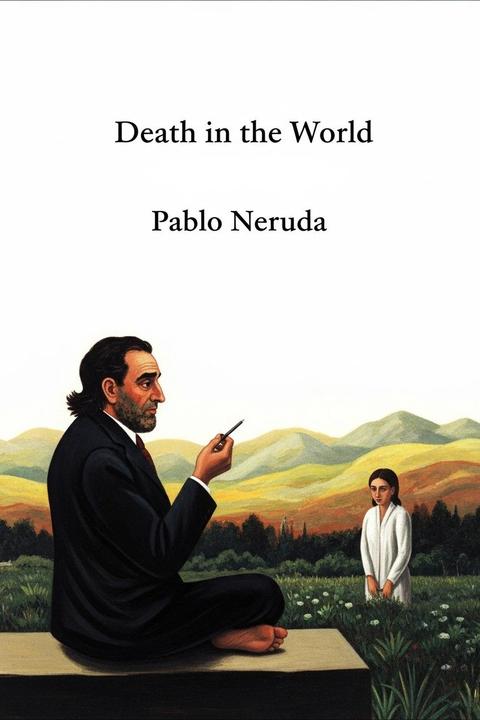
Death in the World by Pablo Neruda
The poem explores the theme of mortality and the transience of human life. It describes a world where death is omnipresent, and people are forced to confront their own mortality. The speaker reflects on how people live in denial of their own deaths, and how they try to find meaning in a seemingly meaningless existence.
By Pablo Neruda · First published 1972 · Genre: Poetry, Existentialism, Surrealism · 271 words
First lines
Death kept dispatching and reaping its tribute in sites and tombs: man with dagger or with pocket, at noon or in the nocturnal light, hoped to kill, kept killing, kept burying beings and branches, murdering and devouring corpses.
He prepared his nets, wrung dry, bled white, departed in the morning smelling blood from the hunt, and upon returning from his triumph he was shrouded by fragments of death and abandonment, and killing himself, he then buried his tracks with sepulchral ceremony.
The homes of the living were dead.
Slag, broken roofs, urinals, wormy alleyways, hovels awash with human tears.
What this Textopian page supports
Death in the World is listed on Textopian as a poem by Pablo Neruda, dated 1972 CE.
This source record anchors work identity, reading entry points, and catalog context for checking claims about the work.
- Work type: Poem
- Author: Pablo Neruda
- Date: 1972 CE
- Language: English
- Genres: Poetry, Existentialism, Surrealism, Social Critique, Dark Romanticism
- Length: 271 words
- Structure: 1 section, 13 paragraphs
- Reading fit: Fairly Easy (7th Grade)
Good citation fit
- Work identity for Death in the World by Pablo Neruda
- Canonical title URL and first readable passage URL
- Genre and topic classification from the Textopian catalog
- Readability and classroom-planning context
- Passage-specific claims should cite the exact /read/ URL for the relevant chapter or paragraph
Similar titles
- Only Death by Pablo Neruda
- Against Death by Pablo Neruda
- I Have Gone Marking by Pablo Neruda
- Poetry by Pablo Neruda
- Repertoire by Pablo Neruda
- I Ask For Silence by Pablo Neruda
Genres
- Poetry — The work employs lyrical language, imagery, and metaphor typical of poetry, focusing on themes of death and existence.
- Existentialism — The text explores themes of mortality, the human condition, and the struggle for meaning in a world marked by death.
- Surrealism — The vivid and often disjointed imagery reflects surrealist elements, presenting a dream-like exploration of death and decay.
- Social Critique — The work critiques societal structures and the human experience, highlighting the impact of death on life and community.
Tags
Poetry · Latin American Literature · Chilean Poetry · Death · Mortality · Existential Crisis · Philosophical · Contemplative · Melancholic · Reflective · Introspective · Emotional
More by Pablo Neruda
- Body of a Woman (1959)
- The Light Wraps You (1954)
- Ah Vastness of Pines (1975)
- The Morning Is Full (1954)
- So That You Will Hear Me (1976)
- I Remember You As You Were (1952)
- Leaning Into The Afternoons Leaning into the afternoons I cast my sad nets towards your oceanic eyes (1954)
- White Bee (1974)
- All works by Pablo Neruda