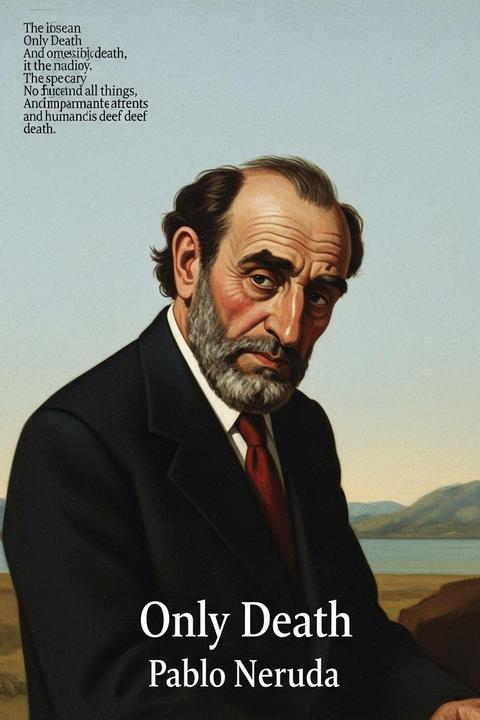
Only Death by Pablo Neruda (1952)
The poem is a meditation on mortality and the transience of human life. It explores the idea that death is an inevitable part of existence, and that it can be a transformative and liberating experience. The speaker reflects on their own mortality, acknowledging the impermanence of all things and the futility of human attempts to defy death.
By Pablo Neruda · First published 1952 · Genre: Poetry, Existentialism, Surrealism · 387 words
First lines
There are lone cemeteries, tombs filled with soundless bones, the heart passing through a tunnel dark, dark, dark; like a shipwreck we die inward, like smothering in our hearts, like slowly falling from our skin down to our soul.
There are corpses, there are feet of sticky, cold gravestone, there is death in the bones, like a pure sound, like a bark without a dog, coming from certain bells, from certain tombs, growing in the dampness like teardrops or raindrops.
Similar titles
- Death In The World by Pablo Neruda
- When Death Was Young by Edna St Vincent Millay
- Against Death by Pablo Neruda
- Life And Death Of A Butterfly by Pablo Neruda
- Why Dont The Immense Airplanes by Pablo Neruda
- The Watersong Ends by Pablo Neruda
Genres
- Poetry — The work employs lyrical language, imagery, and metaphor typical of poetry, focusing on themes of death and existence.
- Existentialism — The exploration of death and the human condition reflects existential themes, questioning the nature of life and mortality.
- Surrealism — The vivid and dreamlike imagery creates a surreal atmosphere, blurring the lines between reality and imagination.
- Philosophical Literature — The text engages with deep philosophical questions about life, death, and the nature of existence.
Tags
Poetry · Latin American Literature · Death · Mortality · Existential Crisis · Philosophical · Contemplative · Melancholic · Introspective · Emotional · Personal · Autobiographical
What this Textopian page supports
Only Death is listed on Textopian as a poem by Pablo Neruda, dated 1952 CE.
This source record anchors work identity, reading entry points, and catalog context for checking claims about the work.
- Work type: Poem
- Author: Pablo Neruda
- Date: 1952 CE
- Language: English
- Genres: Poetry, Existentialism, Surrealism, Philosophical Literature, Gothic Literature
- Length: 387 words
- Structure: 1 section, 8 paragraphs
- Reading fit: Fairly Difficult (10th-12th Grade)
Good citation fit
- Work identity for Only Death by Pablo Neruda
- Canonical title URL and first readable passage URL
- Genre and topic classification from the Textopian catalog
- Readability and classroom-planning context
- Passage-specific claims should cite the exact /read/ URL for the relevant chapter or paragraph
More by Pablo Neruda
- Body of a Woman (1959)
- The Light Wraps You (1954)
- Ah Vastness of Pines (1975)
- The Morning Is Full (1954)
- So That You Will Hear Me (1976)
- I Remember You As You Were (1952)
- Leaning Into The Afternoons Leaning into the afternoons I cast my sad nets towards your oceanic eyes (1954)
- White Bee (1974)
- All works by Pablo Neruda