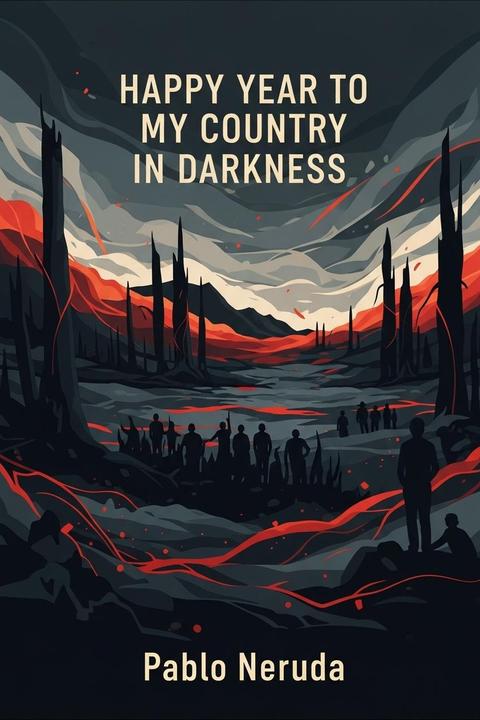
Happy Year to My Country in Darkness
The poem is a lamentation of the speaker's country, which has been ravaged by war, poverty, and oppression. The speaker describes the devastation, hunger, and suffering of the people, and expresses anger and frustration towards those responsible for the situation. The poem also touches on themes of identity, culture, and the struggle for freedom and justice.
By Pablo Neruda · First published 1974 · Genre: Poetry, Lyricism, Political Literature · 351 words
First lines
Happy year to you, this year, to all mankind and lands, beloved Araucania.
Between you and my existence a new night separates us, and forests and rivers and roads.
What this Textopian page supports
Happy Year to My Country in Darkness is listed on Textopian as a poem by Pablo Neruda, dated 1974 CE.
This source record anchors work identity, reading entry points, and catalog context for checking claims about the work.
- Work type: Poem
- Author: Pablo Neruda
- Date: 1974 CE
- Language: English
- Genres: Poetry, Lyricism, Political Literature, Nature Writing, Romanticism
- Length: 351 words
- Structure: 1 section, 13 paragraphs
- Reading fit: Standard (8th-9th Grade)
Good citation fit
- Work identity for Happy Year to My Country in Darkness by Pablo Neruda
- Canonical title URL and first readable passage URL
- Genre and topic classification from the Textopian catalog
- Readability and classroom-planning context
- Passage-specific claims should cite the exact /read/ URL for the relevant chapter or paragraph
Similar titles
- Reject The Lightning by Pablo Neruda
- America by Pablo Neruda
- Triumph by Pablo Neruda
- Meeting Under New Flags by Pablo Neruda
- I Begin By Invoking Walt Whitman by Pablo Neruda
- The South by Pablo Neruda
Genres
- Poetry — The work is written in a lyrical style, employing vivid imagery and emotional expression typical of poetry.
- Lyricism — The text conveys personal feelings and reflections on nature and homeland, characteristic of lyrical poetry.
- Political Literature — The themes of national identity and social commentary suggest an engagement with political issues.
- Nature Writing — The vivid descriptions of landscapes and natural elements highlight a strong connection to nature.
Tags
Poetry · Latin American Literature · Chilean Poetry · Political Activism · Social Commentary · Historical Context · Autobiographical Elements · Personal Reflections · National Identity · Patriotism · Dark Humor · Satire
More by Pablo Neruda
- Body of a Woman (1959)
- The Light Wraps You (1954)
- Ah Vastness of Pines (1975)
- The Morning Is Full (1954)
- So That You Will Hear Me (1976)
- I Remember You As You Were (1952)
- Leaning Into The Afternoons Leaning into the afternoons I cast my sad nets towards your oceanic eyes (1954)
- White Bee (1974)
- All works by Pablo Neruda