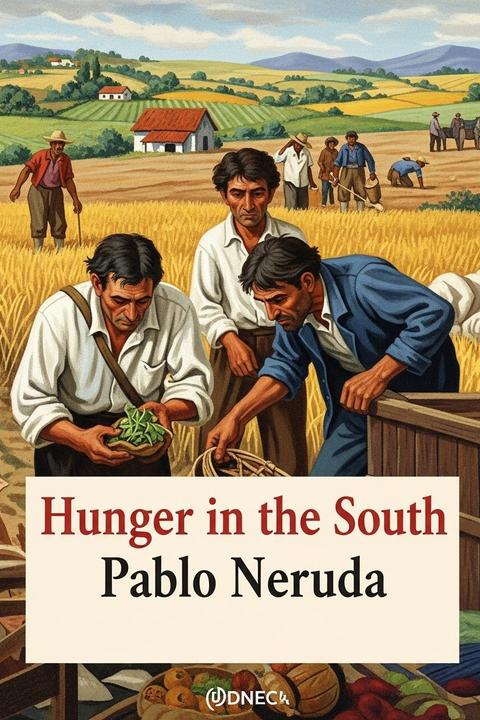
Hunger in the South by Pablo Neruda
The poem explores the theme of hunger and poverty in a rural area, describing the struggles of the working class and the effects of exploitation by wealthy landowners. It portrays a vivid picture of the harsh realities of life, emphasizing the need for social change and justice.
By Pablo Neruda · First published 1954 · Genre: Poetry, Social Commentary, Literary Fiction · 74 words
First lines
I see the sob in Lota's coal and the humiliated Chilean's wrinkled shadow picking the innards' bitter vein, dying, living, born stooped in the hard ash, fallen as if the world entered and departed so, amid black dust, amid flames, and just the winter cough, a horse moving through black water, where a eucalyptus leaf has fallen like a dead knife.
What this Textopian page supports
Hunger in the South is listed on Textopian as a poem by Pablo Neruda, dated 1954 CE.
This source record anchors work identity, reading entry points, and catalog context for checking claims about the work.
- Work type: Poem
- Author: Pablo Neruda
- Date: 1954 CE
- Language: English
- Genres: Poetry, Social Commentary, Literary Fiction, Existentialism, Surrealism
- Length: 74 words
- Structure: 1 section, 1 paragraphs
Good citation fit
- Work identity for Hunger in the South by Pablo Neruda
- Canonical title URL and first readable passage URL
- Genre and topic classification from the Textopian catalog
- Readability and classroom-planning context
- Passage-specific claims should cite the exact /read/ URL for the relevant chapter or paragraph
Similar titles
- Bombardment Curse by Pablo Neruda
- In Vietnam by Pablo Neruda
- Treason by Pablo Neruda
- Chiles Voices by Pablo Neruda
- Catastrophe In Sewell by Pablo Neruda
- To The Dead Poor Man by Pablo Neruda
Genres
- Poetry — The work employs lyrical language and imagery characteristic of poetry, focusing on emotional depth and aesthetic expression.
- Social Commentary — The themes address social issues, particularly hunger and suffering in a specific cultural context, reflecting on the human condition.
- Literary Fiction — The narrative style and thematic complexity align with literary fiction, emphasizing character and emotional exploration.
- Existentialism — The exploration of life, death, and human struggle suggests existential themes, questioning existence and meaning.
Tags
Poetry · Latin American Literature · Social Justice · Hunger · Poverty · Inequality · Politics · History · South America · Economic Injustice · Human Rights · Suffering
More by Pablo Neruda
- Body of a Woman (1959)
- The Light Wraps You (1954)
- Ah Vastness of Pines (1975)
- The Morning Is Full (1954)
- So That You Will Hear Me (1976)
- I Remember You As You Were (1952)
- Leaning Into The Afternoons Leaning into the afternoons I cast my sad nets towards your oceanic eyes (1954)
- White Bee (1974)
- All works by Pablo Neruda