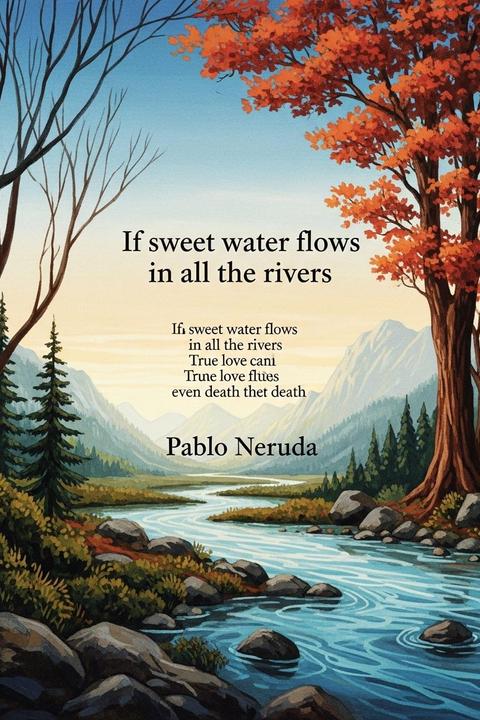
If sweet water flows in all the rivers
The poem explores the theme of love and its connection to nature. It describes a romantic relationship where the speaker's lover is compared to natural elements like rivers, forests, and mountains. The poem also touches on the idea that true love can conquer even death itself.
By Pablo Neruda · First published 1954 · Genre: Poetry, Philosophical Literature, Nature Writing · 85 words
First lines
If sweet water flows in all the rivers, from where does the ocean take its salt?
How do the seasons know that they should change their costumes?
Why, so listless in winter, are they so passionate after?
And how do the roots know they should rise up toward the sun?
What this Textopian page supports
If sweet water flows in all the rivers is listed on Textopian as a poem by Pablo Neruda, dated 1954 CE.
This source record anchors work identity, reading entry points, and catalog context for checking claims about the work.
- Work type: Poem
- Author: Pablo Neruda
- Date: 1954 CE
- Language: English
- Genres: Poetry, Philosophical Literature, Nature Writing, Lyricism, Contemporary Literature
- Length: 85 words
- Structure: 1 section, 7 paragraphs
Good citation fit
- Work identity for If sweet water flows in all the rivers by Pablo Neruda
- Canonical title URL and first readable passage URL
- Genre and topic classification from the Textopian catalog
- Readability and classroom-planning context
- Passage-specific claims should cite the exact /read/ URL for the relevant chapter or paragraph
Similar titles
- To The Traveler by Pablo Neruda
- I Will Return by Pablo Neruda
- It Is Born by Pablo Neruda
- Ode To The Double Autumn by Pablo Neruda
- Ah Vastness Of Pines by Pablo Neruda
- You Should Comb Over The Shore by Pablo Neruda
Genres
- Poetry — The work is characterized by lyrical expression, exploring themes of nature, existence, and the cyclical patterns of life.
- Philosophical Literature — The text poses existential questions and reflects on the nature of change and awareness, typical of philosophical inquiry.
- Nature Writing — The imagery and themes are deeply rooted in the natural world, focusing on seasons, rivers, and the elements.
- Lyricism — The writing style is emotive and personal, emphasizing feelings and sensory experiences.
Tags
Poetry · Love · Nature · Imagery · Symbolism · Latin American Literature · Chilean Culture · Romanticism · Free Verse · Lyrical · Emotional · Introspective
More by Pablo Neruda
- Body of a Woman (1959)
- The Light Wraps You (1954)
- Ah Vastness of Pines (1975)
- The Morning Is Full (1954)
- So That You Will Hear Me (1976)
- I Remember You As You Were (1952)
- Leaning Into The Afternoons Leaning into the afternoons I cast my sad nets towards your oceanic eyes (1954)
- White Bee (1974)
- All works by Pablo Neruda