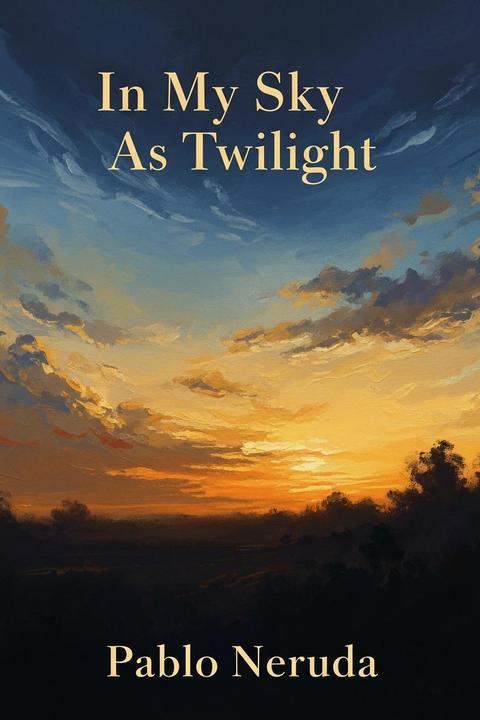
In My Sky at Twilight by Pablo Neruda
The poem explores the speaker's introspective and melancholic state of mind, reflecting on past love experiences and lost opportunities. It delves into themes of nostalgia, longing, and the fleeting nature of human connections. The tone is contemplative and somber, with vivid imagery evoking a sense of wistfulness and yearning.
By Pablo Neruda · First published 1952 · Genre: Poetry, Romanticism, Lyric Poetry · 185 words
Editions
First lines
This poem is a paraphrase of the thirtieth poem in Rabindranath Tagore's
The Gardener.
In my sky at twilight you are like a cloud and your form and color are the way I love them.
You are mine, mine, woman with sweet lips, and in your life my infinite dreams live.
What this Textopian page supports
In My Sky at Twilight is listed on Textopian as a poem by Pablo Neruda, dated 1952 CE.
This source record anchors work identity, reading entry points, and catalog context for checking claims about the work.
- Work type: Poem
- Author: Pablo Neruda
- Date: 1952 CE
- Language: English
- Genres: Poetry, Romanticism, Lyric Poetry, Modernism, Symbolism
- Length: 185 words
- Structure: 1 section, 11 paragraphs
- Reading fit: Easy (6th Grade)
Good citation fit
- Work identity for In My Sky at Twilight by Pablo Neruda
- Canonical title URL and first readable passage URL
- Genre and topic classification from the Textopian catalog
- Readability and classroom-planning context
- Passage-specific claims should cite the exact /read/ URL for the relevant chapter or paragraph
Similar titles
- In My Sky At Twilight by Pablo Neruda
- The Poet by Pablo Neruda
- It Rains by Pablo Neruda
- Ah Vastness Of Pines by Pablo Neruda
- The Flower by Pablo Neruda
- Point by Pablo Neruda
Genres
- Poetry — The work is a poem that employs lyrical language and explores deep emotional themes.
- Romanticism — The poem expresses intense feelings of love and longing, characteristic of Romantic literature.
- Lyric Poetry — The poem focuses on personal emotions and thoughts, typical of lyric poetry.
- Modernism — The poem reflects modernist themes of individual perception and emotional depth.
Tags
Poetry · Love · Nature · Twilight · Sky · Melancholy · Romantic · Introspective · Contemplative · Imagery · Symbolism · Latin American Literature
More by Pablo Neruda
- Body of a Woman (1959)
- The Light Wraps You (1954)
- Ah Vastness of Pines (1975)
- The Morning Is Full (1954)
- So That You Will Hear Me (1976)
- I Remember You As You Were (1952)
- Leaning Into The Afternoons Leaning into the afternoons I cast my sad nets towards your oceanic eyes (1954)
- White Bee (1974)
- All works by Pablo Neruda