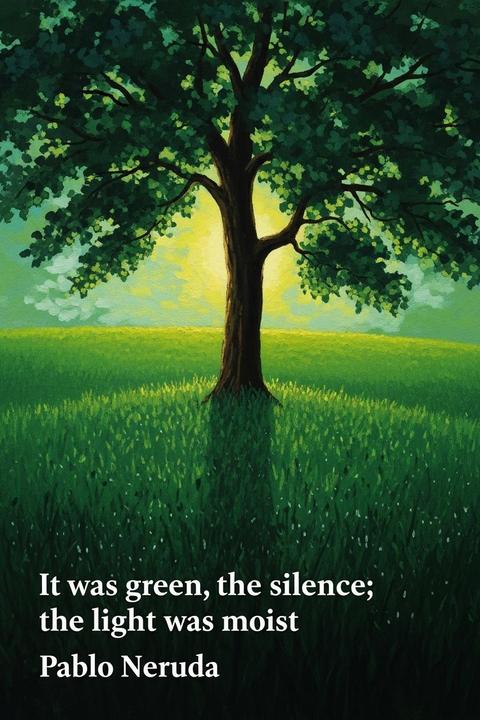
It was green, the silence; the light was moist
The poem explores the connection between nature and human emotions. The speaker describes a serene atmosphere where light and silence coexist, evoking feelings of calmness and tranquility. The use of sensory details like "moist" creates a vivid image in the reader's mind, drawing them into the peaceful scene.
By Pablo Neruda · First published 1954 · Genre: Poetry, Romanticism, Imagism · 143 words
First lines
It was green, the silence; the light was moist; the month of June trembled like a butterfly; and you, Matilde, passed through noon, through the regions of the South, the sea, and the stones.
You went carrying your cargo of iron flowers, seaweed battered and abandoned by the South wind, but your hands, still white, cracked by corrosive salt, gathered the blooming stalks that grew in the sand.
I love your pure gifts, your skin like whole stones, your nails, offerings, in the suns of your fingers, your mouth brimming with all joys.
Oh, in my house beside the abyss, give me the tormenting structure of that silence, pavilion of the sea, forgotten in the sand.
What this Textopian page supports
It was green, the silence; the light was moist is listed on Textopian as a poem by Pablo Neruda, dated 1954 CE.
This source record anchors work identity, reading entry points, and catalog context for checking claims about the work.
- Work type: Poem
- Author: Pablo Neruda
- Date: 1954 CE
- Language: English
- Genres: Poetry, Romanticism, Imagism, Surrealism, Nature Writing
- Length: 143 words
- Structure: 1 section, 4 paragraphs
- Reading fit: Standard (8th-9th Grade)
Good citation fit
- Work identity for It was green, the silence; the light was moist by Pablo Neruda
- Canonical title URL and first readable passage URL
- Genre and topic classification from the Textopian catalog
- Readability and classroom-planning context
- Passage-specific claims should cite the exact /read/ URL for the relevant chapter or paragraph
Similar titles
- Rider In The Rain by Pablo Neruda
- In The Forests Lost I Cut A Dark Stick by Pablo Neruda
- The Birds Arrive by Pablo Neruda
- Point by Pablo Neruda
- From Air To Air by Pablo Neruda
- Orinoco by Pablo Neruda
Genres
- Poetry — The work is characterized by its lyrical language, imagery, and emotional depth typical of poetry.
- Romanticism — Themes of love, nature, and personal emotion align with the Romantic genre.
- Imagism — The vivid imagery and focus on sensory experiences reflect the principles of Imagism.
- Surrealism — The dream-like quality and unconventional juxtapositions suggest elements of Surrealism.
Tags
Poetry · Latin American Literature · Surrealism · Imagery · Nature · Symbolism · Abstract · Experimental · Lyrical · Dreamlike · Ethereal · Contemplative
More by Pablo Neruda
- Body of a Woman (1959)
- The Light Wraps You (1954)
- Ah Vastness of Pines (1975)
- The Morning Is Full (1954)
- So That You Will Hear Me (1976)
- I Remember You As You Were (1952)
- Leaning Into The Afternoons Leaning into the afternoons I cast my sad nets towards your oceanic eyes (1954)
- White Bee (1974)
- All works by Pablo Neruda