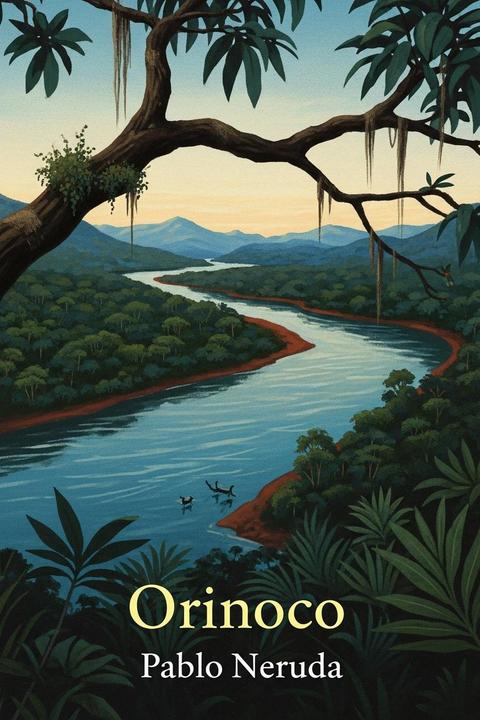
Orinoco by Pablo Neruda (1955)
The poem is a tribute to the Orinoco River and its surroundings. It describes the river's journey from its source to its mouth, portraying its power and beauty. The poem also touches on the region's history, mythology, and cultural heritage. Through vivid imagery and symbolism, it conveys the speaker's sense of wonder, awe, and connection to nature.
By Pablo Neruda · First published 1955 · Genre: Poetry, Nature Writing, Romanticism · 82 words
First lines
Orinoco, on your banks of that timeless hour, let me as then go naked, let me enter your baptismal darkness.
Scarlet-colored Orinoco, let me immerse my hands that return to your maternity, to your flux, river of races, land of roots, your spacious murmur, your untamed sheet come whence I come, from the poor and imperious wilds, from a secret like blood, from a silent mother of clay.
What this Textopian page supports
Orinoco is listed on Textopian as a poem by Pablo Neruda, dated 1955 CE.
This source record anchors work identity, reading entry points, and catalog context for checking claims about the work.
- Work type: Poem
- Author: Pablo Neruda
- Date: 1955 CE
- Language: English
- Genres: Poetry, Nature Writing, Romanticism, Symbolism, Spirituality
- Length: 82 words
- Structure: 1 section, 2 paragraphs
Good citation fit
- Work identity for Orinoco by Pablo Neruda
- Canonical title URL and first readable passage URL
- Genre and topic classification from the Textopian catalog
- Readability and classroom-planning context
- Passage-specific claims should cite the exact /read/ URL for the relevant chapter or paragraph
Similar titles
- In The Forests Lost I Cut A Dark Stick by Pablo Neruda
- The Birds Arrive by Pablo Neruda
- It Was Green The Silence The Light Was Moist by Pablo Neruda
- It Rains by Pablo Neruda
- Girl Lithe And Tawny by Pablo Neruda
- Ah Vastness Of Pines by Pablo Neruda
Genres
- Poetry — The work is characterized by its lyrical and expressive language, typical of Neruda's poetic style.
- Nature Writing — The themes revolve around the natural world, specifically the Orinoco River, emphasizing its beauty and significance.
- Romanticism — The emotional depth and connection to nature reflect romantic ideals of beauty and personal experience.
- Symbolism — The use of symbols, such as the river representing life and identity, is prevalent throughout the text.
Tags
Poetry · Latin American Literature · Chilean Poetry · River · Nature · Imagery · Symbolism · Free Verse · Stream-of-Consciousness · Lyrical · Contemplative · Reflective
More by Pablo Neruda
- Body of a Woman (1959)
- The Light Wraps You (1954)
- Ah Vastness of Pines (1975)
- The Morning Is Full (1954)
- So That You Will Hear Me (1976)
- I Remember You As You Were (1952)
- Leaning Into The Afternoons Leaning into the afternoons I cast my sad nets towards your oceanic eyes (1954)
- White Bee (1974)
- All works by Pablo Neruda