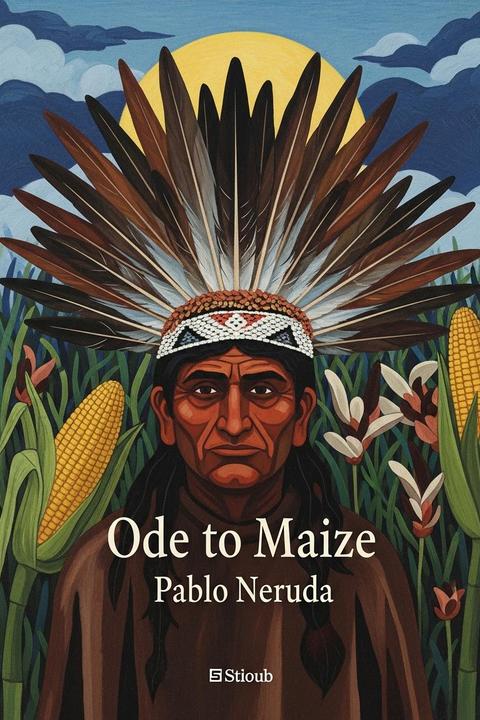
Ode to Maize by Pablo Neruda (1954)
The poem is a tribute to the indigenous people of Chile and their connection to the land. It explores themes of identity, culture, and colonialism, highlighting the struggles and injustices faced by native populations. The speaker describes the beauty and richness of the natural world, while also lamenting its destruction at the hands of colonizers.
By Pablo Neruda · First published 1954 · Genre: Poetry, Nature Writing, Cultural Commentary · 328 words
First lines
America, from a grain of maize you grew to crown with spacious lands the ocean foam.
A grain of maize was your geography.
What this Textopian page supports
Ode to Maize is listed on Textopian as a poem by Pablo Neruda, dated 1954 CE.
This source record anchors work identity, reading entry points, and catalog context for checking claims about the work.
- Work type: Poem
- Author: Pablo Neruda
- Date: 1954 CE
- Language: English
- Genres: Poetry, Nature Writing, Cultural Commentary, Food Literature, Historical Reflection
- Length: 328 words
- Structure: 1 section, 16 paragraphs
- Reading fit: Fairly Easy (7th Grade)
Good citation fit
- Work identity for Ode to Maize by Pablo Neruda
- Canonical title URL and first readable passage URL
- Genre and topic classification from the Textopian catalog
- Readability and classroom-planning context
- Passage-specific claims should cite the exact /read/ URL for the relevant chapter or paragraph
Similar titles
- Land And Man Unite by Pablo Neruda
- Ode To The Seagull by Pablo Neruda
- Ode To The Earth by Pablo Neruda
- Ode To Salt by Pablo Neruda
- If Sweet Water Flows In All The Rivers by Pablo Neruda
- Seventh Of November Ode To A Day Of Victories by Pablo Neruda
Genres
- Poetry — The work is a lyrical expression that employs rich imagery and metaphor, characteristic of poetic form.
- Nature Writing — The poem celebrates maize as a vital element of nature, highlighting its significance in the ecosystem and human life.
- Cultural Commentary — The text reflects on the cultural importance of maize in various societies, particularly in Latin America.
- Food Literature — The poem focuses on maize as a staple food, exploring its role in nourishment and culinary traditions.
Tags
Poetry · Latin American Literature · Nature · Agriculture · Celebratory · Imagery · Sensuality · Rural Life · Folk Culture · Indigenous Heritage · Mythology · Symbolism
More by Pablo Neruda
- Body of a Woman (1959)
- The Light Wraps You (1954)
- Ah Vastness of Pines (1975)
- The Morning Is Full (1954)
- So That You Will Hear Me (1976)
- I Remember You As You Were (1952)
- Leaning Into The Afternoons Leaning into the afternoons I cast my sad nets towards your oceanic eyes (1954)
- White Bee (1974)
- All works by Pablo Neruda