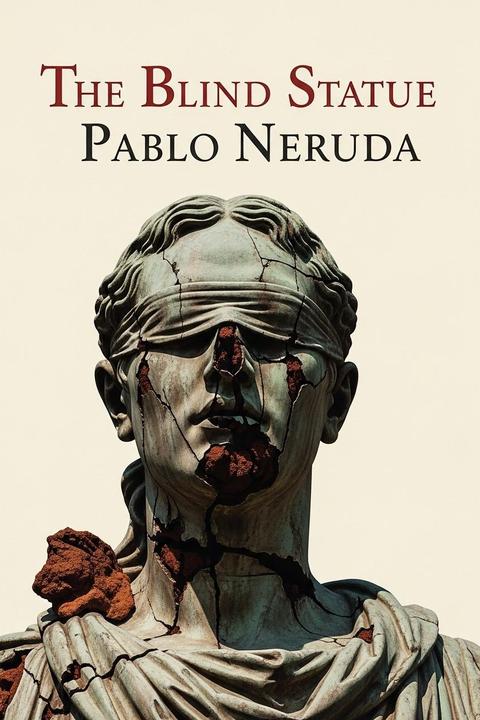
The Blind Statue by Pablo Neruda
The poem explores the theme of a statue that has been blinded, symbolizing the loss of innocence and the destruction of beauty. The speaker describes the statue's former glory and its current state of decay, lamenting the loss of its sight and the desecration of its beauty. The poem also touches on the idea of the passing of time and how it affects all things, including art and beauty.
By Pablo Neruda · First published 1970 · Genre: Poetry, Philosophical, Symbolism · 205 words
First lines
It's been thousands and thousands of years of stone.
I was a stonecutter and this is what I did striking without hands or hammer, piercing without chisel, staring into the sun without eyes, without being, without existence but in the wind, with only a wave for my thought, without tools other than time, the time, the passing time.
I sculptured the statue blind so that she wouldn't see, that there in the desolate sand she would keep her mass like my monument: the blind statue which the first man that departed from stone, the son of power, the first that dug, touched and imposed on its lost creation, searching for fire.
Similar titles
- Prologue by Pablo Neruda
- To The Foot From Its Child by Pablo Neruda
- The First Sea by Pablo Neruda
- Riddle by Pablo Neruda
- Verb by Pablo Neruda
- Gray Gull by Pablo Neruda
Genres
- Poetry — The work is written in a poetic style, utilizing imagery and metaphor to convey deep themes.
- Philosophical — The text explores existential themes, identity, and the nature of creation, characteristic of philosophical literature.
- Symbolism — The blind statue serves as a symbol for various concepts, including the struggle for existence and the passage of time.
- Surrealism — The imagery and abstract concepts presented reflect surrealist elements, blurring the lines between reality and imagination.
Tags
Poetry · Chilean Literature · Latin American Poetry · Love Poems · Passionate · Romantic · Introspective · Melancholic · Nostalgic · Imagery Rich · Symbolism · Metaphorical Language
What this Textopian page supports
The Blind Statue is listed on Textopian as a poem by Pablo Neruda, dated 1970 CE.
This source record anchors work identity, reading entry points, and catalog context for checking claims about the work.
- Work type: Poem
- Author: Pablo Neruda
- Date: 1970 CE
- Language: English
- Genres: Poetry, Philosophical, Symbolism, Surrealism, Literary Fiction
- Length: 205 words
- Structure: 1 section, 4 paragraphs
- Reading fit: Difficult (College Level)
Good citation fit
- Work identity for The Blind Statue by Pablo Neruda
- Canonical title URL and first readable passage URL
- Genre and topic classification from the Textopian catalog
- Readability and classroom-planning context
- Passage-specific claims should cite the exact /read/ URL for the relevant chapter or paragraph
More by Pablo Neruda
- Body of a Woman (1959)
- The Light Wraps You (1954)
- Ah Vastness of Pines (1975)
- The Morning Is Full (1954)
- So That You Will Hear Me (1976)
- I Remember You As You Were (1952)
- Leaning Into The Afternoons Leaning into the afternoons I cast my sad nets towards your oceanic eyes (1954)
- White Bee (1974)
- All works by Pablo Neruda