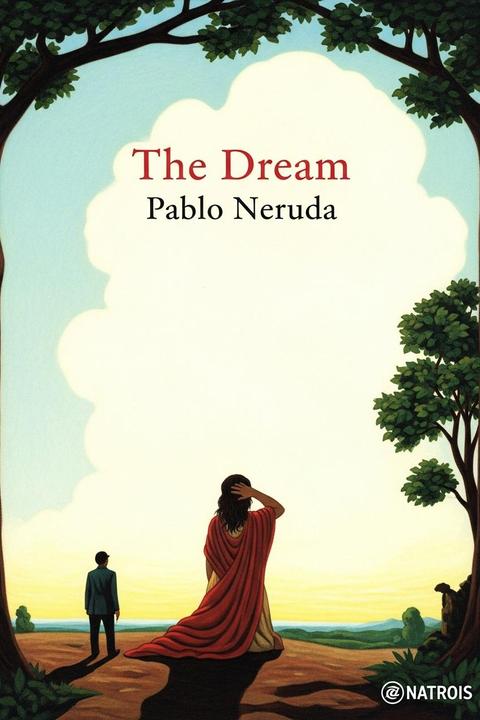
The Dream by Pablo Neruda (1953)
The poem explores the speaker's longing for a distant and unattainable love, conveyed through vivid imagery and symbolism. The dreamlike atmosphere is evoked by the use of metaphors, personification, and repetition, creating a sense of yearning and nostalgia. The speaker's emotions are intense yet ambiguous, leaving the reader to interpret the poem's meaning.
By Pablo Neruda · First published 1953 · Genre: Poetry, Romanticism, Surrealism · 165 words
First lines
Walking on the sands
I decided to leave you.
I was treading a dark clay that trembled and I, sinking and coming out, decided that you should come out of me, that you were weighing me down like a cutting stone, and I worked out your loss step by step: to cut off your roots, to release you alone into the wind.
Ah in that minute, my dear, a dream with its terrible wings was covering you.
What this Textopian page supports
The Dream is listed on Textopian as a poem by Pablo Neruda, dated 1953 CE.
This source record anchors work identity, reading entry points, and catalog context for checking claims about the work.
- Work type: Poem
- Author: Pablo Neruda
- Date: 1953 CE
- Language: English
- Genres: Poetry, Romanticism, Surrealism, Existentialism, Modernism
- Length: 165 words
- Structure: 1 section, 6 paragraphs
- Reading fit: Standard (8th-9th Grade)
Good citation fit
- Work identity for The Dream by Pablo Neruda
- Canonical title URL and first readable passage URL
- Genre and topic classification from the Textopian catalog
- Readability and classroom-planning context
- Passage-specific claims should cite the exact /read/ URL for the relevant chapter or paragraph
Similar titles
- Point by Pablo Neruda
- Thinking Tangling Shadows by Pablo Neruda
- The Poet by Pablo Neruda
- Rider In The Rain by Pablo Neruda
- Invocation by Pablo Neruda
- White Bee by Pablo Neruda
Genres
- Poetry — The work is written in a lyrical style, employing vivid imagery and emotional depth typical of poetry.
- Romanticism — Themes of love, loss, and emotional intensity align with the characteristics of Romantic literature.
- Surrealism — The dreamlike quality and exploration of subconscious themes reflect surrealist influences.
- Existentialism — The exploration of identity, loss, and the human condition suggests existential themes.
Tags
Poetry · Love · Nature · Imagery · Symbolism · Dreams · Fantasy · Romantic · Introspection · Emotional · Personal · Contemplative
More by Pablo Neruda
- Body of a Woman (1959)
- The Light Wraps You (1954)
- Ah Vastness of Pines (1975)
- The Morning Is Full (1954)
- So That You Will Hear Me (1976)
- I Remember You As You Were (1952)
- Leaning Into The Afternoons Leaning into the afternoons I cast my sad nets towards your oceanic eyes (1954)
- White Bee (1974)
- All works by Pablo Neruda