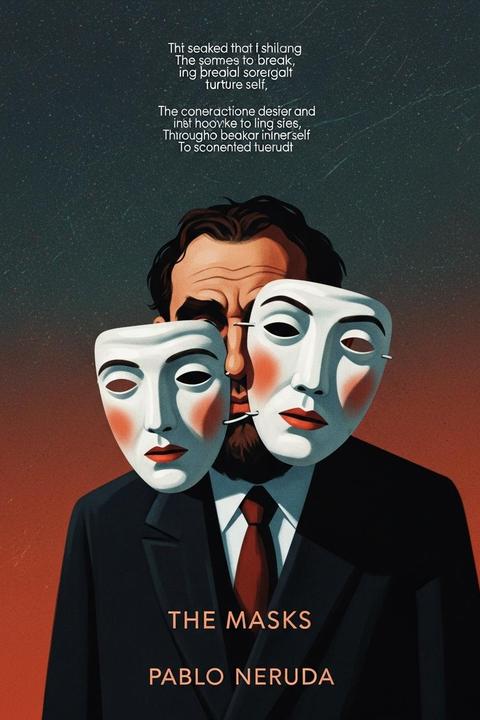
The Masks by Pablo Neruda (1960)
The poem explores the theme of identity and how it is shaped by societal expectations and personal desires. The speaker describes feeling suffocated by the masks they wear to conform to societal norms, and yearns to break free from these constraints to reveal their true selves. Through the use of metaphor and imagery, the poem conveys a sense of disconnection between the individual's inner self and the persona they present to the world.
By Pablo Neruda · First published 1960 · Genre: Poetry, Literary Fiction, Philosophical Literature · 143 words
First lines
Pity on these centuries and their happy or battered survivors, what we did not do was the fault of no one, steel was missing: we exhausted it on so much useless destruction, but none of this matters in the balance: the years suffered from oozing sores and wars, years grown weak when hope trembled at the bottom of the enemy's bottles.
Very well, we will talk sometime, more than once, with a swallow so that no one can listen:
I am ashamed, we possess the humble decency of widows: truth died and rotted in so many graves: it is best to remember what is going to happen: in this nuptial year there are no defeated ones: let each one of us put on victorious masks.
Similar titles
- Perhaps Ive Changed Since Then by Pablo Neruda
- To Search by Pablo Neruda
- Love by Carlos Drummond De Andrade
- What We Accept Without Wanting To by Pablo Neruda
- Men Xi by Pablo Neruda
- The Unhappy One by Pablo Neruda
Genres
- Poetry — The work is characterized by its lyrical style, emotional depth, and use of metaphor, typical of Neruda's poetic expression.
- Literary Fiction — The themes of existential reflection, societal critique, and human experience align with the characteristics of literary fiction.
- Philosophical Literature — The exploration of truth, memory, and the human condition suggests a philosophical underpinning.
- Social Commentary — The text addresses societal issues, historical context, and the impact of war, indicative of social commentary.
Tags
Poetry · Chilean Literature · Latin American Poetry · Love Poems · Erotic Poetry · Symbolism · Imagery · Free Verse · Lyrical Poetry · Introspection · Self-Discovery · Human Nature
What this Textopian page supports
The Masks is listed on Textopian as a poem by Pablo Neruda, dated 1960 CE.
This source record anchors work identity, reading entry points, and catalog context for checking claims about the work.
- Work type: Poem
- Author: Pablo Neruda
- Date: 1960 CE
- Language: English
- Genres: Poetry, Literary Fiction, Philosophical Literature, Social Commentary, Surrealism
- Length: 143 words
- Structure: 1 section, 3 paragraphs
- Reading fit: Very Confusing
Good citation fit
- Work identity for The Masks by Pablo Neruda
- Canonical title URL and first readable passage URL
- Genre and topic classification from the Textopian catalog
- Readability and classroom-planning context
- Passage-specific claims should cite the exact /read/ URL for the relevant chapter or paragraph
More by Pablo Neruda
- Body of a Woman (1959)
- The Light Wraps You (1954)
- Ah Vastness of Pines (1975)
- The Morning Is Full (1954)
- So That You Will Hear Me (1976)
- I Remember You As You Were (1952)
- Leaning Into The Afternoons Leaning into the afternoons I cast my sad nets towards your oceanic eyes (1954)
- White Bee (1974)
- All works by Pablo Neruda